
Paid Ads vs Content Marketing: Which Drives Better ROI?

You’re sitting with your marketing budget open, trying to decide where it should go. One option promises quick traffic and instant visibility. The other feels slower but keeps bringing results long after the work is done. That’s where the real debate begins—paid ads vs content marketing.
Maybe you’ve run ads before and saw clicks come in fast, but the moment you paused spending, everything stopped. Or maybe you’ve published blogs and wondered why results take time but seem to grow steadily. It can feel confusing trying to figure out which one actually gives better ROI.
That’s exactly where this blog helps. We’ll break down how each strategy works, where it delivers the most value, and how you can decide what’s right for your business. By the end, you’ll have a clear, practical way to choose the approach that actually drives results—not just traffic.
What is the Difference Between Paid Ads vs Content Marketing?
Paid ads generate immediate traffic through paid placements, while content marketing builds long-term organic traffic through SEO and valuable content. Paid ads stop when spending stops, while content continues generating results over time.
Maybe you’ve run ads before and saw clicks come in fast, but the moment you paused spending, everything stopped. Or maybe you’ve published blogs and wondered why results take time but seem to grow steadily. It can feel confusing trying to figure out which one actually gives better ROI.
That’s exactly where this blog helps. We’ll break down how each strategy works, where it delivers the most value, and how you can decide what’s right for your business. By the end, you’ll have a clear, practical way to choose the approach that actually drives results—not just traffic.
What Are Paid Ads?
In the discussion of paid ads vs content marketing, paid ads represent the fastest way to generate immediate visibility. Instead of waiting for your website or content to rank, you can appear right at the top of search results or in users’ social media feeds within minutes. Platforms like Google, Facebook, and Instagram allow you to target specific audiences based on their interests, behavior, and search intent.
Most paid ads work on a bidding system, where you pay per click, impression, or conversion. This means you’re essentially buying traffic. As long as your budget is active, your ads keep running and bringing in visitors. But once you stop spending, the traffic usually stops as well.
When comparing paid ads vs content marketing, this is where paid ads stand out—they deliver fast results and immediate visibility, making them a strong choice for businesses that need quick wins or want to promote time-sensitive offers.
What Is Content Marketing?
When comparing paid ads vs content marketing, content marketing focuses on long-term growth through SEO and valuable content. Instead of paying for instant visibility, you build trust over time through blog posts, SEO pages, videos, and helpful resources that answer your audience’s questions.
The goal is not just to bring in traffic, but to guide potential customers through a journey—from learning about a problem to finding a solution and eventually making a decision. This approach helps position your brand as a reliable source, which naturally improves conversions over time.
When you look at paid ads vs content marketing, content marketing stands out for its long-term impact. A well-written blog or optimized page can keep driving traffic and leads for months or even years, making it a more sustainable way to grow your business.
Read more: Content Gap Analysis: The Strategy to Rank Higher on Google
Inbound vs Outbound Marketing: How They Impact Paid Ads vs Content Marketing
Understanding inbound vs outbound marketing is critical when evaluating paid ads vs content marketing strategies. This difference between inbound vs outbound marketing directly affects how businesses generate traffic, leads, and long-term ROI.
Outbound marketing is a more direct approach. It puts your message in front of people even if they are not actively looking for it. The goal is to grab attention quickly and generate fast results.
Inbound marketing is more subtle and value-driven. Instead of interrupting users, it attracts them through helpful and relevant content that answers their questions and builds trust over time.
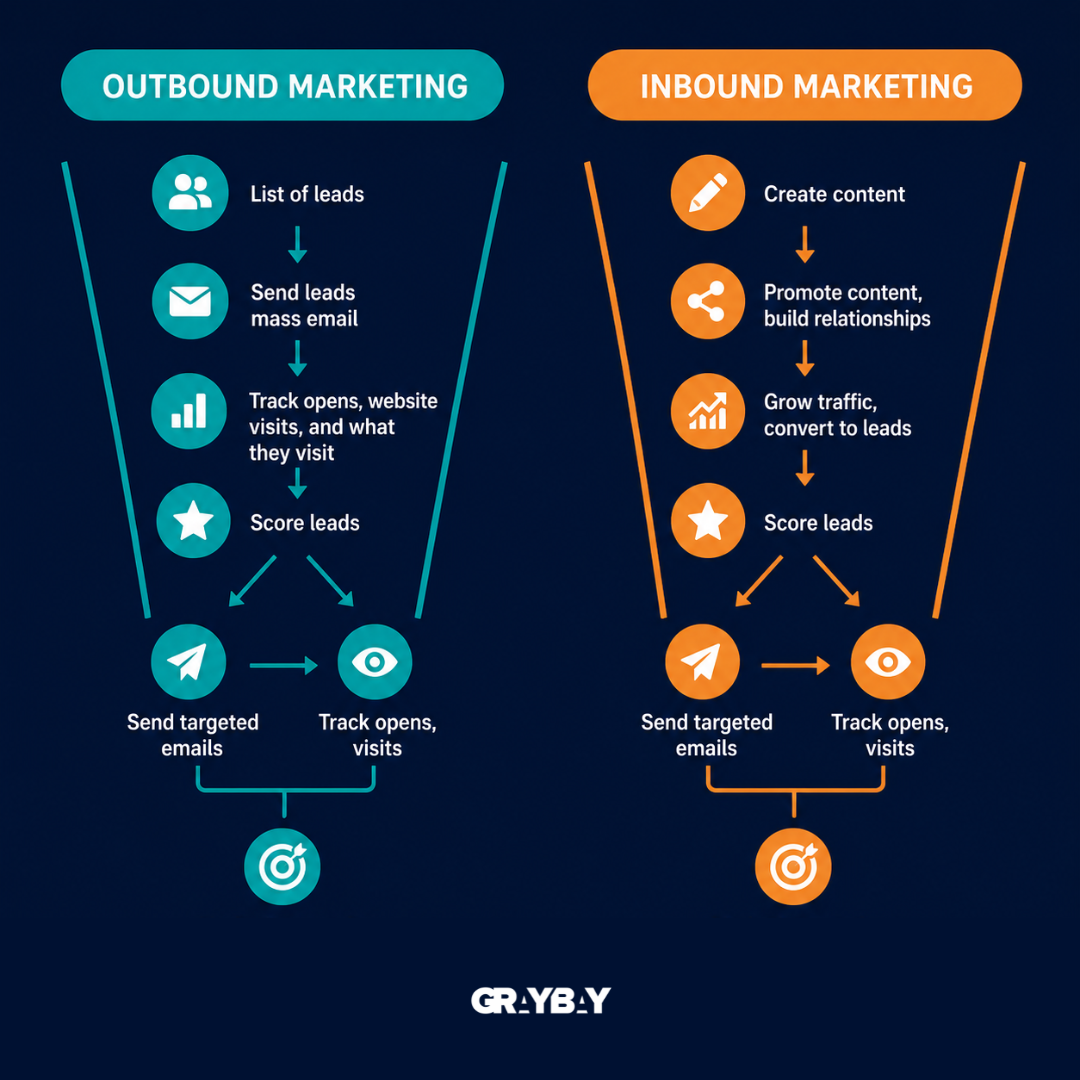
Outbound Marketing (Push Strategy)
Focuses on actively promoting messages to audiences
Reaches people even if they are not searching for your product or service
Includes paid ads, cold emails, and display campaigns
Delivers fast visibility and quick results
Often requires continuous spending to maintain performance
Inbound Marketing (Pull Strategy)
Focuses on attracting users through valuable content
Targets people who are already searching for solutions
Includes blogs, SEO content, videos, and guides
Builds trust and authority over time
Generates long-term, sustainable traffic and leads
In simple terms, outbound marketing pushes your message out, while inbound marketing pulls your audience in. Both can work effectively, but they serve different roles in a complete marketing strategy.
SEO vs Paid Advertising: Key Differences For ROI
When analyzing SEO vs paid advertising, the main difference comes down to how traffic is acquired and sustained.
Here are the main differences:
Difference 1: Speed of Results
One of the biggest differences in paid media vs content strategy is the speed at which results appear. Paid media delivers almost instant visibility—once your campaign goes live, your ads can start generating clicks and traffic within hours. This makes it ideal for time-sensitive goals, product launches, or promotions that need immediate attention.
On the other hand, content strategy takes more time to show results because it focuses on building organic reach and authority. Blog posts, SEO pages, and videos need time to rank, gain traction, and build audience trust. However, once they start performing, the results become more stable and long-lasting compared to paid campaigns.
Difference 2: Cost Structure
Another major difference lies in how each approach handles spending. Paid advertising requires continuous investment because you are essentially renting visibility. Every click, impression, or conversion comes with a direct cost, and once the budget stops, so does the traffic.
In contrast, content-based strategies require more upfront effort in creating high-quality material, but they don’t rely on ongoing payments for visibility. Over time, a single piece of content can continue attracting visitors without additional spending, making it more cost-efficient in the long run.
Difference 3: Traffic Sustainability
Paid ads generate traffic only while campaigns are active, whereas content marketing continues to bring in organic traffic over time without additional spend.
Difference 4: Longevity of Results
One of the most important distinctions is how long the results last. Paid campaigns deliver results only while the budget is active, meaning traffic and visibility stop almost immediately once spending is paused.
Content-based efforts, however, continue to generate traffic and engagement long after they are published. A well-optimized piece of content can keep ranking, attracting visitors, and driving leads for months or even years, making it a more sustainable long-term asset.
Difference 5: Trust and Credibility
Trust plays a major role in how audiences respond to marketing. Paid campaigns can quickly put a brand in front of potential customers, but users often view them as promotional messages, which may limit immediate trust.
Content-based approaches, on the other hand, focus on providing value, answering questions, and solving problems. Over time, this helps build stronger credibility and positions a brand as an authority in its industry, making audiences more likely to engage and convert.
Difference 6: ROI Timeline
The timeline for returns is another key difference. Paid campaigns can generate quick conversions, making them useful for short-term goals and immediate results. However, the returns are closely tied to ongoing spending.
From a business perspective, paid ads vs content marketing also impacts customer acquisition cost (CAC) and lifetime value (LTV). Paid ads often increase CAC in the short term, while content marketing improves LTV by building trust and repeat engagement.
Content-focused strategies take longer to show impact, but their returns grow over time. As content accumulates and gains visibility, it continues to bring in traffic and leads without requiring constant investment, leading to compounding ROI in the long run.
Read more: What Is Long Form Content? Tips on How to Make It Rank in SEO
Difference 7: Targeting Approach
Paid campaigns rely on advanced targeting options such as demographics, interests, and behaviors to reach specific audiences instantly. This allows businesses to control who sees their message and when, making it highly effective for precise, short-term goals.
Content-based approaches focus more on search intent. Instead of pushing messages to people, they attract users who are already looking for information, solutions, or answers. This makes the audience more engaged and often further along in the decision-making process.
Difference 8: Scalability
Scaling paid campaigns usually means increasing the budget, which directly increases reach and traffic. While this can deliver fast growth, it also raises overall costs and depends heavily on continuous spending.
Content-driven strategies scale more gradually but sustainably. As more content is created and optimized, it builds a growing library of assets that continues to attract traffic over time without a proportional increase in cost.
Difference 9: Customer Approach
Another key difference in inbound vs outbound marketing is how customers are reached. Outbound marketing pushes messages out to audiences through ads, even if they are not actively searching for a solution. This includes paid campaigns that focus on visibility and interruption-based attention.
Inbound marketing, on the other hand, attracts customers by offering valuable content that matches their intent. Instead of interrupting users, it draws them in naturally through helpful blogs, SEO content, and resources that answer their questions and solve their problems.
Difference 10: Engagement Quality
Outbound methods often generate quick attention, but engagement can be short-lived because the audience may not always be actively interested. The interaction is usually immediate but less deep.
Inbound approaches tend to create stronger engagement because users discover the brand while actively searching for information. This leads to higher intent traffic, better trust, and more meaningful interactions over time.
Paid Media vs Content Strategy: What’s the Difference?
When comparing paid media vs content strategy, the key difference lies in speed versus sustainability.
A balanced approach between paid media vs content strategy helps businesses achieve both immediate and long-term growth.
Paid Ads vs Content Marketing: Full ROI Comparison Table
| Paid Ads vs Content Marketing | Paid Ads / Outbound Approach | Content Marketing / Inbound Approach |
|---|---|---|
| Speed of Results | Delivers instant visibility and quick traffic once campaigns go live | Takes time to build rankings and authority, but delivers stable, long-term traffic once content performs |
| Cost Structure | Requires continuous spending to maintain visibility; traffic stops when the budget ends | Requires upfront effort but continues to generate traffic without ongoing ad spend |
| Longevity of Results | Results stop immediately when ad spend is paused | Content continues to drive traffic and leads long after publishing |
| Trust and Credibility | Often seen as promotional and interruptive, leading to lower trust | Builds authority and credibility by providing value and solutions |
| ROI Timeline | Fast ROI but short-term and dependent on ongoing budget | Slower ROI but compounding and long-lasting returns over time |
| Targeting Approach | Uses paid targeting, including demographics, interests, and behavior, to push messages instantly | Uses search intent to attract users actively looking for solutions |
| Scalability | Scales directly with a higher budget, but costs rise accordingly | Scales gradually through growing content assets and SEO performance |
| Customer Approach | Outbound approach pushes ads to audiences even if they are not searching | Inbound approach attracts users through helpful and relevant content |
| Engagement Quality | Generates quick but often short-lived engagement | Creates deeper, higher-intent, and more meaningful engagement |
The Real Winner: Combining Both Strategies
When evaluating paid ads vs content marketing as a complete growth system, it becomes clear that both strategies play different roles. But in reality, the strongest results often come from using both together in a smart, balanced way.
Paid ads can bring instant visibility and quick traffic, while content marketing builds long-term trust and organic growth. When combined, they support each other instead of competing.
Here’s how they work best together:
Paid ads drive traffic to high-quality content like blogs and landing pages
Content marketing builds trust, so paid traffic converts more effectively
Ads can promote your best-performing content to reach a wider audience
Retargeting helps bring back visitors who engaged with your content
Together, they support the full customer journey from awareness to conversion
In the end, it’s not about choosing one winner. It’s about using both strategies in the right way so your marketing delivers both quick results and long-term ROI.
When Should You Use Paid Ads vs Content Marketing?
Use paid ads when:
- You need immediate traffic
- You’re testing offers
- You’re launching a product
Use content marketing when:
- You want long-term growth
- You want to reduce CAC
- You want consistent inbound leads
Final Thoughts
Choosing between paid ads vs content marketing isn’t about picking a single winner. It’s about understanding how each one fits into your business goals. Paid ads give you speed and instant visibility, while content marketing builds trust, authority, and long-term growth. When used together, they create a powerful system that delivers both quick wins and sustainable ROI.
The real success comes from balance. When you combine smart ad strategies with strong content, you don’t just attract traffic—you build a brand that keeps growing over time.
Ready to Grow Your ROI Smarter?
If you want to stop guessing and start building a strategy that actually works, Gray Bay Marketing can help.
We, the best paid advertising agency, help businesses bring every marketing channel together. From LLM SEO agency solutions and Google Ads Management Services to Facebook marketing agency expertise, we create integrated strategies that generate measurable results, strengthen your online presence, and maximize your return on investment.
Let’s create a marketing strategy that delivers more than clicks and focuses on real business outcomes.
FAQs
Which is better for ROI: paid ads vs content marketing?
Paid ads provide faster ROI in the short term, while content marketing delivers higher ROI over time through compounding traffic and reduced acquisition costs.
How long does content marketing take to show results?
Content marketing usually takes a few months to show strong results because it depends on SEO, rankings, and audience trust. However, once it starts performing, it continues to generate traffic and leads for a long time without ongoing ad spend.
Can small businesses rely only on paid ads?
Yes, but it can be expensive in the long run. Paid ads can bring immediate traffic, but relying only on them means results stop when spending stops. Many small businesses use a mix of both for better stability and growth.
What is the difference between SEO vs paid advertising?
SEO focuses on organic growth through optimized content, while paid advertising delivers instant visibility through budget-based campaigns. SEO builds long-term authority, whereas paid ads provide short-term traffic boosts.
How does inbound vs outbound marketing affect strategy?
Inbound marketing attracts users through helpful content and search intent, while outbound marketing pushes messages through ads and promotions. Understanding both helps businesses choose the right balance for better engagement and ROI.
What is the role of paid media vs content strategy in marketing?
Paid media focuses on quick visibility through advertising spend, while content strategy builds long-term brand value through useful and consistent content. Using both together creates a stronger and more balanced marketing system.