
Content Marketing for Event Production Companies in the Bay Area

You’re pitching for high-value events, but most of the time, you’re not even part of the shortlist. A venue coordinator is already recommending someone else before you get a call. A brand manager is scrolling through LinkedIn, impressed by visuals—but still unsure if you can handle pressure on event day. A corporate buyer opens your website, but leaves within seconds because nothing clearly shows scale, structure, or execution capability.
The problem isn’t your service—it’s what people can’t see about it.
This is where content marketing for event companies makes the difference. In this blog, you’ll learn how to build visibility, trust, and authority so clients choose you before they even start comparing options.
What is Content Marketing for Event Companies (and Why It Matters)
When people talk about marketing in your industry, it’s not just about posting photos after an event or updating your website once in a while. It’s about how clearly you show your ability to plan, manage, and execute high-pressure events before a client ever contacts you.
In simple terms, content marketing for event companies is the process of using your real work, your process, and your results to build trust online. It helps you show what you can do instead of just telling people about it.
It includes everything from event visuals and behind-the-scenes moments to case studies, social media posts, and search-optimized pages. When all of this works together, it shapes perception. Clients start to feel like they already know you, even before the first meeting.
That’s what turns online visibility into actual event bookings.
Why Content Marketing for Event Companies Fails Without Strategy
You might already be doing great work, but still feel like inquiries come in randomly instead of steadily. One month you’re busy, the next one is quiet. That inconsistency usually isn’t a service problem—it’s a visibility and communication problem.
Most event companies rely heavily on referrals or past clients, which limits growth. If people don’t already know you, they often have no strong reason to trust you over competitors. And since event decisions are high-risk for clients, they choose the company that feels most reliable online—not necessarily the one doing the best work behind the scenes.
Another major gap is that many businesses don’t guide potential clients properly. Someone might see your Instagram post or website, but there’s no clear path that helps them move from “interested” to “inquiry.”
This is where content marketing for event companies plays a critical role. It creates structure in your visibility, builds trust at every touchpoint, and ensures you’re not just seen—but seriously considered.
Read more: Content Gap Analysis: The Strategy to Rank Higher on Google
How to Build Content Marketing for Event Companies Step by Step
Let’s break down how you can build a content marketing strategy step by step:
Step 1: Understand Your Gray Bay Audience
Everything starts here because without clarity on your audience, even the best content won’t convert. In the Bay Area, event clients are highly specific in what they expect, and they don’t respond to generic messaging.
Your audience usually falls into distinct groups, and each group evaluates you differently.
Who You’re Really Speaking To:
Corporate teams that want flawless execution and zero risk in high-stakes events
Startup brands looking for bold, modern, and visually impactful experiences
Wedding and private clients who prioritize emotion, detail, and personalization
Before creating anything, you need to understand how they think, what they search for, and what builds their trust.
To do that effectively, you can use:
Google Trends to understand what event services people are actively searching for
AnswerThePublic to discover real client concerns and questions
LinkedIn insights to understand corporate expectations and decision behavior
Once you understand these patterns, your messaging becomes sharper and more intentional. This is the foundation of a strong event marketing strategy, because it ensures your content speaks directly to real client intent, not assumptions.
Step 2: Define Your Brand Position Clearly
Once you know your audience, the next step is deciding how you want to be perceived in the market. Without this, your content will feel inconsistent and forgettable.
You need to define whether your company is known for luxury experiences, corporate precision, creative innovation, or full-service reliability.
Core Positioning Decisions:
Are you premium and detail-focused or scalable and efficient?
Are you more creative and experiential or structured and corporate-ready?
Do you specialize in weddings, corporate events, or brand activations?
This step is critical for event production marketing because every piece of content you create should reinforce the same identity instead of sending mixed signals.
Step 3: Build a Content Funnel That Mirrors Client Behavior
Clients don’t book after one interaction. They move through a journey, and your content should support every stage of that journey instead of treating all audiences the same.
| Stage | What the Client is Doing | What They Are Thinking | What Content They Need | Goal of Your Content | Best Formats |
|---|---|---|---|---|---|
| Awareness Stage | Clients are discovering your brand for the first time through social media, blogs, or search engines. | “Who are they?” “Do they do events like mine?” | Introductory and discovery-focused content that grabs attention and introduces your services. | Build visibility and initial interest in your brand. | Reels, blog posts, SEO articles, short videos, event highlights |
| Consideration Stage | Clients start comparing multiple event companies and evaluating their options. | “Are they better than others?” “Can they handle my event professionally?” | Proof-based content like case studies, testimonials, and behind-the-scenes execution. | Build trust and position your company as a reliable choice. | Case studies, testimonials, behind-the-scenes content, comparison posts |
| Decision Stage | Clients are ready to choose and need final reassurance before contacting you. | “Can I trust them completely?” “Will they deliver exactly what I need?” | High-trust content that removes doubt and shows credibility and clarity. | Drive inquiries and conversions. | Detailed service pages, proposal breakdowns, client reviews, FAQs |
When your content aligns with this journey, it naturally improves conversion. This structure is at the core of B2B event marketing, especially when dealing with corporate clients who require multiple touchpoints before making decisions.
You can map and manage this funnel using tools like HubSpot or Mailchimp to track leads and automate follow-ups.
Step 4: Focus on Content That Builds Trust
Not all content performs equally in this industry. Some attract attention, while others drive conversions.
What You Should Prioritize?
Event showcases that highlight final outcomes and visual impact
Behind-the-scenes content that shows process and professionalism
Case studies that explain challenges and solutions in real events
Educational posts that help clients plan better events
Short-form videos that capture transformation and energy
This mix is especially powerful for local SEO for events, because search engines also reward detailed, experience-driven content that demonstrates real authority in your location.
Step 5: Strengthen Local Visibility and SEO
Even strong content fails if it doesn’t reach the right audience. You need to ensure your brand appears when people in your area actively search for event services.
What to Focus On:
Optimize your website for location-based keywords
Create dedicated pages for corporate, wedding, and brand events
Publish blogs that answer real client planning questions
Helpful Tools
Google Search Console for performance tracking
Ahrefs or Ubersuggest for keyword discovery
Google Business Profile for local visibility and map ranking
This is where content marketing for event companies becomes highly strategic because it connects visibility directly to real booking opportunities.
Read more: What Is Long Form Content? Tips on How to Make It Rank in SEO
Step 6: Use Tools to Stay Consistent
Consistency is what separates growing companies from invisible ones. Instead of posting randomly, build a structured workflow using:
Canva for visuals and branding
CapCut for editing event videos
Notion for content planning and calendars
These tools help you maintain consistency without overwhelming your team. A strong content marketing for event companies system is not about doing more—it is about doing the right things repeatedly.
Common Content Marketing Mistakes Event Production Companies Make
Here are the most common mistakes you should avoid if you want your marketing to bring in clients instead of just engagement:
Showcasing Only Final Event Results
Many companies only post polished photos or highlight videos of completed events. While these visuals are important, they don’t explain how the event was planned, managed, or executed. Clients want more than just the outcome—they want confidence in the process. Without showing behind-the-scenes effort, problem-solving, and coordination, your content feels incomplete and less trustworthy.
Inconsistent Brand Presence Across Platforms
A common mistake is having different tones and visuals across Instagram, websites, and LinkedIn. One platform may look premium while another feels outdated or informal. This inconsistency confuses potential clients and weakens trust before they even reach out. A strong content marketing for event companies approach ensures every platform reflects the same identity, message, and level of professionalism.
Ignoring Corporate Decision-Making Behavior
Many companies create content as if clients make quick, emotional decisions, but corporate and B2B clients work differently. They involve multiple stakeholders who need clarity, proof, and structured justification before choosing a vendor. Without content that supports this decision-making process, such as case studies or execution breakdowns, you lose high-value opportunities. This is where effective event production marketing becomes essential.
Weak Local Visibility and Search Presence
Relying only on social media or referrals limits long-term growth. Many potential clients actively search for event production services in their area, but without proper SEO or Google presence, your business remains invisible to them. This results in missed high-intent leads who are already ready to book but simply cannot find you online.
No Structured Content Journey for Clients
Another major issue is the lack of a clear content journey. Clients may discover your brand through social media or search, but there is no structured path that guides them toward inquiry. Without a connection between awareness, trust-building, and conversion content, interest fades quickly, even if your individual posts are strong.
Measuring Content Marketing Success
Once these issues are fixed, success should be measured beyond likes or impressions. The most important indicator is the number of qualified inquiries coming through your content channels. This shows whether your messaging is attracting the right audience.
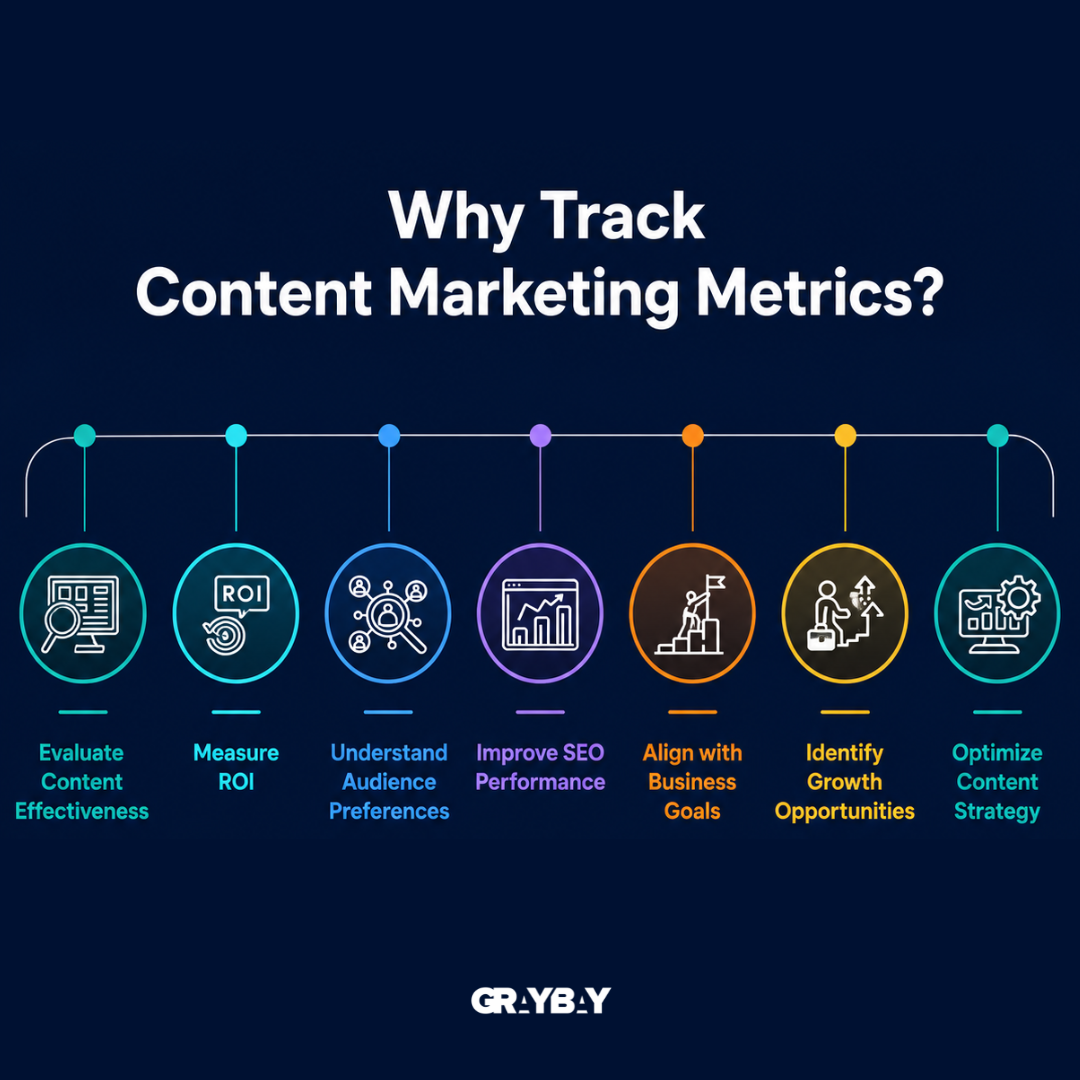
Website engagement also matters, especially on service pages, case studies, and contact pages, where decisions are made. Strong performance here indicates real intent, not just casual browsing.
You should also track conversions from search traffic, as this reflects how well your visibility aligns with client demand. Ultimately, strong content marketing for event companies is measured by its ability to consistently turn attention into real bookings.
Final Thoughts
In a competitive market like the Bay Area, event production companies don’t lose clients because of poor execution—they lose them because their value isn’t communicated clearly enough online. When your content is structured, consistent, and aligned with how clients actually think, it stops being “marketing” and starts becoming a steady source of inquiries.
The real shift happens when you move from random posting to a system that builds trust at every stage—awareness, consideration, and decision. That is what turns visibility into bookings and keeps your pipeline active instead of unpredictable.
If you're ready to turn your marketing into a reliable source of new business, partner with Gray Bay Marketing. Our AI SEO services, Google Ads campaign management services, and Facebook marketing services work together to help event production companies increase visibility, reach high-intent prospects, and convert more inquiries into booked events. Let's build a marketing strategy that keeps your pipeline full while you focus on delivering unforgettable experiences.
Connect with us today and start building a marketing system that works even when you’re busy executing events.
FAQs
What is content marketing for event companies?
It is a strategic approach where event production companies use blogs, social media, videos, and SEO-driven content to attract, educate, and convert potential clients into bookings instead of relying only on referrals.
Why is content important for event production businesses?
Because clients don’t book instantly—they research first. Strong content builds trust, shows your expertise, and helps clients feel confident about choosing your company for high-value events.
How does local SEO help event companies get more clients?
Local SEO helps your business appear when people search for event services in your area. This increases visibility for high-intent clients who are already looking to book a local provider.
What type of content works best for event production marketing?
Behind-the-scenes videos, case studies, event showcases, client testimonials, and educational posts work best because they build both emotional connection and trust in your execution.
How often should event companies post content?
Consistency matters more than frequency. Posting 2–4 high-quality pieces per week with a mix of visuals, stories, and educational content is usually enough to maintain visibility and engagement.
How long does it take for content marketing to show results?
Typically, you may start seeing traction in 2–3 months, but strong and consistent lead generation usually develops within 4–6 months of structured effort and SEO optimization.