
Content Gap Analysis: The Strategy to Rank Higher on Google
Google keeps evolving, and 2026 brings another round of changes that affect how every business shows up online. Search results look different, user expectations feel higher, and strong content matters more than ever. That’s why content gap analysis has become such a practical tool. It helps you understand what your pages cover well and where readers might still feel lost.
Gray Bay Marketing pays close attention to these shifts because local teams need strategies that make sense in the real world. As an SEO company in San Francisco, we see how focused improvements can lift visibility without adding extra noise. This guide walks through a clear process you can use to strengthen your content.
What Content Gap Analysis Means in 2026
The term once meant comparing keywords, but 2026 demands more. Today, teams must analyze structure, tone, examples, and depth. Because user expectations shift quickly, each page needs clarity and purpose. That’s why content gap analysis uncovers more than missing topics. It highlights weak explanations, thin sections, and outdated details. When you study top performers, you notice how they guide readers with confidence. This process reveals opportunities to upgrade your message without chasing trends. Teams that analyze meaning, not just words, create the strongest content. Although it requires discipline, the payoff feels worth the effort.
Why Google Raised the Standard for Helpful Content
Google pushes pages that show trust, depth, and practical value. Because AI now generates endless surface-level text, the bar for original insight rises. Teams using content gap analysis spot where competitors provide richer details. They also see how visuals, examples, and cleaner flow strengthen understanding. These markers help users decide quickly. They also tell Google that your page deserves visibility. When brands focus on clarity and purpose, rankings improve. Even small refinements shape stronger engagement patterns. Your job isn’t just to answer; your job is to guide.
How Search Intent Shapes Every Ranking Opportunity
Every search carries layered intent. Because buyers move between research and action fast, your content must track these shifts. Strong pages respond directly to purpose, not assumptions. Content gap analysis reveals how top competitors match intent with structure and examples. When you compare your layout with theirs, you see where readers may feel confused. You also notice missing angles or unanswered questions. This insight shapes planning and prevents wasted effort. Teams that respect intent consistently outperform those chasing keywords alone. Intent guides the flow and strengthens trust.
How to Do a Content Gap Analysis (2026 Edition)
A clear method keeps your review objective. You avoid confusion by working in steps that reveal patterns fast.
Identify the layered purpose behind the query, including needs before and after the click.
Capture top SERP formats to understand what Google showcases.
Compare each competitor’s structure with your own to reveal weak spots.
Note missing examples, visuals, or clarifying statements that guide readers.
Study the strongest explanations to understand what depth truly looks like.
When done well, how to do a content gap analysis becomes a blueprint for smarter decisions and clearer content.
Using Content Gap Analysis Tools That Actually Work
Modern tools speed up comparison and expose hidden details. Although human judgment still matters, automation helps you see patterns clearly.
Use semantic tools to spot missing entities that weaken authority.
Capture SERP variations with browser extensions for accurate review.
Pull competitor outlines to study the logic behind their flow.
Scan readability tools to uncover friction that slows understanding.
Analyze visual placement to see how top pages support scannability.
These content gap analysis tools help you evaluate faster while keeping insights grounded in real user needs.
Content Mapping Strategy for Stronger Results
Mapping builds structure before writing. Because readers skim, strong planning shapes better flow and stronger clarity.
Outline major sections that match intent and reduce confusion.
Place visuals where readers typically pause or struggle.
Add FAQs that answer predictable objections or follow-up questions.
Plan internal links that support deeper research across your site.
Identify moments where examples provide necessary human insight.
A thoughtful content mapping strategy ensures your page respects both logic and user expectations.
Content Optimization Techniques That Matter Now
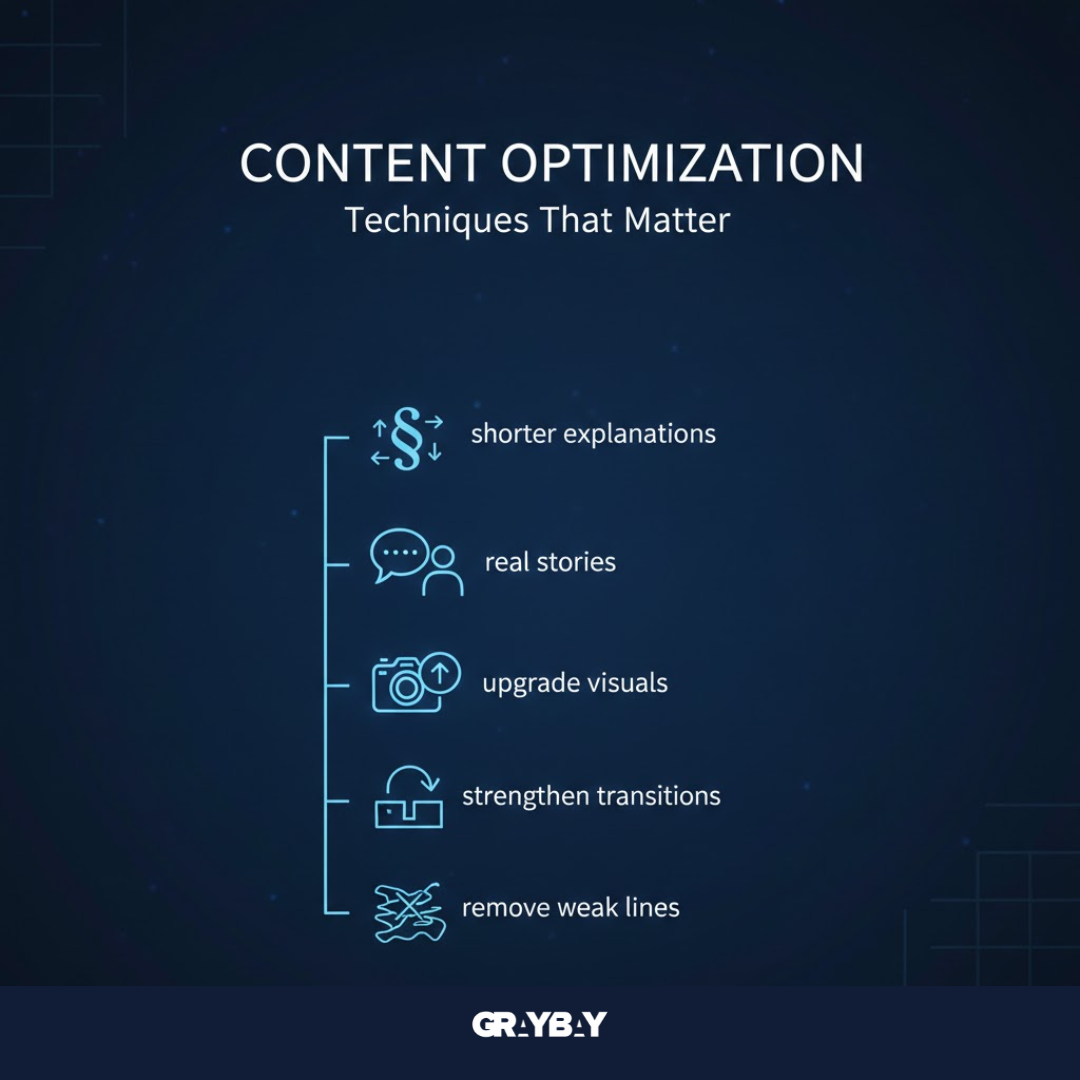
Refinement separates good content from great content. Optimization improves clarity, engagement, and trust without forcing jargon.
Replace dense paragraphs with shorter, purposeful explanations.
Add real stories to show practical relevance instead of theory.
Upgrade visuals to support complex ideas quickly.
Strengthen transitions so readers move smoothly across sections.
Remove weak lines that add noise rather than value.
These content optimization techniques pair perfectly with insights from content gap analysis and help readers stay engaged longer.
Repairing UX Gaps That Harm Engagement
Poor UX drives readers away faster than weak writing. Because Google watches engagement signals closely, usability matters more than ever.
Improve spacing so readers process ideas comfortably.
Reduce clutter that distracts from core explanations.
Add visual anchors that guide skimming without confusion.
Ensure mobile layouts feel intuitive, not cramped.
Use simple formatting to highlight key points cleanly.
UX fixes often emerge directly from content gap analysis, especially when competitor pages feel easier to use.
Strengthening E-E-A-T for Real Authority
Search favors content backed by real people with real knowledge. Because trust becomes more important each year, brands must show credibility.
Add author bios that highlight practical experience, not job titles.
Include local examples to demonstrate relevance to your market.
Use screenshots that prove your advice comes from lived practice.
Reference reputable sources when citing facts or processes.
Publish update notes to prove your content remains accurate.
Stronger E-E-A-T reinforces insights surfaced during content gap analysis and improves long-term rankings.
Optimizing for AI Overviews and Search Modules
AI-driven panels influence visibility more than ever. Because these modules prefer structured clarity, formatting matters.
Add short definitions that help modules extract clean answers.
Use bulleted steps where readers expect process guidance.
Insert concise summaries at the start of major sections.
Create comparison tables to support quick scanning.
Highlight solutions before background information.
These adjustments improve performance and support on-page SEO optimization without forcing awkward keyword use.
Refreshing Content With a 90-Day Cycle
Quarterly updates help your page stay strong as expectations shift. Because search changes quickly, updates feel lighter when done consistently.
Monitor engagement to spot confusing sections early.
Add new examples that reflect real trends or local insight.
Update visuals so the page stays fresh and helpful.
Strengthen weak paragraphs discovered through analytics.
Revisit tone to ensure it matches your brand voice.
This cycle pairs naturally with content gap analysis and keeps your page competitive.
Common Mistakes to Avoid During Gap Reviews
Gap reviews lose impact when teams skip the harder parts. Because clarity matters, you must avoid shortcuts.
Don’t copy competitor structures without improving their logic.
Avoid assuming more words equal more authority.
Never chase keywords without matching intent.
Don’t ignore visuals that clarify your main ideas.
Avoid publishing content that feels generic or hesitant.
Clear thinking leads to better outcomes, especially when content gap analysis guides the process.
How Gray Bay Marketing Helps Businesses Close Their Gaps
The strongest content strategies are backed by smart research and even smarter execution. Gray Bay Marketing combines LLM SEO agency expertise, Google Ads Management Services, Facebook marketing agency solutions, and comprehensive digital marketing services to help businesses strengthen their authority, reach more potential customers, and stay ahead of the competition.
Contact our team today, and let's identify the opportunities your competitors are missing.