
What Is Long Form Content? Tips on How to Make It Rank in SEO
At Gray Bay Marketing, we believe great storytelling is a long game – and a smart one. Businesses that take the time to create deep, meaningful resources usually see stronger visibility, more backlinks, and lasting audience trust. That’s why understanding what is long form content is essential to any serious SEO marketing strategy.
Long-form content isn’t just about word count. It’s about depth, clarity, and structure. In 2026, search engines and users both reward content that teaches something valuable, not just something long. So, if your goal is to build authority and visibility, this is where it starts.
What Is Long-Form Content (and How It Differs from Short-Form)
Before we explore optimization, let’s define what is long form content in clear terms. Long-form content typically refers to any piece that exceeds 2,000 words and fully explores a topic. It could be a blog post, whitepaper, guide, or even an in-depth case study.
Unlike short-form content, which skims the surface, long-form digs deep. It explains, compares, and supports its ideas with data. Readers can trust it to provide everything they need to understand a subject without clicking away.
Short-form content sparks curiosity. Long-form content satisfies it. This distinction is what makes long-form ideal for building topical authority and improving SEO. While both have a role, long-form guides and pillar pages form the foundation of a well-structured content ecosystem.
Benefits of Long-Form Content
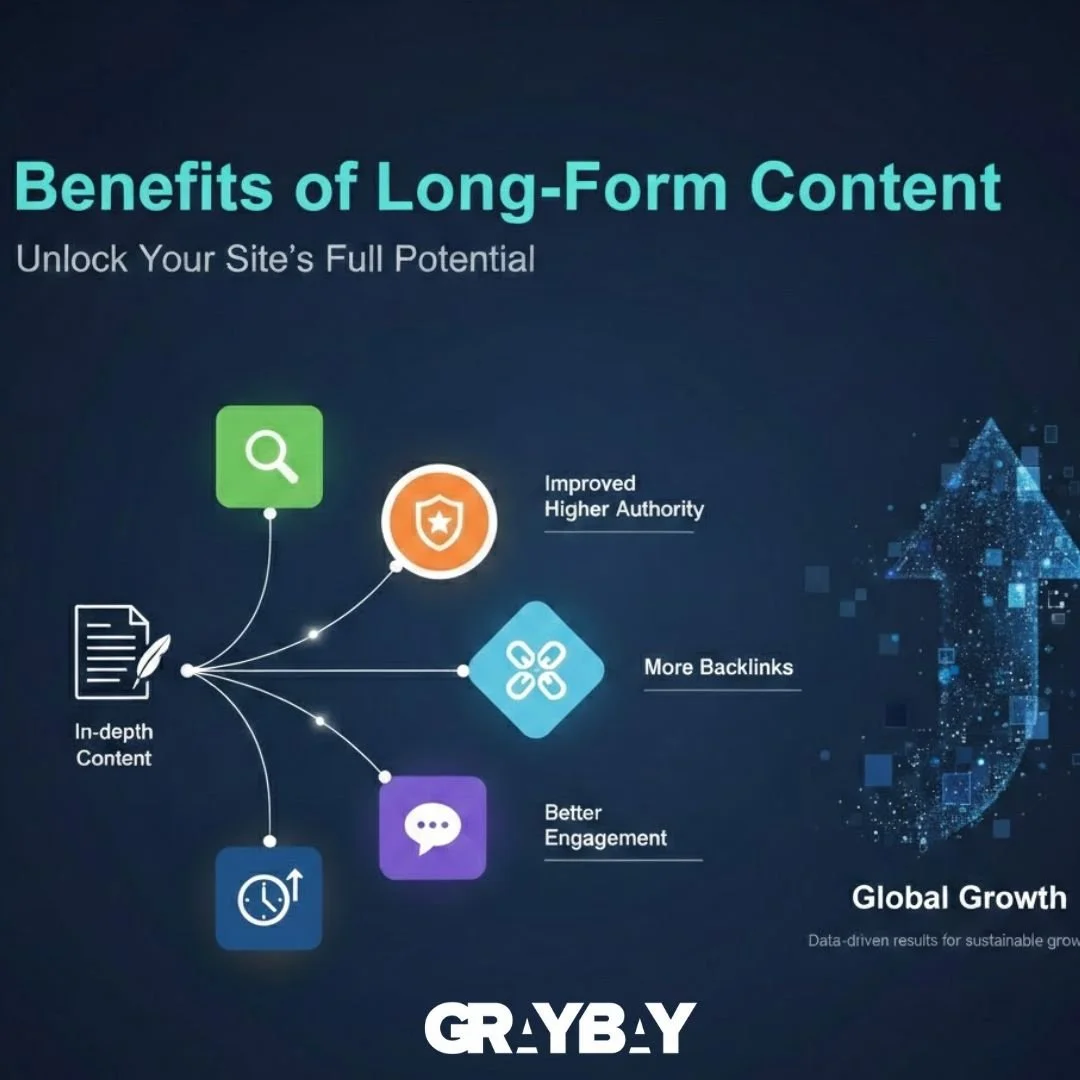
Creating in-depth material takes time – but the return is undeniable. The key benefits of long-form content go beyond simple ranking power. When done right, it helps your site perform better across several fronts:
Improved visibility: Comprehensive posts answer more user queries, helping you show up for multiple search terms.
Higher authority: Search engines recognize expertise, and readers perceive credibility when a topic is fully explored.
More backlinks: Data-backed articles naturally attract links from other writers and media outlets.
Better engagement: People stay longer when they feel guided and informed, signaling quality to search algorithms.
Longer lifespan: Evergreen long-form posts keep bringing in organic traffic for months or even years.
These benefits explain why the best-performing blogs across industries consistently include well-structured long-form pieces. But to enjoy those results, you need a framework that combines strategy with readability – and a clear understanding of what is long form content at its core.
How to Structure Long-Form Content for SEO Performance
Structure is where most long-form pieces fail. Even great writing can lose readers if it’s poorly formatted. The good news? Structuring what is long form content effectively isn’t complicated – it just takes discipline.
Use descriptive subheadings. They help readers skim and help crawlers understand your hierarchy.
Keep paragraphs short. Aim for 2–4 lines max. Long blocks of text scare people away.
Add visuals and data. Charts, infographics, and photos make complex ideas more digestible.
Maintain a logical flow. Start broad, then narrow down. Guide readers through a natural progression.
End sections with transitions. A smooth bridge between ideas keeps engagement strong.
This structure also makes your page “AI-friendly”. Search engines that use natural language models rely on clear sectioning to interpret context. So, a well-organized post not only reads better – it ranks better.
SEO Optimization Techniques That Make Long-Form Content Rank
The smartest creators know what is long form content only pays off if it’s properly optimized. Great writing alone doesn’t guarantee visibility. Technical precision matters, too.
Here’s how to fine-tune your long-form content for modern search engines:
Keyword placement: Include your main keyword naturally in the title, intro, and headings.
Internal linking: Connect related pages to strengthen site architecture.
External validation: Link to reputable sources – it builds trust and relevance.
Meta optimization: Write concise, engaging meta titles and descriptions.
Schema markup: Help Google understand your content’s structure and type.
Page speed: Compress images and clean code to improve load times.
Remember, optimization isn’t stuffing – it’s signaling. You’re showing search engines exactly what the page is about without overwhelming readers.
How to Make Long-Form Content Work on Social Media
Many brands assume long-form content belongs only on blogs. That’s a mistake. The secret to how to make long-form content work on social media lies in smart repurposing.
You can turn one in-depth article into dozens of smaller posts. Try these approaches:
Break it down. Turn key sections into short LinkedIn or Instagram carousels.
Quote your own stats. Share a data point or takeaway with a link to the full piece.
Create short videos. Summarize key insights as 30-second clips for Reels or TikTok.
Use storytelling threads. On X (formerly Twitter), turn your article into a narrative series.
Add interactive snippets. Polls or short quizzes drive engagement and bring attention back to your site.
Repurposing keeps your long-form work alive long after publication. Plus, consistent social sharing builds familiarity with your voice – a crucial factor for modern brand growth.
Your Brand’s Strategy for Long-Form Content
A smart brand’s strategy for long-form content doesn’t start with keywords. It starts with purpose. Every article, guide, or eBook should serve your audience while aligning with your brand’s larger goals.
Here’s what that looks like in practice:
Define your voice. Keep tone and language consistent across all content formats.
Focus on audience needs. Build resources that solve real problems or answer critical questions.
Plan thematic clusters. Develop long-form pieces that connect through shared topics.
Measure performance. Use analytics to see what drives engagement and conversions.
Iterate regularly. Refresh older posts with updated stats, visuals, and links.
A strong long-form strategy turns one-time readers into loyal fans. When every piece reflects your understanding of what is long form content and fits your brand identity, your content starts feeling less like marketing – and more like leadership.
Common Mistakes That Undermine Long-Form Content
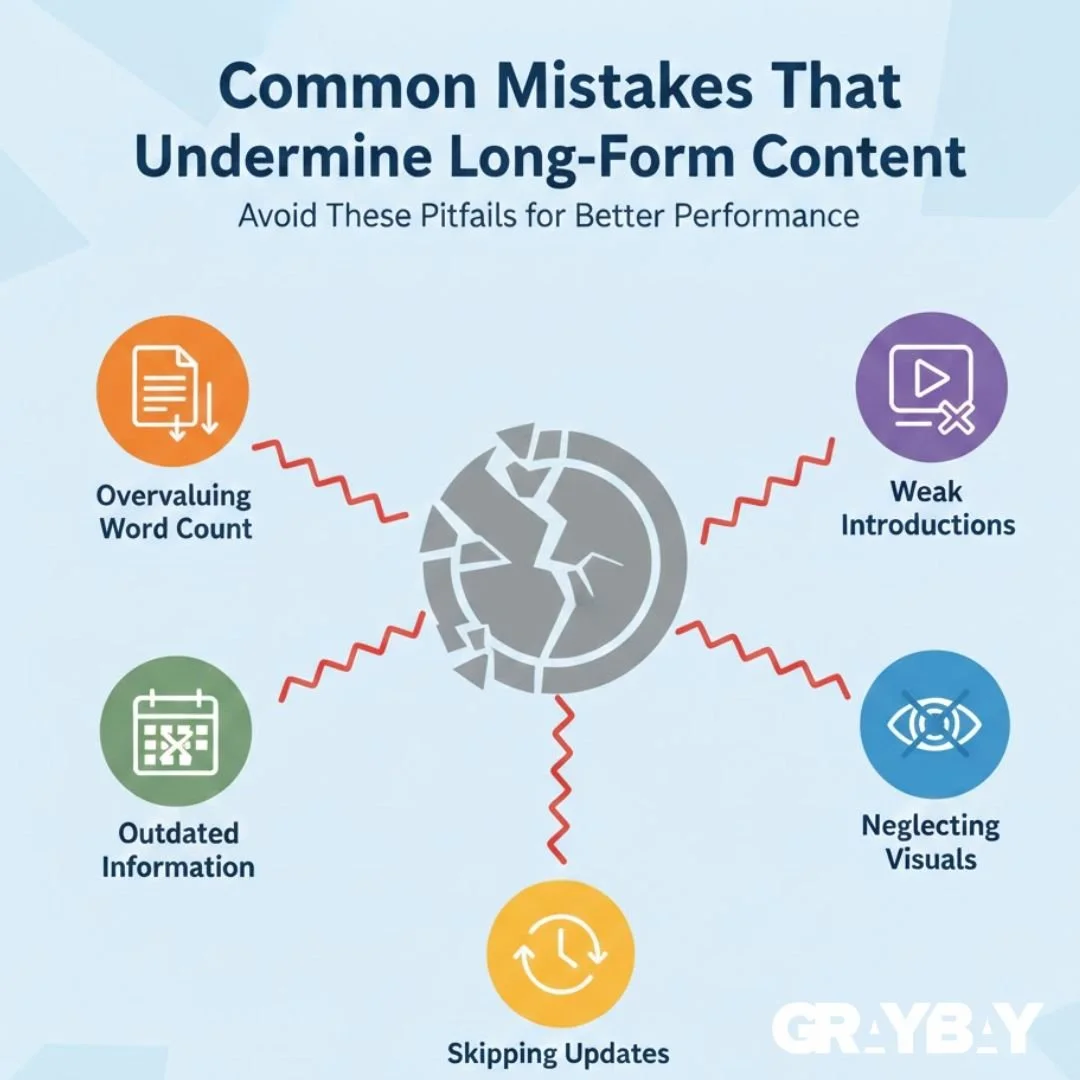
Even experienced marketers misstep. Understanding what is long form content also means knowing what not to do. Here are common errors that reduce performance:
Overvaluing word count. Long doesn’t mean better; relevance always wins.
Weak introductions. If your first lines don’t engage, readers won’t stay.
Outdated information. Nothing kills authority faster than old data.
Neglecting visuals. Walls of text feel overwhelming and outdated.
Skipping updates. SEO decay is real – refresh content quarterly to stay competitive.
Avoiding these mistakes helps you maintain trust, readability, and ranking power.
Turning Depth into Brand Power
The most effective content strategies do not operate in isolation. Gray Bay Marketing aligns long-form content with advanced LLM SEO Agency solutions, performance-focused Google Ads Management Services, and results-driven campaigns from our Facebook Marketing Agency team. This integrated approach helps businesses reach potential customers at every stage of the buying journey while making the most of every marketing dollar.