
How to Start Email Marketing Automation and Set It Up for Success
Email marketing automation is a game-changer for businesses looking to streamline communication and increase revenue. By setting up automated email campaigns, companies can save time, nurture leads, and boost conversions without manually sending every message.
This guide will help beginners understand the fundamentals of automation and take practical steps to implement an effective system. In the following sections, you’ll learn how to start email marketing automation, create a strategy that works, and ensure your campaigns are optimized for maximum engagement and ROI.
Table of Contents
Why Email Marketing Automation is Important?
3.1 Personalization at Scale
3.2 Consistent Communication
3.3 Time and Resource Efficiency
3.4 Data-Driven Decision Making
3.5 Lead Nurturing and Customer Retention
3.6 Scalability for Growth
3.7 Higher Conversion RatesHow to Start Email Marketing Automation?
4.1 Setting Goals
4.2 Building Your Email List
4.3 Choosing the Right Email Automation Tool
4.4 Planning Your Email Marketing Automation Strategy
4.5 Creating High-Converting Content
4.6 Testing and Optimization
4.7 Ensuring Deliverability and Compliance
What Is Email Marketing Automation?
Email marketing automation is a technology-driven marketing process that allows businesses to send targeted emails automatically based on predefined rules, user behavior, or scheduled time intervals.
It works by combining customer data, trigger events, and workflow logic to deliver relevant messages without manual intervention:
Data Collection – Information is gathered from signup forms, website interactions, purchase history, or engagement behavior.
Trigger Events – Specific actions activate email workflows. For example, subscribing to a list or abandoning a shopping cart.
Workflow Execution – The automation engine processes rules and sends emails accordingly.
The goal?
The main purpose of an email marketing automation strategy is to improve communication precision and operational efficiency. Instead of manually writing and sending emails, marketers design logical sequences once. The system then delivers messages at optimal moments, increasing engagement probability.
Why Email Marketing Automation is Important?
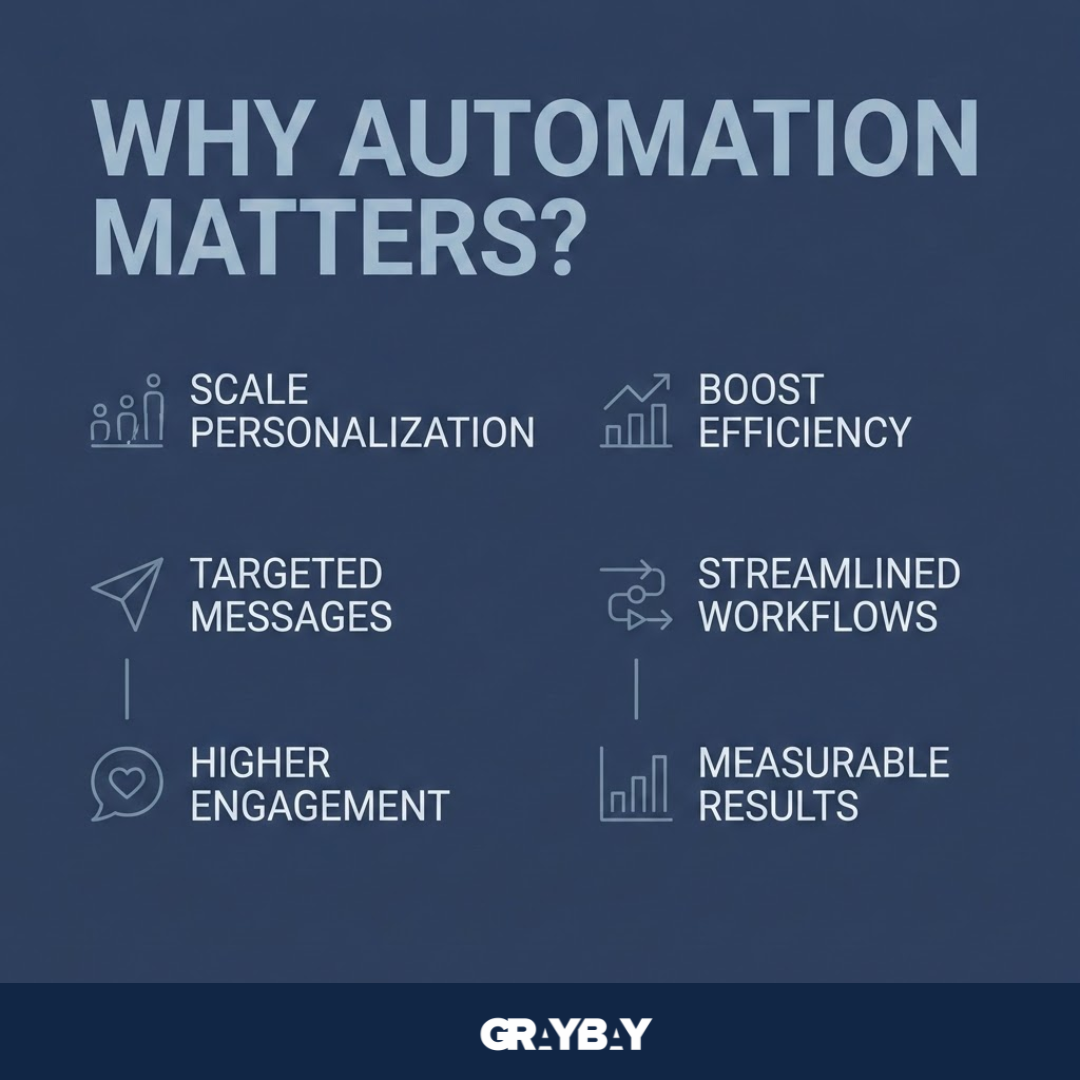
In today’s fast-paced digital world, businesses can’t rely on manual email campaigns to engage customers. Email automation has become essential because it streamlines communication, enhances personalization, and drives measurable results. Here are the main reasons why email marketing automation is crucial for modern businesses:
1. Personalization at Scale
One of the most powerful advantages of email marketing automation is the ability to personalize messages for thousands of subscribers simultaneously. Automated systems can insert names, recommend products based on behavior, and tailor content according to interests. Personalization increases open rates, click-through rates, and ultimately conversions. Without automation, delivering this level of customized communication manually would be impossible.
2. Consistent Communication
Email marketing automation ensures that subscribers receive timely and relevant messages without missing important touchpoints. Whether it’s a welcome series, a birthday offer, or a post-purchase follow-up, automation maintains a consistent flow of communication. This keeps your brand top-of-mind and builds trust with customers over time.
3. Time and Resource Efficiency
Manually sending emails to every segment of your audience is time-consuming and prone to errors. Automation reduces repetitive tasks, allowing marketing teams to focus on strategy, content creation, and campaign optimization. This efficiency is particularly valuable for small businesses with limited resources or large enterprises managing thousands of contacts.
4. Data-Driven Decision Making
Automated email platforms provide detailed analytics on every campaign, including open rates, click-through rates, conversions, and user behavior. This data allows marketers to refine strategies, test subject lines, and segment audiences more effectively. Automation turns every email into an actionable insight, helping businesses improve ROI continuously.
5. Lead Nurturing and Customer Retention
Automation helps guide prospects through the sales funnel by delivering targeted content based on where they are in their journey. For example, a user who downloads a free ebook can automatically receive educational emails that build trust and prepare them for a purchase. Similarly, re-engagement campaigns can remind inactive customers to return, increasing loyalty and lifetime value.
6. Scalability for Growth
As your business grows, manual email campaigns quickly become unmanageable. Automation allows you to scale without increasing workload. You can manage thousands of subscribers, multiple workflows, and complex campaigns without adding extra staff, ensuring that your marketing efforts grow alongside your business.
7. Higher Conversion Rates
Because automated emails are timely, relevant, and personalized, they tend to outperform standard broadcast emails. Abandoned cart reminders, for instance, recover potentially lost revenue automatically. Similarly, post-purchase follow-ups encourage repeat sales. By automating the right messages, businesses can significantly increase conversions and drive consistent revenue growth.
In summary, email marketing automation isn’t just a convenience—it’s a strategic necessity. Businesses that embrace automation can save time, nurture leads more effectively, and generate higher revenue without increasing manual effort.
Read more on: Trends in Digital Marketing: 14 Key Insights for 2026
How to Start Email Marketing Automation?
Here are the essential steps on how to start email marketing automation:
1. Setting Goals
Before you dive into automation, define your objectives clearly.
Start by asking yourself what you want to achieve through email marketing. Some businesses focus on increasing sales, while others want to build stronger customer relationships or grow brand awareness. For example, if your main aim is to boost conversions, you may plan automated product recommendation emails or abandoned cart reminders. On the other hand, if engagement matters more, you can focus on welcome sequences and educational content.
Next, break your bigger goal into smaller, measurable targets. Instead of saying you want “more sales,” decide how many new customers you want to attract each month or how much revenue you expect from automated campaigns.
At the same time, consider your audience’s needs and behaviour. When you align your email marketing automation goals with customer expectations, your campaigns naturally start performing better. In short, clear goals work like a roadmap that keeps your email strategy on track.
2. Building Your Email List
A strong email marketing automation strategy always begins with a quality email list because the success of your campaigns depends on reaching people who actually want to hear from you. Avoid adding random contacts since that usually lowers engagement and damages long-term performance.
Here is how you can build your email list:
Placing signup forms on your website helps capture interested visitors. Place them on the homepage, blog pages, footer, and checkout sections. Keep the form simple by asking only for name and email address.
Leveraging lead magnets like ebooks, discounts, or free trials attracts users by offering value in return for their email address. Choose offers that solve audience problems and match their interests.
Using social media campaigns targeting specific audiences can promote your signup page. Share subscription benefits and run small targeted promotions to bring more quality subscribers into your list.
Always obtain explicit consent from subscribers to comply with GDPR and CAN-SPAM regulations. A well-segmented and permission-based list improves deliverability, increases engagement, and ensures your automation efforts reach the right people at the right time.
3. Choosing the Right Email Automation Tool
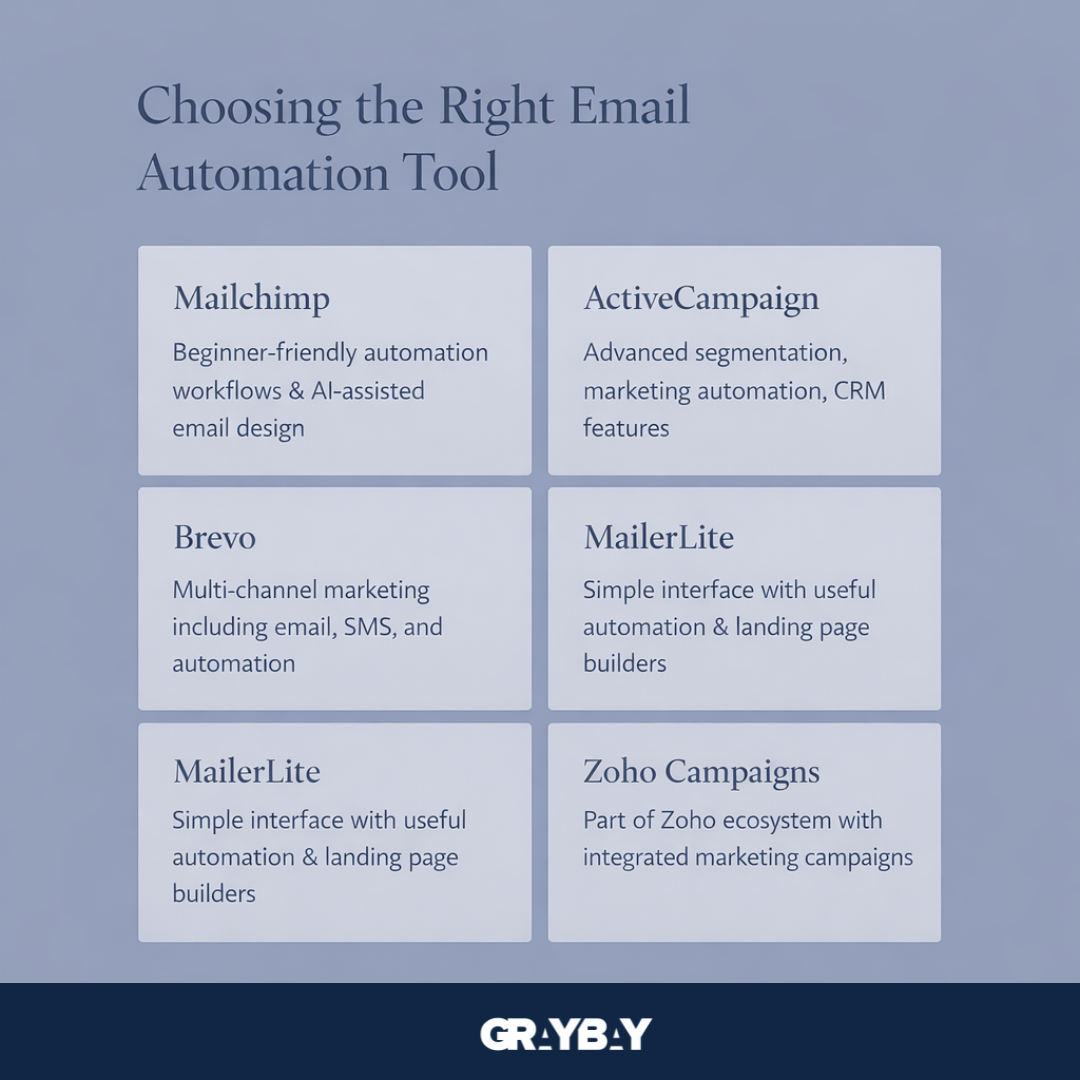
Selecting the right email marketing automation tool is an important step because it directly affects how smoothly your campaigns run. A good tool should help you create, schedule, and track automated emails without technical difficulty.
Some popular email marketing automation tools you can consider are:
Mailchimp– Known for beginner-friendly automation workflows and AI-assisted email design.
ActiveCampaign– Offers advanced segmentation, marketing automation, and customer relationship management features.
Brevo– Provides multi-channel marketing, including email, SMS, and automation.
MailerLite– Simple interface with useful automation and landing page builders.
Zoho Campaigns – Part of the Zoho business ecosystem and supports integrated marketing campaigns.
Choosing among these tools depends on your budget, technical comfort, and marketing goals.
4. Planning Your Email Marketing Automation Strategy
Without a clear strategy, automated emails may feel random and fail to achieve marketing goals. Start by understanding your audience, defining communication stages, and deciding what type of content you want to send through automation.
Make sure to follow these steps:
Segment your audience to improve message relevance. Group subscribers based on behaviour, interests, or purchase history.
Create email workflows that guide subscribers through different stages of the customer journey. Common workflows include welcome sequences, abandoned cart reminders, and post-purchase follow-ups.
Focus on valuable content rather than constant promotion. Share helpful information, product tips, or special offers that match subscribers' needs.
5. Creating High-Converting Content
Content drives engagement, so every email must be clear, actionable, and visually appealing. These are the most important elements you should focus on:
Subject lines: Keep them short, catchy, and personalized
Body content: Focus on clarity, actionable steps, and visual hierarchy
CTA (Call to Action): Make it specific, strong, and easy to click
Personalization & segmentation: Include subscriber names, behaviors, and preferences
This approach keeps your audience engaged and drives conversions. Testing different versions of content and subject lines can help optimize results further.
Read more on: Conversion Rate Optimization Guide: 8 Ways To Get Started
6. Testing and Optimization
Regular testing is essential to maximize automation performance. Use A/B testing to experiment with subject lines, email content, and timing.
Monitor key metrics such as open rates, click-through rates, and conversion rates to identify trends and improvement areas. Adjust workflows based on insights, and keep iterating to improve campaign outcomes.
Continuous optimization ensures your email marketing automation strategy remains effective as your audience evolves, helping you achieve higher ROI over time.
7. Ensuring Deliverability and Compliance
Maintaining deliverability is critical for success. Avoid spam triggers by properly authenticating senders with SPF and DKIM, and regularly clean your list to remove inactive subscribers.
By keeping your list healthy, respecting subscriber preferences, and following industry guidelines, you ensure that your automated emails reach inboxes consistently, protecting your brand reputation while maximizing engagement.
8. Scaling Your Email Marketing Automation Efforts
Integrate email marketing automation with CRM and sales tools to unify data and streamline campaigns. Add advanced triggers based on user behavior, product recommendations, or engagement patterns.
Explore multichannel automation, combining email with SMS, push notifications, and social retargeting to reach audiences across platforms.
Scaling gradually ensures you can manage complexity while maintaining personalization and high performance across all campaigns.
Conclusion
Starting email marketing automation requires careful planning, goal-setting, and a focus on high-quality content. Begin small, implement workflows thoughtfully, and continually test and optimize your campaigns.
Over time, automation saves time, nurtures leads, and drives conversions consistently. By following these steps, you’ll create a robust email marketing automation strategy that grows with your business and delivers measurable results.
Take the next step with Gray Bay Marketing and build an automation strategy designed for long-term growth. As a paid advertising agency, we combine email automation with AI SEO services, Google Ads Management Services, Facebook marketing services, and other digital marketing solutions to help businesses attract the right audience, generate quality leads, and turn more opportunities into loyal customers.
Connect with our team today and transform your email marketing performance with reliable, results-driven solutions.
FAQs
What is email marketing automation?
Email marketing automation is the process of sending pre-scheduled or behavior-triggered emails to subscribers. It allows businesses to personalize messages, nurture leads, and save time while increasing engagement and conversion rates.
How do I start email marketing automation?
Start by defining your goals, building a segmented email list, and selecting an automation tool. Then, create workflows with triggers and sequences, develop content, and test campaigns. Continuous optimization ensures long-term success.
Which email marketing automation tool is best for small businesses?
Mailchimp and ActiveCampaign are popular for small businesses. Mailchimp is beginner-friendly, while ActiveCampaign offers advanced automation features. Choose based on budget, integrations, and ease of use.
How can I increase open rates in automated emails?
Focus on short, catchy, and personalized subject lines. Segment your audience, time emails strategically, and ensure content is relevant. Regular A/B testing helps identify the best-performing variations.
Is email marketing automation compliant with GDPR and CAN-SPAM?
Yes, if you obtain explicit consent from subscribers, include clear unsubscribe options, and authenticate emails properly. Maintaining a clean list and following regulations ensures compliance and high deliverability.