
Conversion Rate Optimization Guide: 8 Ways To Get Started
Most businesses want a simpler way to turn website visitors into actual customers. Traffic helps, of course, but conversions are what keep the lights on. This conversion rate optimization guide focuses on small, practical improvements that make your site easier to use and more effective at helping people take action.
At Gray Bay Marketing, we see this play out all the time with businesses that have plenty of interest but need clearer paths to booking, ordering, or reaching out. Through our work in website design, we’ve learned that even a few thoughtful adjustments can make a noticeable difference in how people interact with a site. That experience shaped this conversion rate optimization guide and helped us narrow the steps to what actually works without adding extra complexity.
What Is Conversion Rate Optimization?
Conversion rate optimization (CRO) is the practice of increasing the percentage of visitors who take a desired action, whether that action is booking a table, purchasing online, or filling out a contact form. This conversion rate optimization guide treats CRO as a long-term discipline rather than a one-off tactic. Because attention spans remain short, a more efficient website saves money while increasing revenue. When your site makes the next step clear and easy, conversions rise naturally.
Start With Research: Understand Your Current Performance
Good research sets up every improvement that follows. This conversion rate optimization guide recommends beginning with data because your users offer clues with every click, scroll, and exit. GA4 shows which pages pull the most traffic, how long users stay, and where drop-offs occur. These insights highlight high-impact problems you might never notice on your own.
User research adds another layer of truth. Brief surveys, feedback prompts, or post-purchase questions reveal motivations behind the behavior you see in analytics. These details improve your decisions and help you build pages that match user needs. To make research actionable, focus on three specific areas:
Traffic patterns: Understand which channels send qualified visitors. This helps you prioritize pages that matter most.
On-site behavior: Identify friction points such as confusing layout or unclear CTAs. These issues often block conversions.
Device performance: Compare mobile and desktop behavior. This matters because many businesses now see a majority of traffic from mobile devices.
Each insight directs your next move and prevents wasted effort.
Conversion Rate Optimization Techniques That Build Momentum
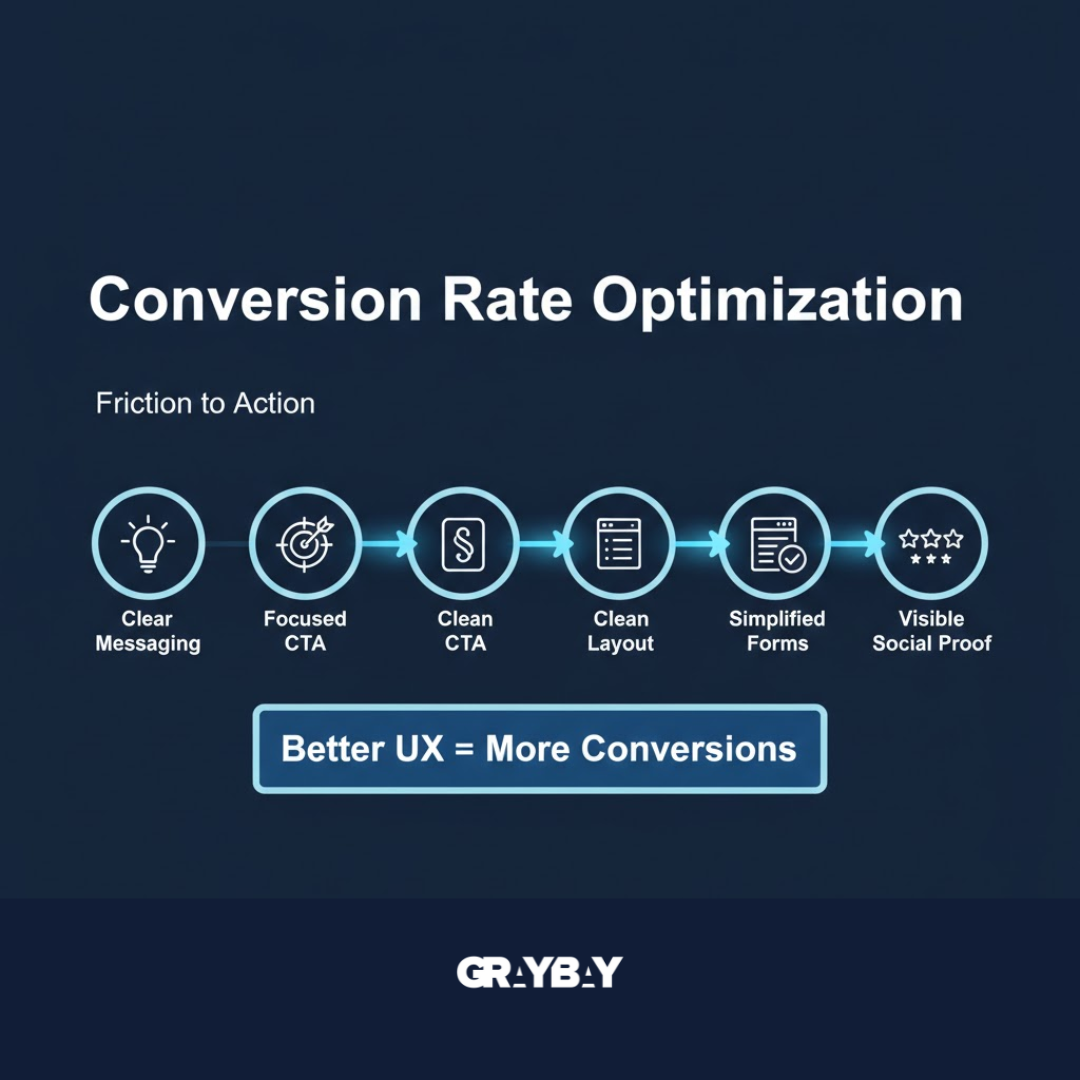
Applying conversion rate optimization techniques gives you quick wins while creating a better user experience. These techniques address the areas where users often struggle or hesitate. When your page becomes clearer and easier to use, people feel more confident taking action. To understand how these techniques work, consider the most common friction points:
Clarity in messaging: A strong headline tells visitors exactly what you offer without forcing them to decode marketing language. Clear text reduces confusion.
Focused CTAs: One primary action above the fold guides the user. Multiple competing buttons create doubt and reduce conversions.
Clean layout: Short paragraphs and readable spacing help users move through the page faster. This supports natural decision-making.
Simplified forms: Removing unnecessary fields cuts resistance and increases completion rates. People act more often when the process feels easy.
Visible social proof: Testimonials and ratings build trust. Users feel safer choosing a business that others recommend.
Each tactic improves a different part of the Each tactic improves a different part of the experience. This conversion rate optimization guide shows how these adjustments work together to turn a busy page into a helpful one, which strengthens conversions across your site.
Conversion Optimization Strategies Based on User Journeys
An effective conversion rate optimization strategy focuses on the entire journey rather than a single page. People arrive with different intentions, so a one-size-fits-all approach rarely works. This conversion rate optimization guide encourages mapping actions to stages of awareness because it creates alignment between user expectations and website flow.
Start by understanding the four typical stages:
Discovery: Users want clarity. Offer helpful information that builds trust without asking for much.
Evaluation: Users compare options. Provide proof, reviews, and key benefits so the value becomes undeniable.
Decision: Users need reassurance. Reduce friction with clear pricing, strong CTAs, and transparent next steps.
Action: Users want speed. Make checkout or booking simple and remove distractions.
By matching each stage with the right message and action, you create a seamless journey. This structure eliminates scattershot decisions. It also supports long-term growth because your strategy evolves with user behavior rather than static assumptions.
Run Smart A/B Tests to Validate Your Ideas
Testing confirms what works and prevents costly mistakes. This conversion rate optimization guide recommends A/B testing whenever possible because real behavior beats opinions. Start with a hypothesis that explains why your variation should perform better. Then test one change at a time so the results stay clean.
Run each test long enough to reach significance. This ensures your findings reflect true behavior rather than random spikes. A/B testing also reveals changes that work better than expected, such as updated CTA phrasing or reorganized content flow. When you test consistently, you build a library of insights that guide future improvements. Testing turns your site into a living system rather than a static brochure.
CRO Tools That Reveal What Users Really Do
Modern CRO tools help you see what analytics alone can’t reveal. They offer detailed views of how people interact with your website and where they encounter friction. This conversion rate optimization guide includes tools because they shorten the distance between confusion and clarity. When you understand what users see, you can fix issues before they cost you sales.
Different types of tools play different roles:
Heatmaps and recordings: These tools show where users click, scroll, pause, or get stuck. They highlight patterns you may overlook.
On-site surveys: Quick feedback prompts capture user sentiment while the experience remains fresh. The responses reveal obstacles hidden in the design.
Experimentation platforms: These give you an easy way to run A/B tests without heavy development. You can test variations quickly and safely.
Analytics platforms: GA4 and similar tools help you measure the impact of your changes across segments and devices.
Using a few tools together creates a complete view of your website’s performance. Tools amplify your intuition and strengthen your decisions.
Fix Mobile First for Fast Wins
Mobile users dominate many industries, and their expectations remain high. This conversion rate optimization guide highlights mobile-first improvements because they often deliver the fastest results. Users browse while multitasking, which makes clarity, speed, and simplicity crucial. When small mobile obstacles pile up, people leave before engaging.
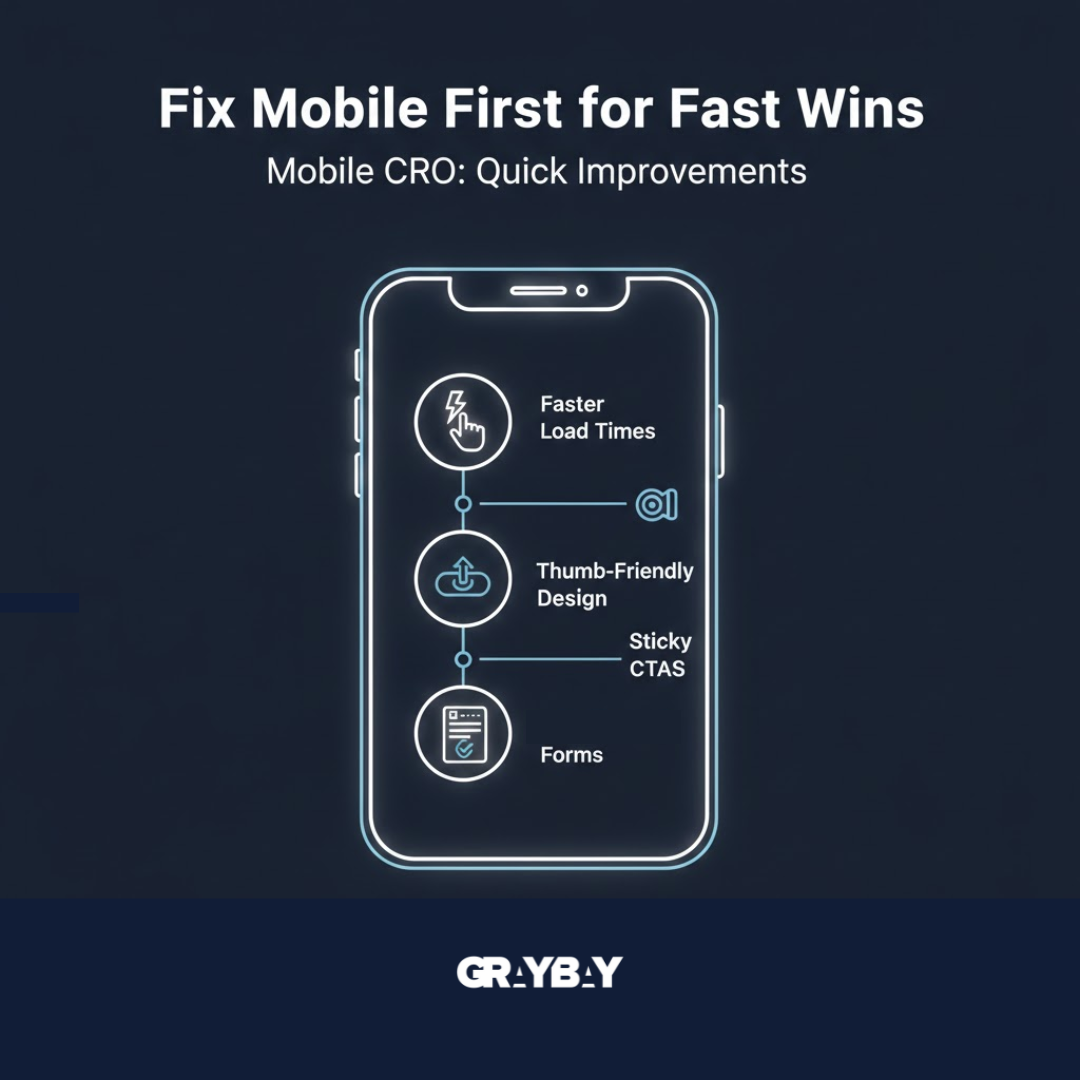
Focus on improvements that address the issues most mobile visitors face:
Faster load times: Compress images to cut delays. Faster pages reduce bounce rates and improve engagement.
Thumb-friendly design: Larger tap targets prevent accidental clicks and reduce frustration during key actions.
Sticky CTAs: Persistent buttons help users act without scrolling back up.
Streamlined forms: Shorter forms increase submissions, especially when users have limited time.
Each change creates a smoother path and reduces cognitive burden. Mobile-friendly design also improves accessibility and boosts trust.
The CRO Flywheel for Ongoing Growth
CRO becomes powerful when it turns into an ongoing cycle. This conversion rate optimization guide includes a flywheel approach because momentum comes from repeated learning. As you research, optimize, test, and refine, your website becomes sharper and more persuasive. Each update informs the next, and each test creates insights that compound over time. With a flywheel in motion, your site evolves as customer behavior shifts.
Why Gray Bay Marketing Is Built for CRO Success
Running a business means balancing growth with the realities of limited time and resources. At Gray Bay Marketing, we shape our work around that balance. This conversion rate optimization guide reflects the same approach we use with our clients: steady improvements, clear communication, and decisions based on how people actually behave online.
We focus on changes that make your day smoother, whether that means more online orders, easier booking flows, or pages that simply help visitors understand your offer faster. When you partner with us, you get an LLM SEO agency team that cares about building something that works for real customers and real businesses, not just in theory. If you’re ready to strengthen how your site converts, we’re here to help you move forward.