
Conversion Rate Optimization for Local Landing Pages: A Complete Guide

If people are landing on your local pages but not calling, booking, or buying, that is a red flag. You might be showing up in search, but if visitors feel confused or unsure, they will bounce out fast. That means lost leads and missed chances you cannot afford.
This is exactly why conversion rate optimization for local landing pages matters so much.
It helps you fix what is broken, clean up what is confusing, and guide visitors toward calling, booking, or walking through your door.
In this blog, you will learn how to build high-performing local pages, what elements actually move visitors to act, and how to avoid costly mistakes that hold conversions back.
How to Improve Conversions on Local Pages With CRO?
Here are the steps to get started with conversion rate optimization for local landing pages:
1. Understanding Local Landing Pages vs Generic Landing Pages
Before you try to improve results, step back and understand what kind of page you are dealing with. Local landing pages are built for people who are ready to take action nearby, while generic landing pages are meant for a wider audience that is still shopping around. Treating both the same way is one of the biggest reasons conversions fall flat.
A local landing page speaks directly to someone searching in a specific city. It reassures them fast, shows local proof, and makes the next step obvious. A generic page, on the other hand, focuses more on explaining services at a high level and building brand awareness.
These are the key differences that affect conversion:
Search intent – Local landing pages target high intent, action ready users who are close to making a decision, while generic landing pages usually serve informational or mixed intent audiences.
Location focus – Local landing pages highlight specific cities or service areas, making offers clearer, while generic landing pages tend to use broad or nationwide messaging.
Trust building – Local landing pages often include local reviews, customer proof, and community signals, whereas generic pages rely more on overall brand credibility.
Main goal – Local landing pages are designed to drive calls, store visits, or bookings, while generic landing pages usually focus on education, product awareness, or general interest.
2. Incorporating Page Structure Behind CRO for Local SEO
Once you understand how local pages work, the next step is structuring them in a way that feels natural and easy to follow. A strong structure guides visitors without overwhelming them and keeps things moving toward action.
The top of the page should immediately confirm two things: the service and the location. This reassures visitors that they are in the right place. Right after that, trust signals like reviews, ratings, or local affiliations help lower doubt and build confidence.
As visitors scroll, the service explanation should stay clear and focused on local needs instead of broad claims. This is where many pages go wrong by adding too much fluff. Keep it simple and show how the service solves a real local problem.
Toward the end, a strong call to action ties everything together. Whether it is a phone call, form submission, or map click, the action should feel like the natural next step rather than a hard sell.
Explore Best Site Structure for SEO: How to Create a Solid Foundation and learn more about building local pages that convert.
3. Using Reviews and Rating Schema
When people land on a local page, they look for reassurance right away.
Reviews do that job faster than any sales copy. This is where conversion rate optimization for local landing pages gets a real boost. Reviews help visitors feel safe enough to take the next step.
Adding a rating schema takes it one step further. It helps search engines understand your reviews and can show star ratings in search results. That visibility alone can increase clicks and help enhance conversions on local pages before users even arrive.
4. Social Proof and Credibility Modules
Reviews are powerful, but they work best when supported by other trust signals. Social proof fills in the gaps and removes doubt. This is a core part of CRO because local visitors want proof that others nearby already trust you.
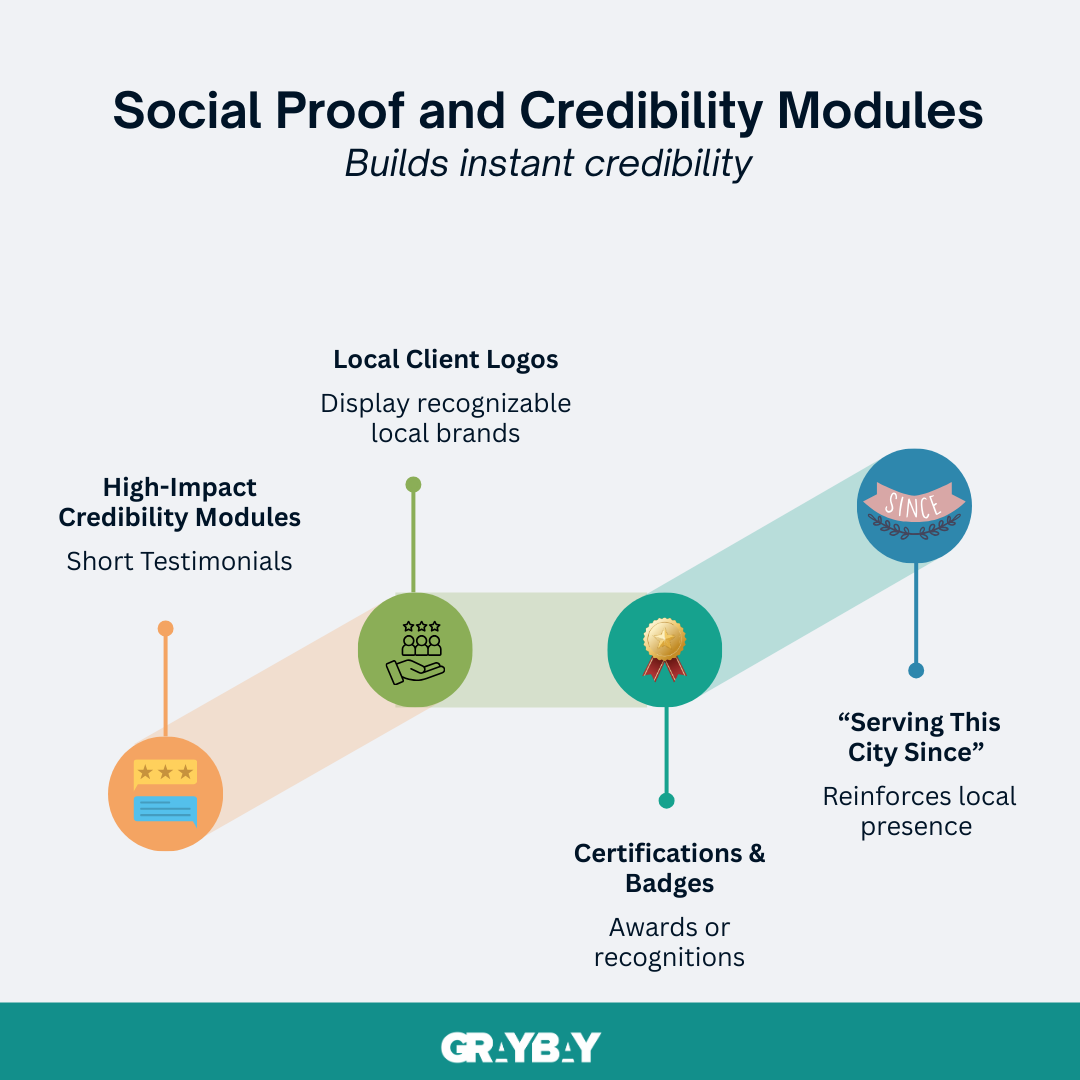
Effective credibility modules include short testimonials, local client logos, certifications, or “serving this city since” statements. When these elements appear naturally within the page, they feel helpful rather than pushy.
5. Embedding Maps and Location Features
Local visitors do not want to guess where you are. They want clarity, fast. Embedding maps and location features helps close that gap and supports conversion rate optimization for local landing pages. A simple Google Map embed, clear address, and clickable directions reduce friction. This is especially helpful for users searching on mobile who are ready to visit or call.
Bonus tips for maximum impact:
Use the right anchor text when linking to your maps or other pages, like “SEO services in San Francisco”—it helps both users and search engines understand location relevance.
Include multiple ways to find your location, such as embedded maps, written address, and a clickable phone number.
Keep the map above the fold on longer local landing pages, so visitors don’t have to scroll to find it.
If you serve multiple locations, create a map for each city page instead of one generic map.
When done correctly, embedding maps and location features doesn’t just show your location—it makes visitors feel confident, lowers hesitation, and reduces hesitation without adding extra fluff.
6. Calls-to-Action for Local Conversions
Calls-to-action make or break local pages. Generic CTAs often fail because they do not match local intent. For CRO for Local SEO, CTAs should feel immediate and relevant.
Instead of vague buttons, local CTAs work better when they:
Reference location or service
Match what the visitor is ready to do
Appear naturally throughout the page
You can use CTAs like “Call Our Austin Team” or “Get a Local Quote.” This way, visitors will know exactly what happens next, which reduces hesitation.
7. Mobile-First Design for Local Pages
Most local searches happen on mobile, which means mobile design is not optional. If a page loads slowly or feels clunky on a phone, conversion rate optimization for local landing pages falls apart fast.
Tips for Mobile-First Local Pages
Keep it clean and simple: Short sections, clear headings, and large tap-friendly buttons.
Fast loading is key: Compress images, use lazy loading, and reduce unnecessary scripts.
Prioritize CTAs: Put call buttons, directions, and contact forms front and center.
Test different devices: Make sure the page looks great on iPhones, Androids, and tablets.
Use local cues: Include your city name, clickable maps, and local reviews above the fold.
8. Avoiding Common Local Landing Page Mistakes
Many businesses struggle because they repeat the same errors. These common local landing page mistakes quietly kill conversions even when traffic looks good:
No clear location mentioned – When the landing page does not clearly show the service area or city, visitors may feel unsure and leave without taking action.
Generic content reuse – Using the same content across multiple pages can make the experience feel impersonal and reduce engagement.
Weak CTAs – Without clear calls to action, users may not understand what step to take next, which lowers conversion chances.
Missing trust signals – Lack of reviews, testimonials, or proof of credibility can reduce visitor confidence in the service.
Poor mobile experience – Pages that are not mobile-friendly often lead to higher bounce rates and lost potential customers.
These common local landing page mistakes often go unnoticed but can quietly drain conversions even when traffic appears strong.
9. Linking Local Listings to Local Pages
Local listings and local pages should work together, not separately. When they are properly connected, conversion rate optimization for local landing pages becomes much easier.
Google Business Profile, directories, and citations should all link directly to the matching local page. This reinforces relevance and helps users land exactly where they expect.
10. Testing and Analytics for CRO
Guessing rarely works when it comes to conversion rate optimization for local landing pages. You can make all the changes you want, but unless you test and track results, you won’t know what actually drives conversions. That’s why the following structured approach to testing and analytics is critical:
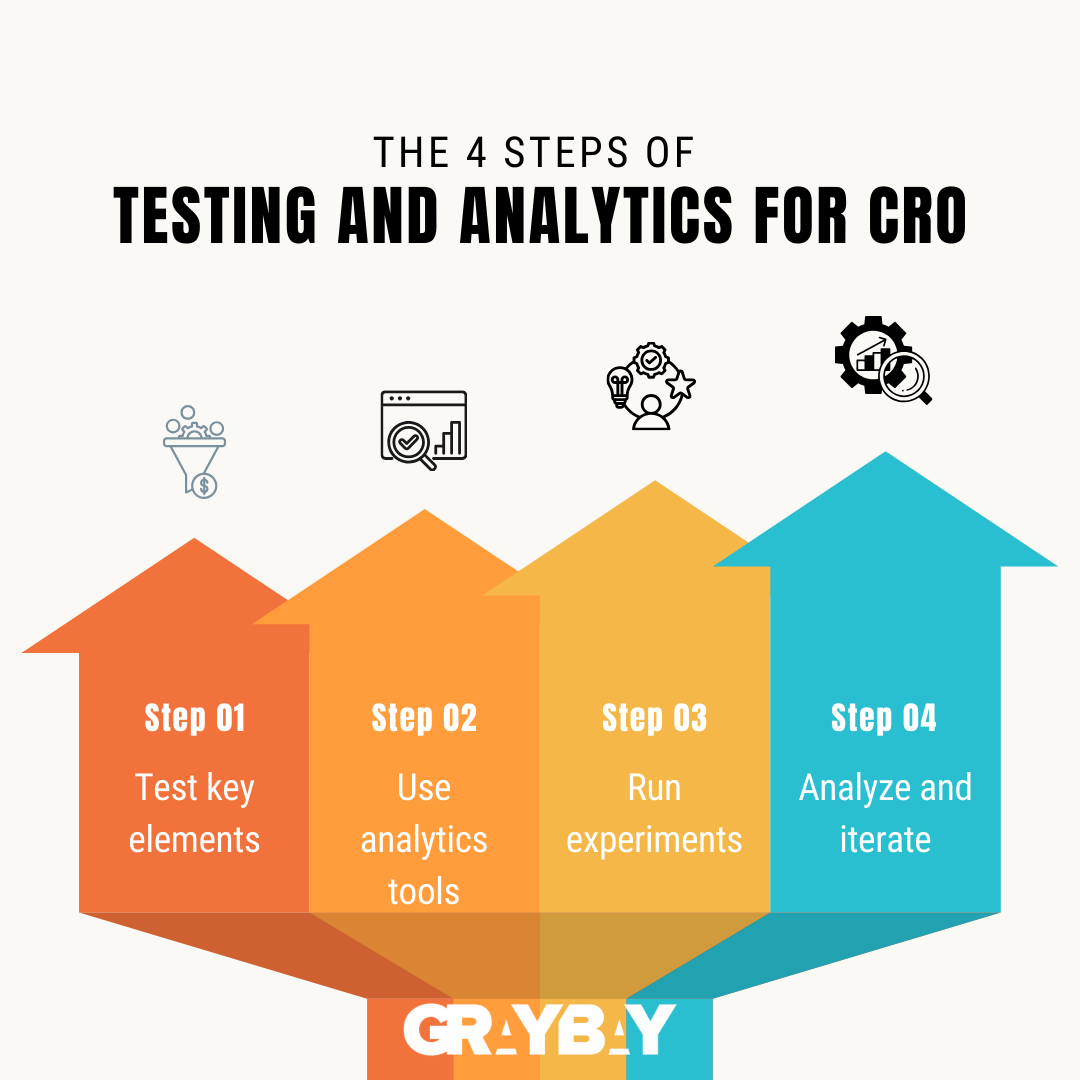
Test key elements: Experiment with headlines, CTA text and placement, page layout, and trust signals like reviews, badges, or testimonials to see what encourages visitors to act.
Use analytics tools: Tools like Google Analytics track conversions and drop-offs, while Hotjar or Crazy Egg show heatmaps and scroll behavior to uncover user pain points.
Run experiments: Conduct A/B or multivariate tests to compare different variations, ensuring you measure real results instead of assumptions.
Analyze and iterate: Use insights from tests to refine pages, repeat regularly, and steadily improve both engagement and conversions.
By combining testing, analytics, and iteration, you improve CRO and boost conversions, engagement, and overall page performance.
Explore Best SEO Tools 2026: 30 Smarter, Faster, AI-Ready Picks and learn more about tracking and improving local page performance.
Final Words
At the end of the day, showing up in local search is only half the job. What really matters is what happens after someone lands on your page. Conversion rate optimization for local landing pages helps turn traffic into real calls, bookings, and sales instead of wasted clicks. When your pages feel local, trustworthy, and easy to act on, visitors stop hesitating and start moving forward.
By fixing structure issues, adding strong trust signals, and focusing on user intent, businesses can build local pages that actually work. Done right, conversion rate optimizationdoes not just improve numbers; it creates a smoother experience that benefits both users and your bottom line.
Ready to Turn Local Traffic Into Real Leads?
Need expert help optimizing your local landing pages? Gray Bay Marketing specializes in building pages designed for maximum local conversions. As an experienced LLM SEO agency, we help businesses strengthen their presence in both local search results and AI-driven discovery platforms.
Contact us today to improve your local conversions and dominate your city’s search results.
FAQs
What is conversion rate optimization for local landing pages?
It is the process of improving your local pages so that more visitors take action, like calling, booking, or visiting your business. It focuses on local intent, trust signals, and user-friendly design.
Why is CRO for local landing pages important?
It ensures that the traffic coming to your local pages actually turns into leads or sales. Without it, visitors may leave before contacting you, wasting potential business.
How can I start conversion rate optimization for local landing pages?
Begin by analyzing your local page structure, CTAs, reviews, and mobile experience. Small adjustments, testing, and analytics help improve conversions steadily.
What elements affect CRO for local landing pages?
Headlines, call-to-actions, reviews, local proof, maps, and mobile design all play a major role in driving local visitors to take action.
Can conversion rate optimization for local landing pages increase ROI?
Yes! Optimizing local pages boosts calls, bookings, and visits, which increases revenue without necessarily increasing ad spend or traffic.