
On-Page SEO Checklist: 20 Steps to Rank #1 in 2026

Search algorithms keep changing, but the best websites still get one thing right – the basics. In 2026, on-page optimization is all about clarity, intent, and making your site easy to understand and even easier to love. At Gray Bay Marketing, we help businesses fine-tune those details through smart, data-driven SEO marketing that actually gets results.
If you want to show up when people search, this updated on-page SEO checklist is your roadmap. It’s built for how search works now – where Google’s AI values context, quality, and engagement over guesswork. Whether you’re updating a blog, improving a service landing page, or creating new content for your business, these 20 steps will help your pages get noticed – and stay noticed.
What Is On-Page SEO and Why It’s Still Your Foundation
Before diving in, let’s clarify what is on-page SEO is and why it remains the cornerstone of visibility. On-page SEO is the practice of optimizing individual web pages so both users and search engines can understand them clearly. It includes improving content quality, structure, tags, and technical performance – everything visible and behind the scenes.
In 2026, understanding this balance is more important than ever. Google now evaluates intent, engagement, and usability, not just keywords. Strong on-page optimization sends clear signals that your page matches a user’s purpose. Without it, even great off-page work can’t save you.
Each part of your on-page SEO checklist, from titles to image tags, should reinforce your page’s relevance. Done right, it helps Google rank your page higher while giving users exactly what they came for.
Steps 1–5: Research and Intent – The New Starting Point
The best rankings begin before you write a single word. Today, every on-page SEO checklist starts with research that digs deep into intent – not just keywords. You must understand why users search, not just what they search for.
Start with these five steps:
Identify intent. Is the search informational, lead-focused, or service-oriented? Align your content to attract qualified prospects ready to engage.
Study SERP patterns. Google now ranks different content types for each intent – videos, lists, or guides.
Analyze competitors. Review the top three pages and see how they answer user needs.
Outline user expectations. Match your layout, tone, and media to what’s performing best.
Validate with tools. Use AI-powered research tools to confirm patterns and opportunities.
Intent-driven strategy keeps you ahead. When you align your keyword with what users truly want, your on-page SEO checklist starts off strong.

Steps 6–10: Content Optimization and On-Page SEO Techniques
Now comes the creative part – crafting content that satisfies search engines and humans alike. The most successful sites use smart on-page SEO techniques that blend readability with structure.
Follow these modern best practices:
6. Craft keyword-smart titles. Use intent-driven phrasing that reflects your service offerings, not generic phrases. Add schema markup relevant to your services, such as FAQ or service schema, to highlight expertise and drive leads.
7. Write compelling meta descriptions. Summarize the page’s value in under 155 characters.
8. Structure content with headers. Use H2s and H3s to mirror logical flow.
9. Add schema markup. Include FAQ, review, or article schema for rich results.
10. Focus on readability. Short paragraphs, clear sentences, and visual spacing keep users engaged. Plus, Don’t stuff keywords – guide users. Google rewards pages that explain, not repeat. The on-page SEO checklist for 2026 values content that teaches, answers, and earns time-on-page.
Steps 11–15: The Technical Tune-Up – Site Health and Speed
Even great content won’t rank if your site is slow or cluttered. Technical cleanup is step two of any strong on-page SEO checklist. Speed and usability directly influence rankings now that Google measures real-world performance through Core Web Vitals.
Here’s what to prioritize:
11. Improve Core Web Vitals. Test in PageSpeed Insights and fix delays.
12. Compress images. Use next-gen formats like WebP for faster load times.
13. Optimize for mobile. Every layout should resize perfectly on any screen.
14. Check your tags. Ensure canonical, noindex, and hreflang tags are correct.
15. Fix crawl issues. Run a crawl report and resolve broken links or redirects.
A fast, clean site earns more than rankings – it earns trust. Users won’t wait for lag, and neither will Google. Keeping this part of your on-page SEO checklist consistent prevents technical debt later.
Steps 16–18: Google Search Console Optimization Tips
If you’re not using Google’s data, you’re optimizing in the dark. These Google Search Console optimization tips show how to turn insights into action.
16. Monitor impressions and CTR. Identify pages with high visibility but low clicks – optimize titles and snippets.
17. Inspect URLs regularly. Confirm every page is indexed and free of crawl issues.
18. Leverage performance reports. Use Core Web Vitals and “Search Appearance” data to enhance layout and schema.
Search Console is your SEO dashboard. It shows which queries drive traffic and how your pages actually perform. Treat it as a feedback loop within your on-page SEO checklist, not an afterthought. The best optimizations come from analyzing your own data.
Steps 19: Tools That Power Modern Optimization
No expert operates blindly. The best tools for on-page SEO now blend automation with human insight, saving time while keeping creativity intact.
Here are the top tools for 2026:
Use tools like Surfer SEO and Clearscope to ensure your content covers all relevant service topics. Semrush and Ahrefs can help track how your service pages perform in search and uncover new high-intent opportunities.
Semrush and Ahrefs: track rankings, backlinks, and competitive performance.
PageSpeed Insights: evaluate loading performance and Core Web Vitals.
ChatGPT-based assistants: outline ideas and improve clarity, not replace writers.
These tools help keep your on-page SEO checklist consistent and measurable. But remember – tools support judgment, they don’t replace it. Real results come from interpreting the data and adapting your strategy.
Step 20: Continuous Testing and Content Refreshing
Every on-page SEO checklist should end with a reminder that optimization is ongoing.
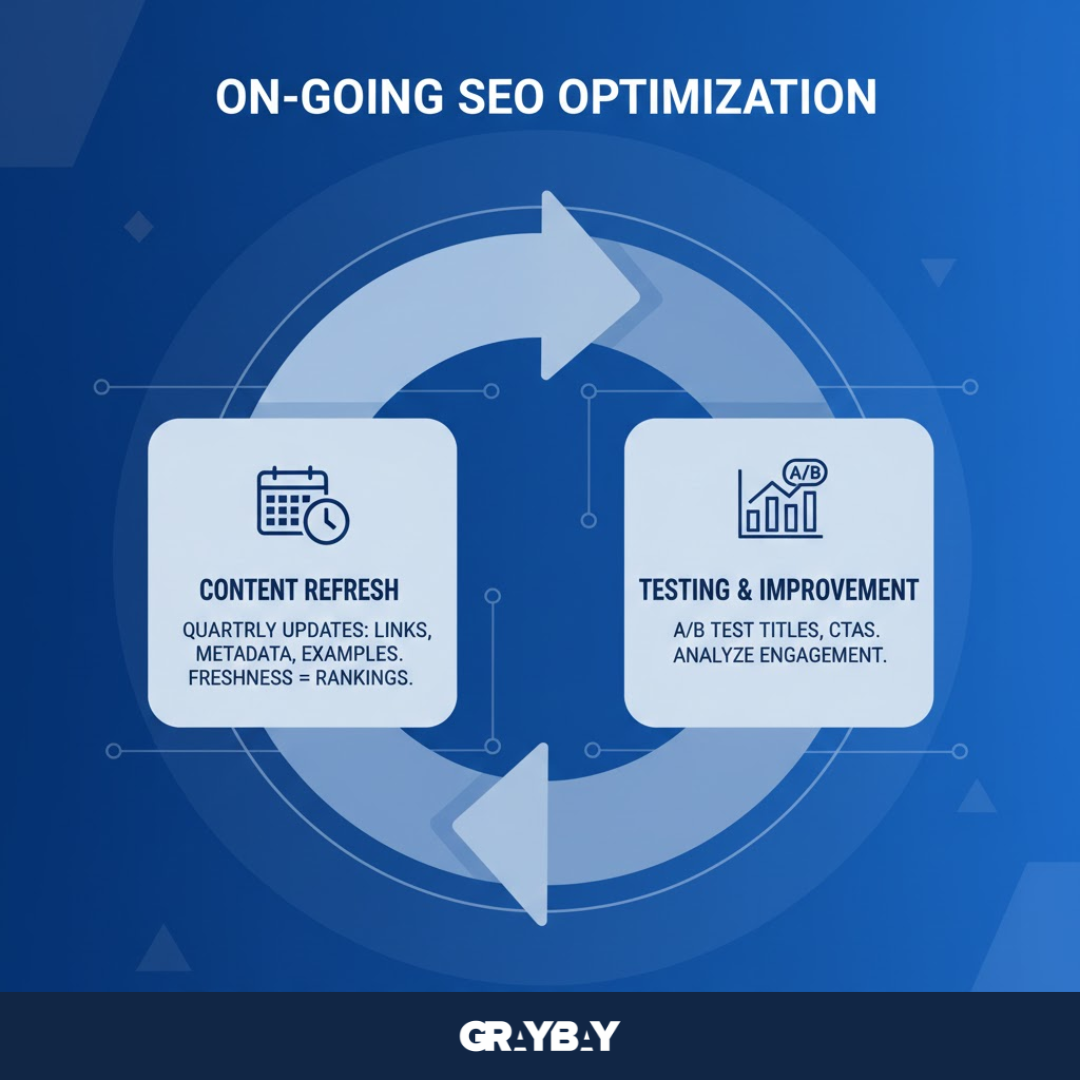
Revisit old content quarterly. Update internal links, refine metadata, and add current examples. Google now rewards freshness and engagement signals. Stale content, even if once high-performing, will fade fast.
Testing is also key. A/B test your titles, meta descriptions, and CTAs to see what drives clicks. Review engagement metrics like time on page and scroll depth. Treat each update as a small experiment.
By continuously improving, you create momentum that compounds over time. For service-based businesses, SEO success depends on learning which content drives qualified leads and refining your strategy to attract the right clients consistently.
On-Page SEO That Works Beyond Algorithms
Great SEO isn’t about chasing every update – it’s about staying clear, consistent, and genuinely useful. At Gray Bay Marketing, we help brands build content that performs well today and keeps working as search evolves.
We focus on what drives real business results: clarity, connection, and smart execution. Whether it’s one service page or your entire online presence, our goal is to attract qualified prospects and convert them into clients effectively. A well-planned on-page SEO checklist helps make that possible, keeping every part of your site aligned and effective.
Search will keep changing, but the value of well-structured, helpful content won’t. That’s the approach we take to SEO marketing – steady, thoughtful, and built for lasting impact. Contact us now and get the best SEO Services in San Francisco.