
3 Ways to Boost Your Amazon Marketing Performance in 2026
In 2026, Amazon continues to dominate the e-commerce space, with over 300 million active customer accounts worldwide.
Despite this massive opportunity, many sellers struggle to boost sales, gain visibility, and stand out from competitors. Even with regular product listings and occasional promotions, results often fall short, leaving businesses frustrated and unsure how to scale.
This blog breaks down a clear Amazon marketing strategy, so you’re not guessing what to do next. Instead of throwing money at ads and hoping for sales, you’ll learn practical steps you can actually apply right away.
Let’s start.
Understanding the Amazon Marketplace
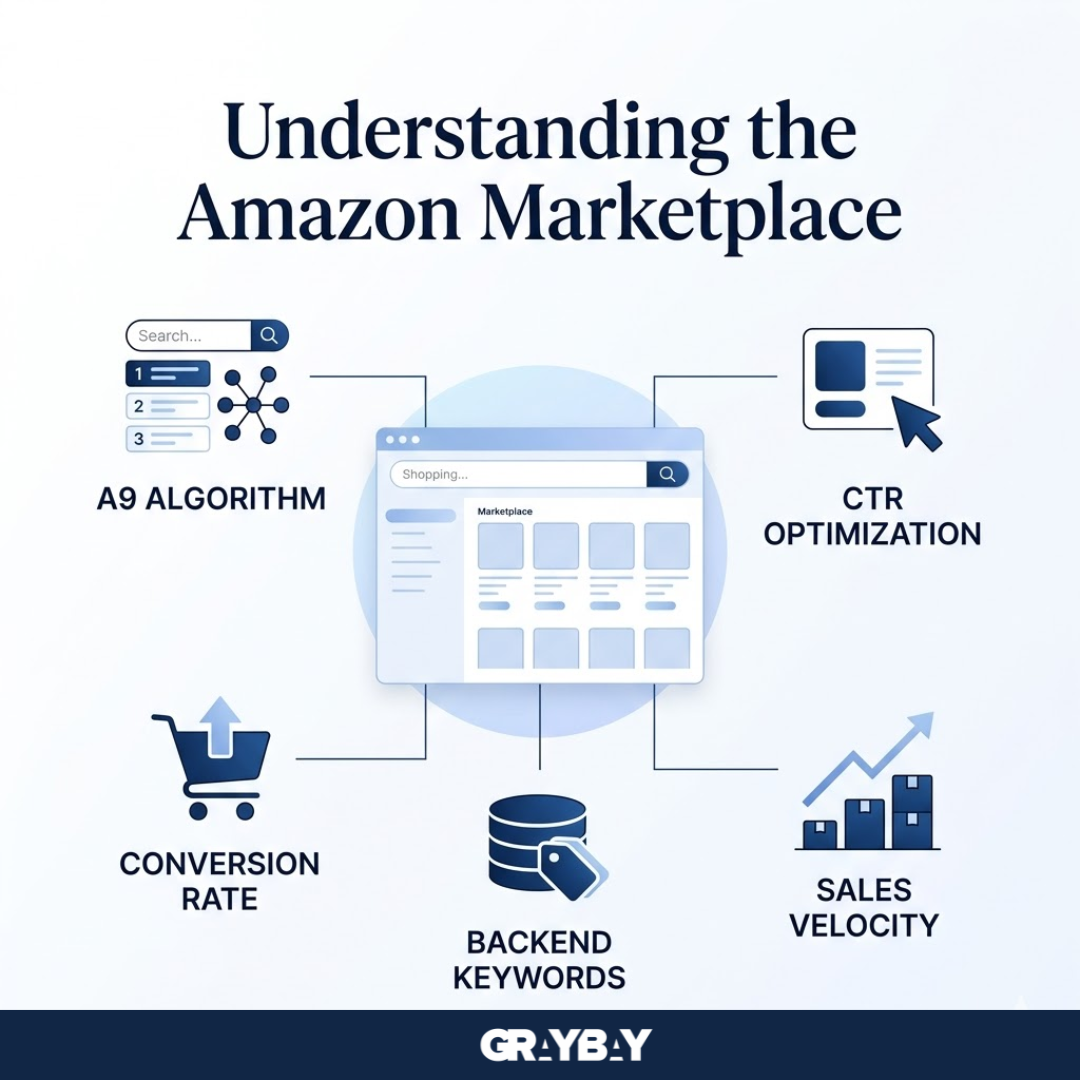
The foundation of a successful Amazon marketing strategy starts with understanding how Amazon.com operates. Unlike simple online stores, Amazon works as a performance-based ecosystem where visibility is earned rather than guaranteed. Here are the key elements that define how the marketplace works:
Amazon A9 Algorithm Ranking Signals: The A9 system prioritizes listings based on relevance, conversion probability, and historical performance. Products that consistently sell well and match search intent are more likely to appear on the first page.
Click-Through Rate (CTR) Optimization: Search ranking is influenced by how many users click your listing after seeing it in search results. Attractive titles, high-quality images, and clear value propositions improve CTR performance.
Conversion Rate Performance: The marketplace algorithm evaluates how often clicks turn into purchases. Listings that successfully convert traffic into sales are rewarded with better visibility.
Backend Search Term Indexing: Amazon allows hidden keyword fields that help products appear in broader search variations. Proper indexing helps capture long-tail search traffic without overcrowding visible content.
Sales Velocity and Purchase History Signals: Consistent and natural sales growth sends positive ranking signals. Sudden, unnatural spikes may trigger performance evaluation checks within the system.
Understanding these marketplace dynamics allows sellers to build a smarter, more effective approach to growth. A strong Amazon marketing strategy is not just about listing products—it is about aligning with how the platform evaluates performance and customer behavior.
Amazon Performance Benchmarks for 2026
Understanding performance standards helps sellers evaluate campaign effectiveness and listing quality on Amazon. As competition increases in 2026, tracking key metrics ensures better decision-making and sustainable growth. Here are the metrics to track:
1. Click-Through Rate (CTR) Benchmark
A strong product listing should attract customer attention and encourage clicks. High-performing listings usually achieve 0.5%–2.5% CTR, depending on niche, keyword competition, and image quality. Optimized titles, compelling thumbnails, and clear value propositions improve CTR performance.
2. Conversion Rate Benchmark
Conversion rate measures how effectively clicks turn into purchases. Successful listings generally maintain 8%–15% conversion rates. Product reviews, pricing competitiveness, and detailed descriptions play important roles in improving buyer confidence and sales performance.
3. Advertising Cost of Sales (ACoS) Benchmark
For paid campaigns on Amazon, maintaining a healthy ACoS is essential for profitability. In 2026, many sellers aim for 15%–30% ACoS, though premium or high-margin products may tolerate slightly higher advertising costs if lifetime customer value is strong.
Monitoring these benchmarks helps sellers align their marketing strategy with platform expectations, improve visibility, and maximize return on investment.
How to Market on Amazon? Top 3 Strategies
Here are the proven techniques for you. Let’s go through each Amazon marketing strategy one by one:
Way 1: Amazon Advertising Strategy: How to Drive Profitable Growth in 2026
Advertising success on the platform depends on understanding customer search behavior and campaign structure. Many sellers often ask how to market on Amazon efficiently while controlling costs and improving ROI. The key is to combine smart targeting with performance monitoring rather than running campaigns blindly.
Below are the main ways to build an effective advertising approach:
Start with Keyword-Targeted Sponsored Ads: Focus on high-intent search terms that match buyer purchase goals. Keyword targeting helps your products appear when customers are actively looking for similar items.
Optimize Product Listings Before Running Ads: Advertising works best when your product pages are already conversion-friendly. High-quality images, clear descriptions, and strong titles improve campaign performance.
Monitor Campaign Performance Regularly: Track click-through rate, conversion rate, and cost-per-click metrics. Continuous monitoring helps you adjust bids and improve budget efficiency.
Use Automatic and Manual Campaigns Together: Automatic campaigns help discover new keywords, while manual campaigns allow precise control over targeting.
Amazon rewards relevance and performance. When your Amazon marketing strategy combines optimization and advertising intelligence, you increase the likelihood of reaching high-value customers and driving consistent sales growth.
Way 2: Optimize Your Listings for Maximum Visibility
If you want more traffic without constantly increasing ad spend, you need to tighten up your product listings. Visibility starts with strong optimization. When your listing is clear, keyword-focused, and conversion-driven, it ranks better and convinces shoppers to buy.
Below are the key areas you should focus on when building a strong Amazon advertising strategy:
1. Strengthen Your Product Title
Your title is the first thing shoppers and the algorithm notice. Make it count with these tips:
Place primary keywords naturally at the beginning to improve search visibility.
Clearly describe the product, including brand, size, color, or key variation.
Highlight one main benefit that makes your product stand out.
Keep it readable instead of stuffing it with repetitive terms.
A clean, keyword-optimized title increases both impressions and clicks.
2. Turn Bullet Points into Persuasion Tools
Bullet points are not just for features—they should sell the outcome. They should:
Lead with benefits first, then support them with features.
Solve a problem in each bullet to connect emotionally with buyers.
Keep sentences short and scannable for mobile users.
Use simple, clear language that builds trust.
Strong bullet points reduce hesitation and improve conversions.
3. Upgrade Your Product Images
Images influence buying decisions more than most sellers realize. So:
Use high-resolution photos with a clean white background for the main image.
Add lifestyle images to show the product in real-life situations.
Include infographics that highlight features and dimensions.
Show close-ups to remove doubt about quality and details.
When shoppers can clearly see what they’re buying, they’re more likely to add it to their cart.
4. Optimize Backend Search Terms
Backend keywords help you rank without cluttering your visible content. Hence:
Add related keyword variations that didn’t fit naturally in your copy.
Include synonyms and long-tail phrases to expand reach.
Avoid repeating words already used in your listing.
This quiet optimization helps you show up in more searches without hurting readability.
5. Keep Testing and Refining
Optimization is not a one-time task. It’s ongoing, hence, keep:
Monitoring click-through rates and conversion data.
Updating weak-performing titles or bullets.
Testing new images if conversions drop.
Small improvements in your Amazon marketing strategy can, over time, significantly increase visibility and sales. When you consistently refine your listings, you don’t just rank higher—you build trust, attract qualified buyers, and convert traffic into steady revenue.
Read more on: ROMI vs ROAS: Which Metric Matters More for Marketing Performance?
Way 3: Leverage Reviews, Social Proof, and Promotions
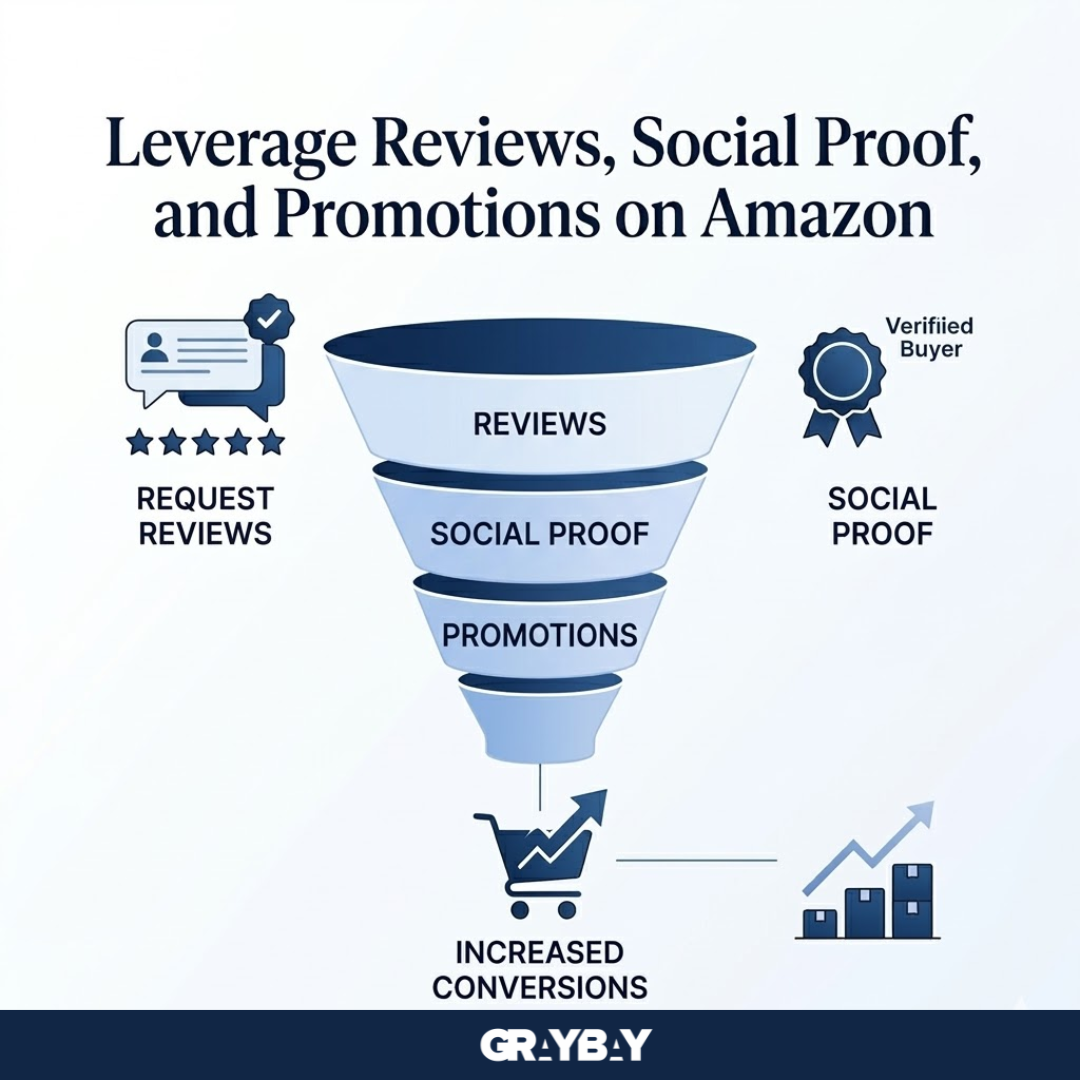
Customer trust drives purchases on Amazon, and reviews are a key form of social proof. By leveraging reviews and promotions, you build trust with buyers, increase conversions, and enhance product visibility, making it easier to scale your Amazon marketing performance.
Practical tips:
Request Reviews: Politely ask satisfied customers to leave feedback, either through Amazon’s follow-up emails or packaging inserts.
Highlight Ratings: Use badges, product awards, and verified reviews to showcase credibility.
Offer Deals: Limited-time discounts, coupons, and bundles can attract attention and increase conversions.
Cross-Promotion: Promote products on social media or email lists to drive traffic directly to your listings.
Bonus Tips for 2026
Winning in 2026 requires more than basic optimization. The marketplace is more competitive, advertising is more expensive, and shoppers expect faster decisions and better experiences. If you want to stand out, you need sharper strategies and quicker adjustments. Below are additional tactics for the Amazon marketing strategy to help you stay competitive and drive consistent growth:
Voice Search Optimization: With Alexa and other voice devices growing in use, optimize product titles and descriptions for natural language queries.
Video Content: Amazon now supports videos in listings, which can increase engagement and explain product benefits better than images alone.
A/B Testing: Continuously test product titles, images, and ad creatives to discover what resonates best with buyers.
Inventory Management: Avoid stockouts as they can hurt Buy Box eligibility and lower your overall performance.
Integrating these extra tactics will strengthen your Amazon marketing strategy and complement the core methods outlined above.
Read more on: Voice Search SEO: How It Works and How to Optimize
Conclusion
In 2026, standing out on Amazon requires a combination of optimized listings, smart advertising, and strong social proof. By implementing each Amazon marketing strategy discussed—listing optimization, an effective Amazon advertising strategy, and leveraging reviews and promotions—you can increase visibility, drive traffic, and grow sales consistently.
Experiment with different campaigns, track analytics, and refine your approach to stay ahead of competitors.
Ready to boost your Amazon sales?
Let Gray Bay Marketing turn your Amazon strategy into a revenue machine. As a paid advertising agency, we combine marketplace expertise with Google Ads management services and other data-driven digital marketing solutions to help brands attract high-intent shoppers, increase visibility, and drive measurable revenue growth.
Connect with our team today and start building a strategy that delivers measurable growth.
FAQs
How can I market on Amazon effectively?
To market on Amazon effectively, optimize your product listings, focus on high-quality images, leverage backend keywords, and implement a well-planned advertising strategy targeting the right audience.
How do reviews impact Amazon's marketing performance?
Reviews build social proof and trust. High-quality, authentic reviews improve conversions, search visibility, and the likelihood of winning the Buy Box, directly affecting marketing success.
Can promotions help improve sales on Amazon?
Yes, limited-time discounts, coupons, and bundles attract buyers, increase conversions, and encourage repeat purchases, enhancing overall Amazon marketing performance.
How do I stay ahead of competitors on Amazon in 2026?
Continuously optimize listings, run targeted ad campaigns, test creatives, leverage video content, and stay updated with trends like voice search and customer behavior to maintain a competitive edge.
What is the difference between Amazon SEO and Amazon PPC?
Amazon SEO focuses on optimizing product listings to rank organically in search results; therefore, it builds long-term visibility without paying for clicks. In contrast, Amazon PPC is paid advertising where sellers bid on keywords and pay per click. While SEO delivers sustainable growth, PPC generates immediate traffic and faster results.
How much should I spend on Amazon advertising in 2026?
In 2026, most sellers allocate 10–20% of revenue to Amazon advertising; however, budgets vary based on competition and goals. Initially, new sellers can start small to test campaigns. As data improves, increase spending on profitable ads. Ultimately, monitor ACoS and margins to ensure sustainable, scalable growth.