
Email Marketing Strategy: 4 Steps to Promote Your Catering Services Successfully
Ever feel like you’re sending catering promotion emails into a black hole?
You prepare beautiful menu offers, showcase delicious dishes, hit send, and then nothing happens. No inquiries. No bookings. Sometimes, barely any are open. It can be frustrating, especially when you know email should be one of the most powerful ways to reach customers searching for catering services.
The truth is, most catering businesses struggle because they send emails without a clear email marketing strategy for promoting catering services. They throw together random food promotions, guess the subject line, and hope someone books their catering service.
But hope is not a business strategy.
Without the right plan, catering emails quickly pile up in inboxes and get ignored, deleted, or worse, sent straight to spam.
No worries.
In this guide, we’ll break things down step by step. You’ll learn how to structure catering campaigns, craft food offers that stand out, and create emails that people actually want to open and read.
Let’s start.
Why Promotional Email Strategy Still Matters for Catering Services in 2026
You might think social media has taken over marketing for catering businesses, but an email marketing strategy is still one of the most powerful tools for promoting catering services.
According to the Data & Marketing Association, companies earn an average of $42 for every $1 spent on email marketing. That kind of return is hard to ignore, which is why many catering brands are doubling down on smarter email campaigns.
So here is how catering email marketing continues to make a real impact:
1: Email Delivers One of the Highest Returns for Catering Businesses
Digital marketing trends change quickly, but email marketing strategy continues to prove its value year after year because it gives catering businesses a direct and reliable way to communicate with clients planning events, parties, or corporate gatherings.
Social media platforms often change their algorithms, which can make it harder for catering brands to reach potential customers without paying for ads. Email works differently because once someone subscribes to your catering list, you have a direct line to their inbox.
That connection allows catering businesses to share seasonal menu packages, party catering offers, and special celebration discounts directly.
Read more on: 11 Influencer Discovery Tools Brands Actually Use in 2026
2: Email Helps Build Long-Term Relationships with Catering Customers
Most customers do not book catering services the first time they see an offer because event planning usually takes time.
People compare menus, check pricing, and review service quality before making decisions.
Email helps catering businesses stay connected during this planning stage by sending helpful information such as menu ideas, party planning tips, and exclusive catering offers.
A strong email marketing strategy allows catering companies to send messages that feel helpful rather than overly promotional.
Instead of pushing booking requests in every email, catering businesses can share celebration menu updates, holiday food packages, or corporate lunch options that gradually build trust.
3: Email Strengthens Other Catering Marketing Channels
Another reason email marketing strategy remains powerful is that it works together with other marketing efforts rather than replacing them.
A customer might first discover your catering business through social media food photos, search engine results, or digital advertisements.
But email helps keep the relationship moving forward.
Once someone joins your catering mailing list, businesses can follow up with menu recommendations, event catering packages, or limited-time booking discounts.
When you consistently follow email marketing best practices, you can segment your audience, personalize catering messages, and monitor how subscribers interact with each campaign.
Email Marketing Best Practices: 5 Steps for Catering Businesses
Here are the five steps that help catering businesses create an email marketing strategy that attracts event clients and encourages bookings.
Step 1: Define Your Goal and Catering Offer
Before writing a single line of copy, it is important to step back and clarify the main purpose of the catering campaign. Many marketers rush into the design and content stage, but successful catering campaigns usually begin with a simple question.
What exactly do you want the reader to do after opening the catering email?
Some catering campaigns focus on generating event bookings, while others aim to promote seasonal food packages, wedding catering services, or corporate lunch menus. When the goal remains unclear, the email may try to promote too many catering offers at once. A focused goal helps catering marketers shape the message, call to action, and overall campaign structure.
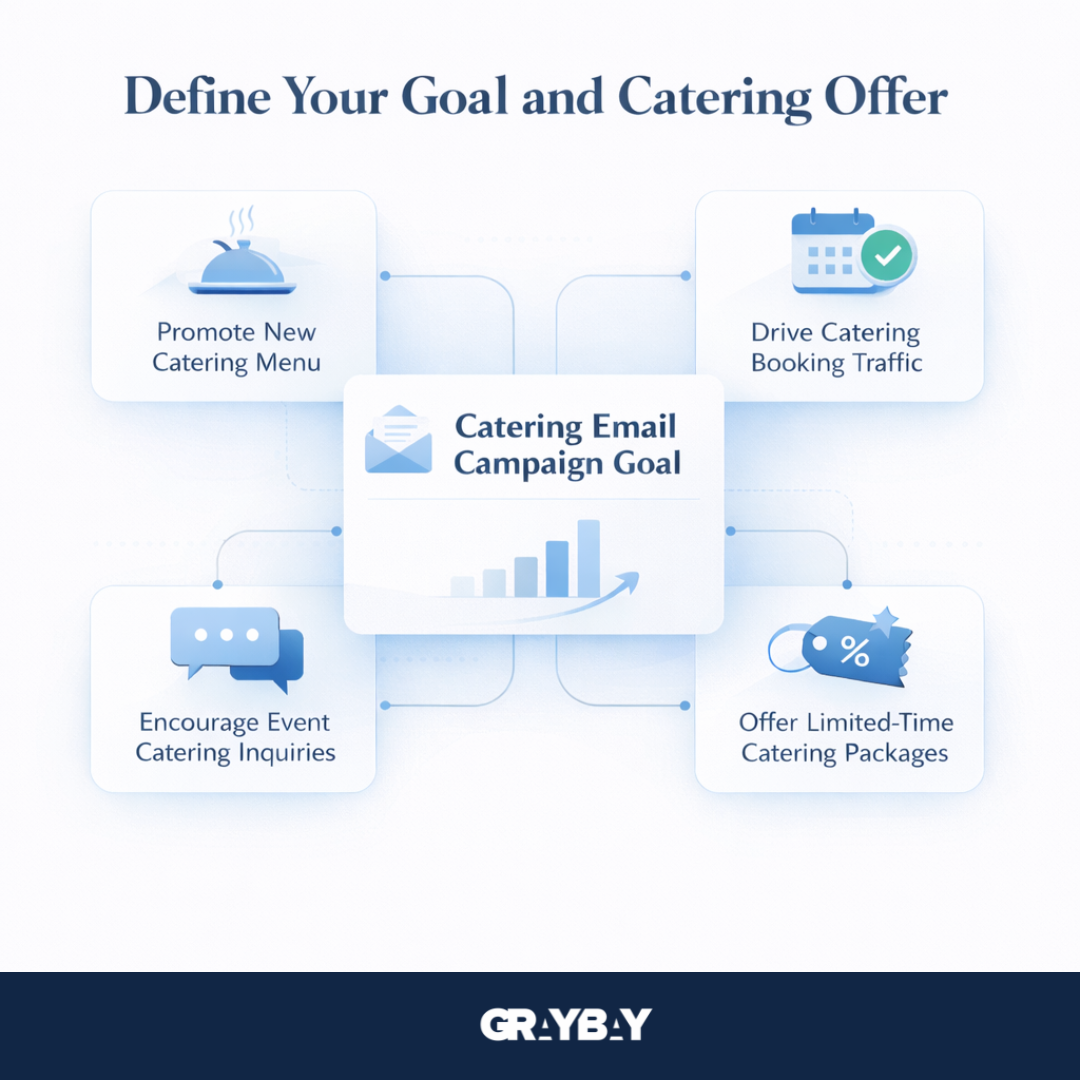
Here are a few common campaign goals for catering email marketing strategy that you can set:
Promote a new catering menu or service
Drive traffic to catering booking pages
Encourage event catering inquiries
Offer limited-time catering package promotions
Pro Tip: Several marketing tools can help catering businesses organize and track campaigns more effectively. Platforms such as Mailchimp, HubSpot, and ActiveCampaign allow you to schedule catering promotions, track inquiry engagement, and monitor performance in real time. When you combine these tools with a clear email marketing strategy, your catering campaigns feel focused rather than scattered.
Step 2: Segment Your Catering Email List
Sending the same catering message to every subscriber might seem easier, but it rarely delivers strong engagement. Event customers are diverse, and their catering needs often depend on occasion type, location, and budget planning.
List segmentation allows catering businesses to divide their audience into smaller groups based on specific characteristics. These groups may include wedding clients, corporate event planners, or customers interested in birthday catering packages. By tailoring messages to each segment, catering companies increase the chances that readers will actually pay attention to the offer.
Common segmentation criteria for email marketing strategy:
Event booking history
Geographic service location
Engagement level with previous catering emails
Food package preferences or browsing behavior
When you apply these strategies carefully and follow proven email marketing best practices, your catering campaigns become more targeted and effective. Instead of sending broad food promotions, catering businesses begin delivering messages that speak directly to customer event requirements. Over time, this targeted communication helps strengthen engagement and build long-term customer relationships.
Read more on: B2B PPC Advertising: Build a Winning Strategy in the AI Search Era
Step 3: Write Subject Lines That Make People Open the Catering Email
Even the most valuable catering offer will struggle to perform if the subject line fails to catch attention. The subject line acts as the first impression of your catering promotion, and in many cases, it determines whether the email gets opened or ignored. Event planners and customers often scan their inboxes quickly, so you must create subject lines that highlight the catering benefit clearly.
Strong subject lines usually spark curiosity about food quality, event convenience, or special catering packages. Instead of sounding overly promotional, they should feel natural and relevant to customers searching for celebration or event food solutions. When the message connects with the reader’s event planning needs, the chances of opening increase significantly.
Here are a few effective approaches for catering marketing:
Ask event planning-related questions
Highlight catering package benefits
Create urgency for booking event dates
Personalize the subject line using the customer's name
Many successful high-converting email campaigns for catering services begin with subject lines that quickly communicate food and service value.
You can test multiple subject line variations to understand which messages resonate best with your catering audience. Over time, these insights help refine messaging and create stronger campaigns that consistently earn higher open rates for catering promotions.
Step 4: Design Catering Emails That Are Easy to Read and Act On
Once someone opens a catering email, the design and structure determine whether they continue reading event food offers.
A well-structured catering email keeps the reader focused on menu quality, service reliability, and booking convenience. Clear headings, short menu descriptions, and logical flow help customers quickly understand catering packages without feeling overwhelmed.
At the same time, the booking call to action should appear naturally within the message so that customers know exactly how to reserve catering services.
You can improve catering email readability by focusing on the following elements:
Use short menu descriptions that highlight dish quality
Include one clear booking CTA instead of multiple options
Optimize the layout so that catering offers display properly on mobile devices
Use food or event images only when they support the message
When marketers apply a thoughtful promotional email strategy, they make sure every part of the email supports the main catering booking goal. The message, menu presentation, and reservation button should work together so customers clearly understand the offer and feel motivated to respond.
Step 5: Test, Measure, and Improve High-Converting Email Campaigns
Successful catering email campaigns rarely happen by accident. Catering marketers who achieve strong inquiry and booking results usually spend time analyzing performance and improving campaigns based on customer response data.
Testing allows catering businesses to experiment with different email elements to discover what works best for event customers. Instead of relying on assumptions, marketers collect feedback signals that help improve future catering promotions.
Common elements you can test for catering campaigns include the following:
Catering package presentation style
Discount or special offer structure
Booking button placement
Best time to send catering promotion emails
Many high-converting catering email campaigns evolve through continuous testing and optimization. As marketers review campaign performance, they begin to recognize patterns in customer booking behavior and inquiry engagement.
These insights help refine future catering marketing strategy, strengthen promotional messaging, and ensure each new campaign performs better than the last.
How to Write a Promotional Email for Catering Services?
Understanding how to write a promotional email for catering services starts with focusing on clarity and customer event needs. Customers searching for catering solutions should immediately understand what food service is offered, why the catering package is valuable, and how they can reserve or order the service.
If the message feels confusing or overly complicated, most event planners and customers will simply move on to the next email in their inbox while searching for better catering options.
A strong catering promotional email usually follows a clear structure that helps guide the reader from interest to booking action. Each section plays a specific role in building interest in food quality, service reliability, and event convenience.
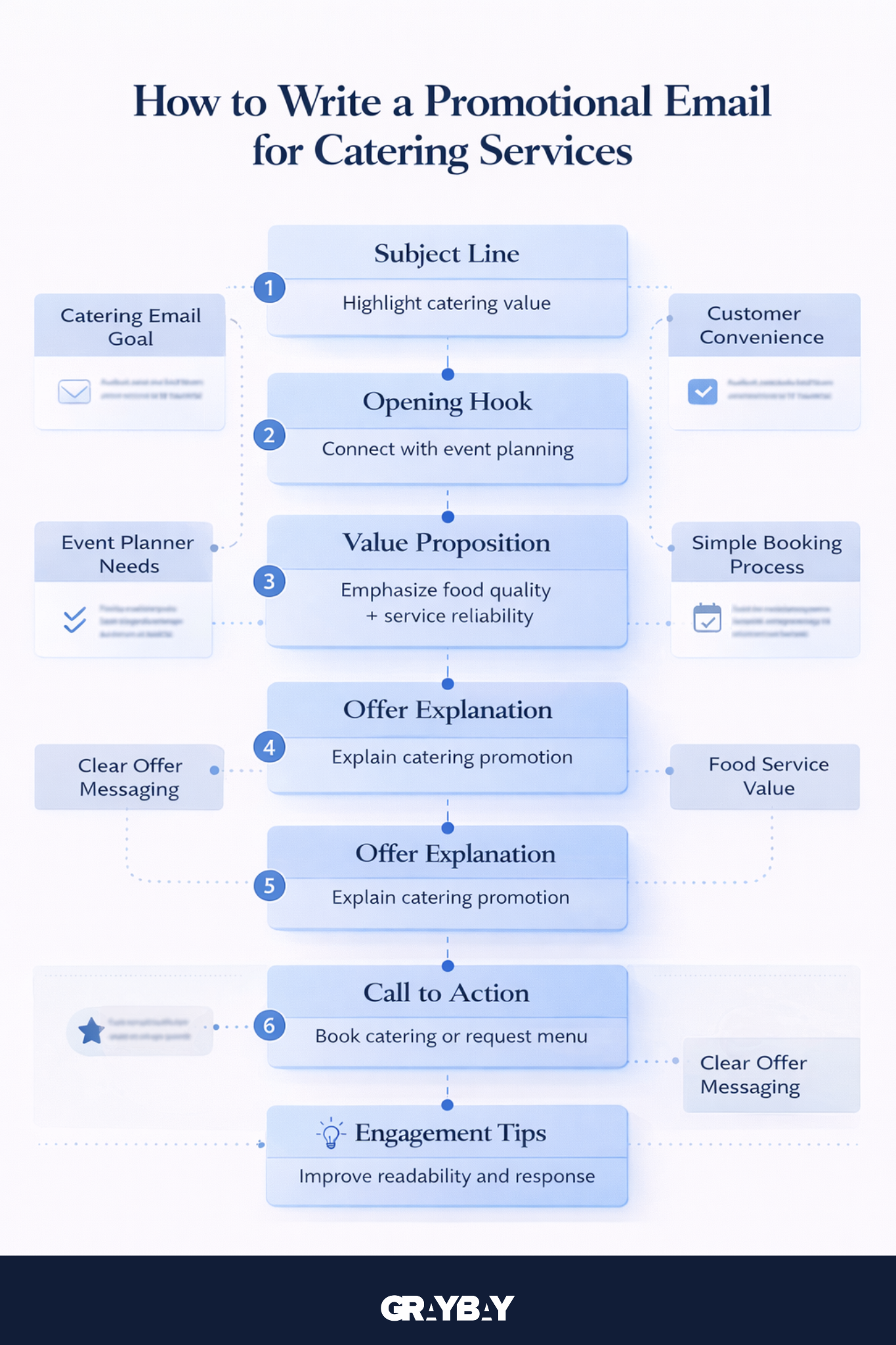
Here is the standard structure you can follow for catering promotional emails:
1. Subject Line: The subject line should highlight the catering package value and event benefit. Short, benefit-focused subject lines usually perform better because they communicate food and service information quickly.
2. Opening Hook: The first few lines of the catering email should capture attention and connect with celebration, party planning, or corporate event food needs. This helps customers feel that the email speaks directly to their catering requirements.
3. Value Proposition: Once you capture attention, the email should clearly explain what makes your catering service valuable. Instead of focusing only on food items, emphasize service quality, delivery reliability, and event experience.
4. Offer Explanation: This section introduces the catering promotion and explains how customers can book or order catering packages. Whether it is a limited-time discount, wedding catering bundle, or corporate lunch service, the offer should feel simple and easy to understand.
5. Call to Action: The call to action directs customers toward the next step. Phrases such as “Book Catering Today,” “Reserve Your Event Date,” or “Request Catering Menu” help customers understand exactly what they should do after reading the email.
Tips for High-Converting Catering Email Campaigns
Even a well-structured catering email can perform better when you focus on small details that improve engagement and readability. Minor improvements often create noticeable differences in how customers respond to catering promotions.
Follow these tips for maximum impact in catering marketing:
Focus on food and service benefits instead of listing too many menu items
Keep catering messages simple so customers quickly understand the offer
Create a sense of urgency that encourages immediate event booking
Personalize messages when possible to strengthen customer connection
Include customer reviews, event photos, or service testimonials
A well-planned promotional email strategy ensures that every catering message feels intentional rather than rushed. When you align menu presentation, booking offers, and customer communication with the overall email marketing strategy, promotional catering emails become more effective at turning interested readers into confirmed event clients.
Wrapping Up
Catering businesses can grow faster when they use email marketing as a reliable channel for connecting with customers planning events, parties, or corporate gatherings. Instead of sending random food promotions, building a thoughtful email marketing strategy helps you reach the right audience with catering offers that match their celebration needs.
Every successful catering business benefits from a marketing strategy that works across multiple channels. Gray Bay Marketing provides AI SEO services, Google Local Service Ads Management, Facebook marketing services, along with email marketing, content development, and conversion-focused strategies that help businesses build stronger customer relationships and generate consistent booking opportunities.
Partner with us today, and turn more marketing opportunities into confirmed events.
Frequently Asked Questions
What is an Email Marketing Strategy for Catering Businesses?
An email marketing strategy for catering businesses is a structured plan used to attract event clients, promote catering services, and convert subscribers into bookings through targeted email campaigns.
How often should catering businesses send marketing emails?
The ideal frequency depends on customer behavior and event seasons. Many catering businesses send one or two emails per week to stay visible without overwhelming subscribers. Consistency matters more than volume because customers planning events want reliable information about catering packages, menu updates, and booking availability.
What makes a catering email campaign successful?
Successful catering campaigns usually focus on clear menu communication, attractive food presentation, and strong booking calls to action. Marketers also analyze engagement signals such as open rates and inquiry clicks to understand customer response. Continuous testing and content improvement help catering campaigns perform better over time.
Why is email still important for catering marketing?
Email remains important because it provides direct communication between catering businesses and event customers. Unlike social media platforms, companies control their email lists and can reach subscribers without depending on changing algorithms. This makes email a dependable channel for promoting catering menus, seasonal packages, and event services.
How can catering businesses improve email engagement?
Event catering companies can improve engagement by segmenting their customer lists, sending event-relevant food offers, and personalizing messages based on customer interests. Testing subject lines, improving email design, and following proven marketing practices also help increase open rates and booking inquiries.