
B2B PPC Advertising: Build a Winning Strategy in the AI Search Era
Search technology is moving fast. AI-powered platforms are changing how people look up products, compare solutions, and make purchase decisions. Because of this shift, brands cannot simply throw ads into the digital space and hope for the best. Instead, they need to step up their game and stay ahead of the curve.
This is where B2B PPC advertising comes into play.
It helps businesses zero in on serious buyers who are already looking for solutions. In this blog, we will break down how you can build a winning PPC strategy, tune up your campaigns for AI search, and turn clicks into real business opportunities without burning through your budget.
Let’s start.
Navigating B2B PPC in the AI Search Era
Navigating paid search in the AI-driven digital landscape means understanding how intelligent algorithms, user intent modeling, and behavior prediction shape advertising visibility today.
Remember, search marketing is no longer limited to matching simple keywords with ads. The rise of advanced search intelligence has transformed how advertisements appear and perform. Today, modern search engines evaluate context, relevance, and user purpose before showing results.
This means?
This shift requires marketers to think carefully about message alignment, audience needs, and conversion potential. In this environment, campaigns that simply push promotional content rarely succeed.
So the question is, how can marketers build campaigns that attract serious buyers while still staying helpful and authoritative?
The answer starts with shifting the focus from aggressive promotion to intelligent guidance. Modern search advertising works best when brands understand that buyers are usually researching, comparing, and trying to solve a problem rather than immediately preparing to purchase.
Therefore, campaigns must feel supportive rather than disruptive.
B2B PPC Management: Best Practices for Smarter Campaigns
Here is a closer look at the most effective strategies that can help refine your campaign performance and strengthen B2B PPC management:
Tip 1: Map Keywords to Buyer Journey Stages
The first step is to understand how buyers move through the sales path. People rarely buy services right after searching once. They usually explore, compare, and return later.
Think about B2B PPC in the AI Search systems that now understand context. Search engines try to predict user intent. So, match your ads with search behavior instead of just matching words. You should also build small keyword groups inside campaigns. This practice improves message clarity.
Here are some tips for you:
Begin with awareness keywords. These are search phrases that answer basic questions like what, why, or how.
Move toward consideration keywords that show product interest.
End with decision keywords where buyers look for pricing, demos, or brand names.
To understand how overall marketing planning supports campaign visibility, explore our guide on “Digital Marketing Strategy: How to Succeed in Today’s Landscape.”
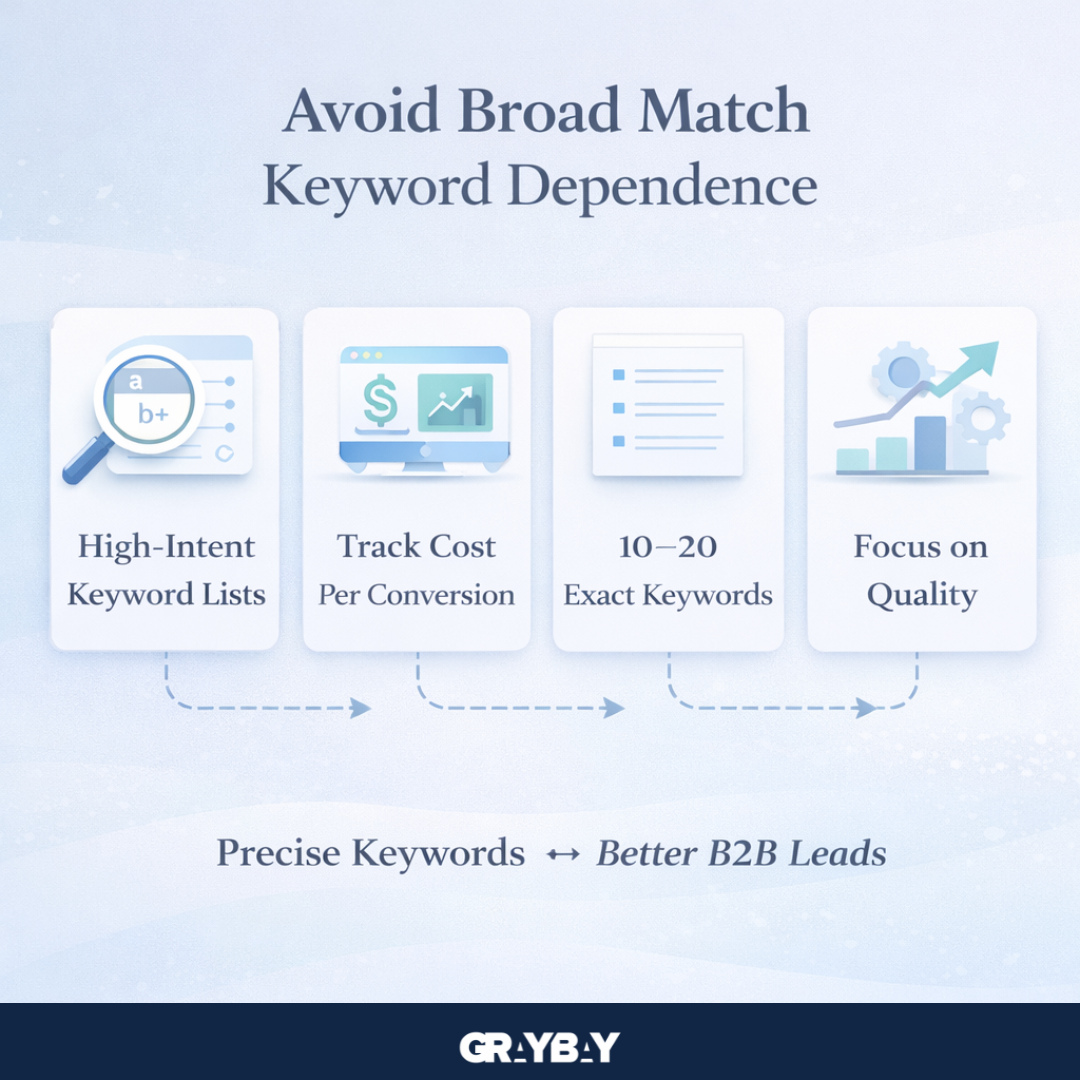
Tip 2: Avoid Broad Match Keyword Dependence
Broad match keywords can feel attractive because they promise more traffic. But traffic alone does not make money. Many businesses lose budget because clicks come from people who are not ready to buy.
Focus more on phrase match or exact match setups inside your B2B PPC advertising plan. Exact match keywords help show ads to people who already know what they want. So, make sure to:
Build small but strong keyword lists.
Track cost per conversion instead of cost per click.
Start with 10–20 high-intent keywords.
Remember, quality always beats quantity. Even if clicks are fewer, leads tend to be stronger. AI search tools now understand search meaning, so precise targeting works better. When you align keywords with intent, ads feel helpful instead of interruptive.
Tip 3: Build Separate Ad Groups for Better Control
Ad grouping is like organizing books on a clean shelf. When ads stay organized, performance tracking becomes easier.
Create ad groups around:
Awareness research topics
Product comparison searches
Competitor brand searches
Final buying or contact searches
Each group should carry matching ad copy and landing pages. Inside each group, use similar keywords. Do not mix beginner research queries with strong purchase intent queries. That mistake usually weakens campaign quality.
Also, test different headlines. Simple language often works better for technical B2B audiences.
Tip 4: Use Smart Remarketing for Lead Nurturing
Remarketing is a powerful part of B2B PPC advertising because buyers rarely convert on the first visit. Many prospects leave after reading product details.
Show remarketing ads about four to seven times across platforms like search, display networks, or social channels. Change the message slightly each time.
Here is how you can do it:
First ad → introduce solution benefits
Second ad → show proof or case study
Third ad → share pricing or demo offer
Final ad → push conversion action
Remarketing helps bring back interested visitors. It keeps your brand inside the buyer's memory while they compare options.
Avoid showing the same ad repeatedly. Fresh messaging feels more natural in AI-driven search environments.
As search behavior becomes more conversational and AI-powered, read our blog on “Voice Search SEO: How It Works and How to Optimize” to learn how evolving search patterns influence advertising reach.
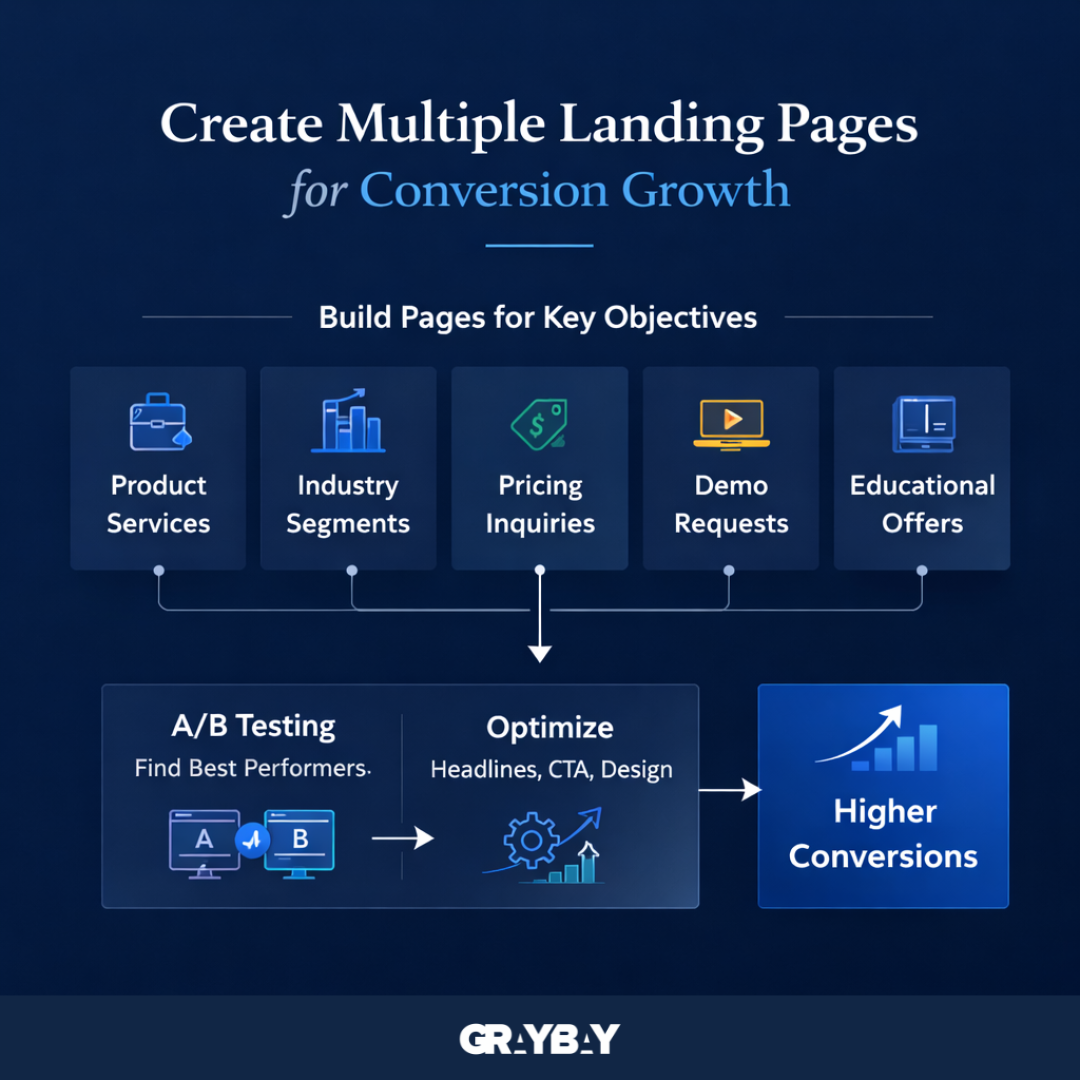
Tip 5: Create Multiple Landing Pages for Conversion Growth
Landing pages work like final meeting rooms for buyers. If the page looks confusing, visitors leave quickly. Many companies lose leads because they send traffic to homepage links.
Strong B2B PPC Management requires at least five to fifteen landing page versions. You can build pages for:
Product services
Industry segments
Pricing inquiries
Demo requests
Educational offers
Tools like Unbounce or Instapage make this work easier. Duplicate one design and change headlines, images, or call-to-action buttons.
Testing is very important. Run split tests to find which design converts best. Small changes sometimes improve conversion by double digits.
Good landing pages support B2B PPC in the AI Search because search engines prefer helpful user experiences.
Quick Overview
The future of search ads depends on understanding intelligent search systems. AI search engines focus more on meaning than simple keyword matching.
Steps to improve campaigns:
Track search intent signals.
Write helpful ad copy.
Build educational content ads.
Use structured keyword clusters.
Monitor conversion behavior.
You can combine automation tools with a human strategy inside B2B PPC advertising.
Useful tools include:
Keyword planners
Conversion trackers
AI campaign optimization software
Funnel analytics dashboards
Good campaigns feel like helpful guides rather than sales machines.
Final Thoughts
Smart B2B PPC advertising helps businesses reach serious buyers who are already searching for solutions. The future belongs to brands that mix human psychology with AI search intelligence.
Focus on strong strategies, precise targeting, and meaningful content. Remember that B2B buyers need education before purchase decisions. So, build trust step by step.
Ready to grow your online visibility?
At Gray Bay Marketing, our Paid Media Services, including Google Ads campaign management services, help businesses connect with the right audience, generate qualified leads, and maximize advertising performance with strategies built for today's AI-powered search landscape. Partner with us and let us help you bring in quality leads in the era of AI-powered search marketing.
FAQs
1. What is B2B PPC advertising?
B2B PPC advertising means running paid search ads to attract business clients instead of individual consumers. It works best when ads answer professional buyer questions and guide them toward solutions.
2. Why is B2B PPC in the AI era important?
B2B PPC in the AI era helps brands reach users who search using natural language. AI search systems understand intent, so ads must provide useful information instead of only matching keywords.
3. How can PPC management improve results?
Good PPC management includes keyword segmentation, remarketing, landing page testing, and conversion tracking. These methods help reduce wasted budget and improve lead quality.
4. Where can I find professional marketing services?
You can explore high-quality marketing services from experts like Gray Bay Marketing, which helps design performance-focused PPC and digital growth strategies.