
Digital Marketing Strategy: How to Succeed in Today’s Landscape
At Gray Bay Marketing, we know the internet has turned into a maze for business owners. Customers don’t take the straight line from Google to checkout anymore. Instead, they zigzag through search results, reviews, social feeds, and ads before choosing where to spend.
That’s why building a digital marketing strategy isn’t about choosing one “perfect” channel. It’s about mapping the real journey your customers take – whether that means reaching them through SEO marketing, staying top-of-mind with email marketing, or building trust with organic social marketing – so you can meet them in the right places.
Why One-Channel Marketing No Longer Works
A decade ago, businesses believed ranking #1 on Google guaranteed a flood of sales. Some still hold onto that idea. But today’s buyer doesn’t stop after one click. They compare, fact-check, and read reviews before trusting a brand.
Your customer is curious, skeptical, and resourceful. They may search, click, then circle back days later after reading social comments or scanning Yelp reviews. If your digital marketing strategy depends on one platform, you’ll miss them.
Mapping the Modern Customer Journey
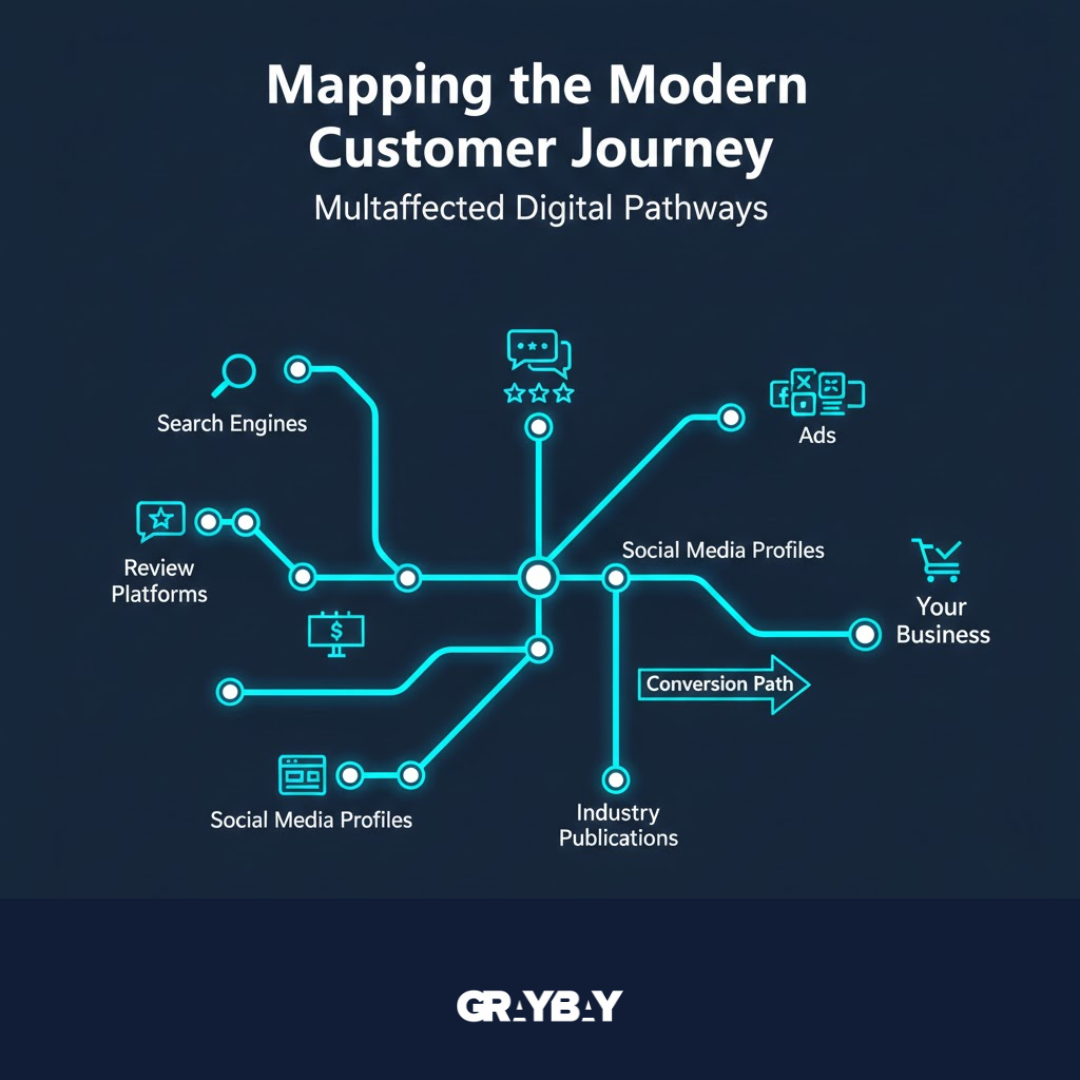
Think of your customer’s online path like a Bay Area BART map. It’s not one straight track. Instead, it branches into multiple stops before they arrive at your business.
Key touchpoints include:
Search engines: The first stop for discovery.
Review platforms: Where trust is gained or lost.
Social media profiles: Proof you’re active and engaged.
Ads: Both search and remarketing ads that reappear later.
Industry publications: Authority-building stops for professional services.
By charting this path, you’ll understand which interactions lead directly to conversions and which simply keep you in the running. Without a mapped digital marketing strategy, you’re flying blind.
Building a Digital Marketing Framework That Actually Works
Every strong campaign needs a digital marketing framework. Think of it as the skeleton that connects your moving parts. The framework helps you decide where each channel fits in the funnel.
Here’s how to structure it:
Awareness channels: SEO, social discovery, and ads.
Consideration channels: Reviews, blog posts, and case studies.
Decision channels: Retargeting, testimonials, and direct offers.
Retention channels: Email updates and loyalty programs.
This framework ensures your digital marketing strategy doesn’t lean too heavily on one stage. Instead, it spreads your presence across the full buyer journey.
Digital Marketing Trends 2026: What to Watch Now
The internet shifts quickly, but some trends are already clear. If you plan ahead, you’ll stay visible while competitors scramble to catch up.
Top trends to note:
Voice search: More customers ask Alexa or Siri before typing.
AI-driven personalization: Content and ads adapt in real time.
Video-first content: Short-form video dominates attention.
Social proof everywhere: Reviews and recommendations matter more than ads.
Weaving these digital marketing trends 2026 into your digital marketing strategy helps you stay future-ready without wasting money on hype.
Crafting a Marketing Strategy for Online Business Success
A marketing strategy for online business doesn’t mean trying every channel at once. It means choosing carefully.
Steps to build yours:
Define your customer: Who are they, and where do they browse?
Map their journey: Write down the likely stops they’ll take.
Pick priority channels: Focus first on 2–3 that align with your customer.
Add support channels: Layer in secondary ones for credibility.
Test and refine: Adjust based on what actually drives conversions.
When you combine these steps, you create an online marketing strategy that’s structured, intentional, and easier to measure. This approach ensures your digital marketing strategy grows with intention, not guesswork.

Measuring What Matters (Without Drowning in Data)
Data overload is real. Many owners see dashboards full of numbers but can’t tell what drives revenue. Tracking smarter, not harder, keeps you focused.
Key measures to track include:
Direct conversions: Which channels close the deal.
Assisted conversions: Which channels contribute earlier in the journey.
Engagement signals: Reviews left, social shares, and repeat visits.
Cost per lead: The clearest signal of ROI.
When tied to your digital marketing strategy, these metrics highlight which channels deserve more investment. They also prevent wasted spend on vanity numbers.
How Gray Bay Marketing Helps You Navigate
At Gray Bay Marketing, we don’t believe in cookie-cutter plans. We build digital marketing strategy maps that reflect how your customers actually move online. That means no chasing fads, no blind spending, and no one-channel shortcuts.
Our approach is rooted in data and designed for businesses that want to grow smarter, not louder. As an experienced LLM SEO agency, we help brands adapt to changing search behaviors and strengthen their visibility across both traditional search engines and AI-driven platforms.
What sets us apart is our focus on clarity. We show you exactly where your customers are, what matters most in their journey, and which channels give you the highest return. You’ll always know why you’re investing in a strategy and how it’s working.
If you’re tired of guessing which platforms deserve your time and budget, Gray Bay Marketing gives you a map, a plan, and a partner invested in your growth. With the right strategy in place, your business isn’t just online—it’s visible, trusted, and chosen.