
How to Build a High-Converting Landing Page for Catering Google Ads
Running ads for a catering business can be exciting at first, but it quickly gets frustrating when clicks are coming in, and leads aren’t. Money gets spent, people land on your page, and yet bookings stay low. That gap between clicks and actual inquiries can feel like a complete waste of time and budget.
Often, the problem comes down to ignoring PPC landing page best practices. And, what are these? PPC landing page best practices refer to the strategies used to design and optimize landing pages so they convert ad clicks into leads or inquiries effectively.
Remember, visitors expect to find clear information and an easy way to reach out, but many pages are too confusing or too general. Because of that, people leave before even thinking about booking. A catering page needs to do more than just look nice. It should clearly show what’s offered, make it easy to take the next step, and build trust along the way. When that happens, those clicks finally turn into real inquiries.
Good news? This guide shows how to make your landing page pull in real leads, so all the time and money spent on ads finally pays off. Following PPC landing page best practices ensures your ad traffic converts into real catering leadsLet’s get started.
Why Landing Pages Are Important
A well-designed landing page can make or break your catering ads. Even if your campaigns are driving clicks, visitors often bounce back without taking action if the page doesn’t speak directly to their needs. That’s why following best PPC landing page practices is crucial for turning traffic into real bookings.
Here’s why having the best landing page matters for your Google Ads:
More Leads from Every Click: When your page is clear and easy to navigate, visitors don’t get lost or frustrated. More of your ad clicks turn into actual inquiries and bookings.
Instant Relevance for Visitors: Pages that speak directly to what someone is searching for—like weddings, corporate events, or private parties—make visitors feel understood and encourage them to stay longer.
Clear Action Steps: Strong calls-to-action and simple layouts guide people naturally to request a quote, schedule a tasting, or check availability, without any confusion.
Stronger Trust and Credibility: Testimonials, ratings, event photos, and client logos reassure visitors that your service is professional and dependable. Trust makes it easier for them to take the next step.
Visual Appeal That Sells: High-quality images of beautifully arranged tables, dishes, and event setups communicate quality instantly and make your services look irresistible.
Smooth Experience on Any Device: Mobile-friendly design, fast loading, and easy-to-tap buttons keep visitors engaged, even on the go, so fewer people leave without acting.
Continuous Improvement: Analytics and testing allow you to see what works, tweak headlines, images, or CTAs, and consistently make your page more effective.
Now, let’s move on to the PPC landing page best practices.
High-Converting Landing Page Tips for Catering Businesses
A landing page that actually converts takes more than just pretty images and a form. A good landing page focuses on guiding visitors, giving them the information they need, and making the next step obvious. Small adjustments can turn casual clicks into real catering inquiries and bookings.
Here are practical PPC landing page optimization tips to get it right. These PPC landing page best practices help improve conversions:
Understand Your Visitors’ Intent
Understanding visitor intent is one of the most important steps in creating a landing page that actually converts. When a page aligns with what people are searching for, it feels relevant, builds trust quickly, and makes it easy for visitors to take the next step. Without this focus, even the best ads can bring clicks that go nowhere.
Visitors usually have a clear goal in mind, and knowing it helps the page speak directly to them:
Weddings: Couples want stress-free planning, customizable menus, and beautiful presentations. They look for a catering service that feels reliable and creative.
Corporate Events: Clients care about efficiency, large capacity, and professional service. Confidence that everything will run smoothly is essential.
Private Parties: Variety, flexible timing, and affordable options grab attention. Clear choices and straightforward pricing make decisions easier.
When the content matches what visitors are looking for, engagement increases naturally. Headings, images, and short, friendly copy help people feel understood. For example, a photo of a beautifully arranged wedding buffet draws in couples, while a professional corporate setup appeals to business clients.
Read more: Email Marketing for Catering Companies: How to Build a List That Actually Converts
Show Unique Selling Points
Every catering business has something special, and a perfect landing page should make that crystal clear. Visitors rarely stick around if the page looks like every other catering website. Highlighting what makes your service unique helps them see why they should choose you.
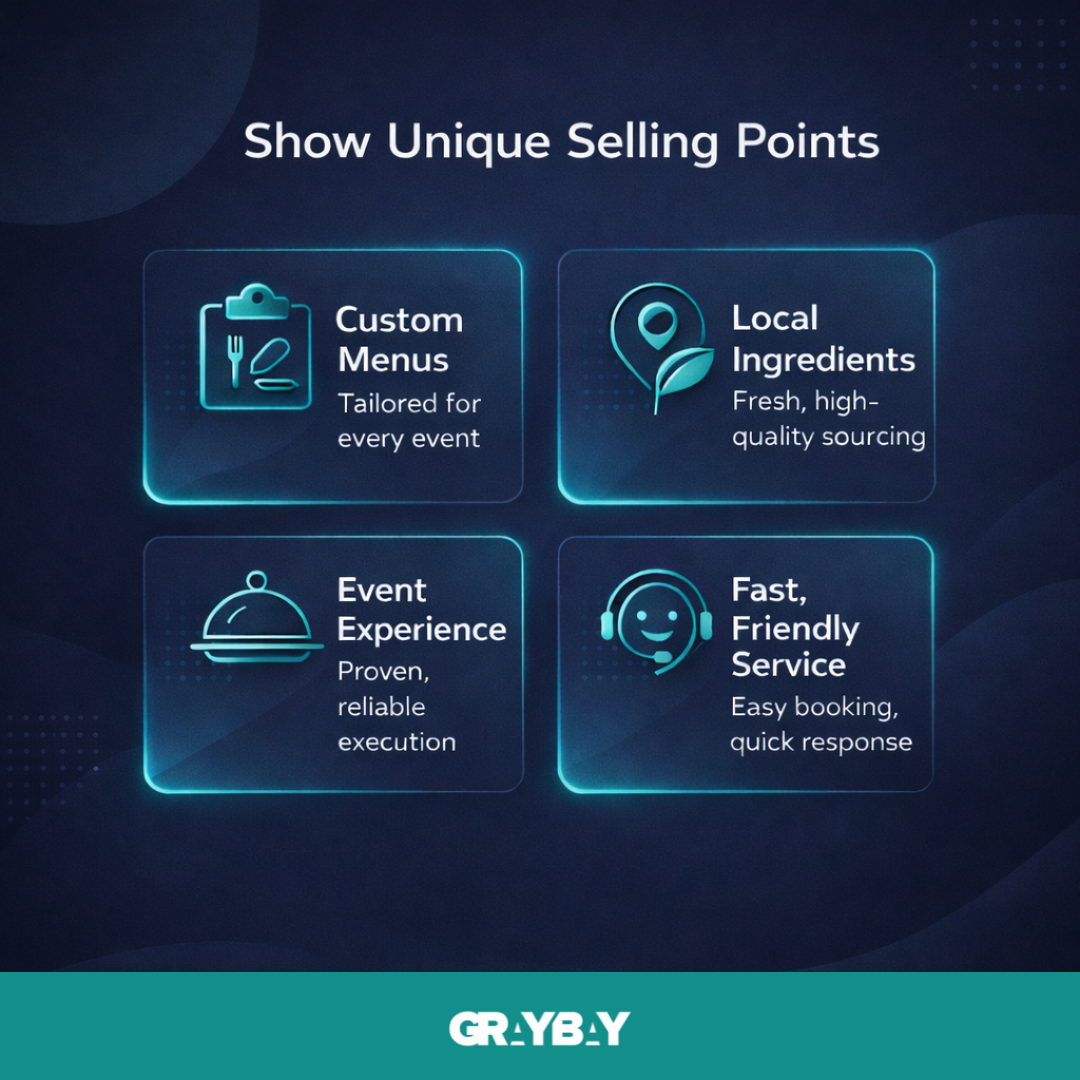
Some PPC landing page best practices to showcase your strengths:
Custom Menus: Tailored dishes for weddings, corporate events, or private parties show flexibility and care.
Local Ingredients: Fresh, locally sourced food signals quality and attention to detail.
Event Experience: Years of handling events with professionalism builds confidence.
Quick, Friendly Service: Responsive communication and easy booking reduce friction.
A page that clearly communicates your unique offerings makes visitors feel understood. When your USPs are obvious, they trust your service more, which naturally boosts conversions. This approach ensures the best catering marketing landing page keeps people engaged and ready to take action.
Build Trust and Credibility
Nothing encourages a visitor more than seeing that others have already had a great experience. Social proof adds credibility and helps your catering marketing landing page feel reliable instead of just another ad.
PPC landing page best practices to build trust are:
Customer Testimonials: Short quotes from happy clients about events you’ve catered.
Star Ratings & Reviews: Visual proof that your service delivers results.
Event Photos or Videos: Real examples of setups, dishes, and events create authenticity.
Client Logos: Corporate or repeat clients reinforce reputation and reliability.
When visitors see proof that your catering service is trusted and experienced, hesitation fades. Including social proof naturally guides them toward completing a form or clicking the CTA.
Craft a Catchy Headline
A headline sets the tone for the entire page. A landing page requires a headline that immediately communicates the value of your catering service, while a clear subheadline supports it and guides the visitor toward action. Following a solid PPC landing page strategy ensures the headline aligns with the ad that brought the visitor, keeping consistency and reducing confusion.
Some PPC landing page best practices to make headlines effective include:
Highlighting benefits instead of features, such as stress-free events or customizable menus.
Matching the visitor’s intent so they feel the page was made for them.
Adding a subheadline that clarifies the next step, like “Request a Quote Today” or “Check Availability Now.”
Integrating a PPC landing page strategy ensures your headline reinforces the promise made in your ad. A headline that matches the user’s search intent increases trust and keeps visitors engaged, which is critical for turning clicks into actual catering leads.
Read more:Email Marketing Strategy: 4 Steps to Promote Your Catering Services Successfully
Simplify Your Lead Form
Forms can feel like a barrier if they’re too long or complicated. A good landing page keeps things simple, asking only for the details that matter most. When visitors see an easy, straightforward form, hesitation disappears and the likelihood of inquiry increases.
PPC landing page best practices for a user-friendly form are:
Essential Fields Only: Name, event type, date, and optional budget. Anything extra can make visitors drop off.
Short & Clear Instructions: Labels and placeholders help people fill out the form quickly without second-guessing.
Visible Submit Button: Make the CTA obvious, such as “Get a Free Quote” or “Check Availability.”
Minimal Scrolling: Place the form where it’s easy to see, ideally above the fold or mid-page for quick access.
A landing page that respects a visitor’s time makes them more willing to submit information.
Optimize for Mobile
Mobile browsing has become the norm, especially for busy clients planning weddings, corporate events, or private parties. Your page should be designed for mobile to make the experience smooth, keeping visitors engaged instead of frustrated by slow loading or hard-to-click buttons.
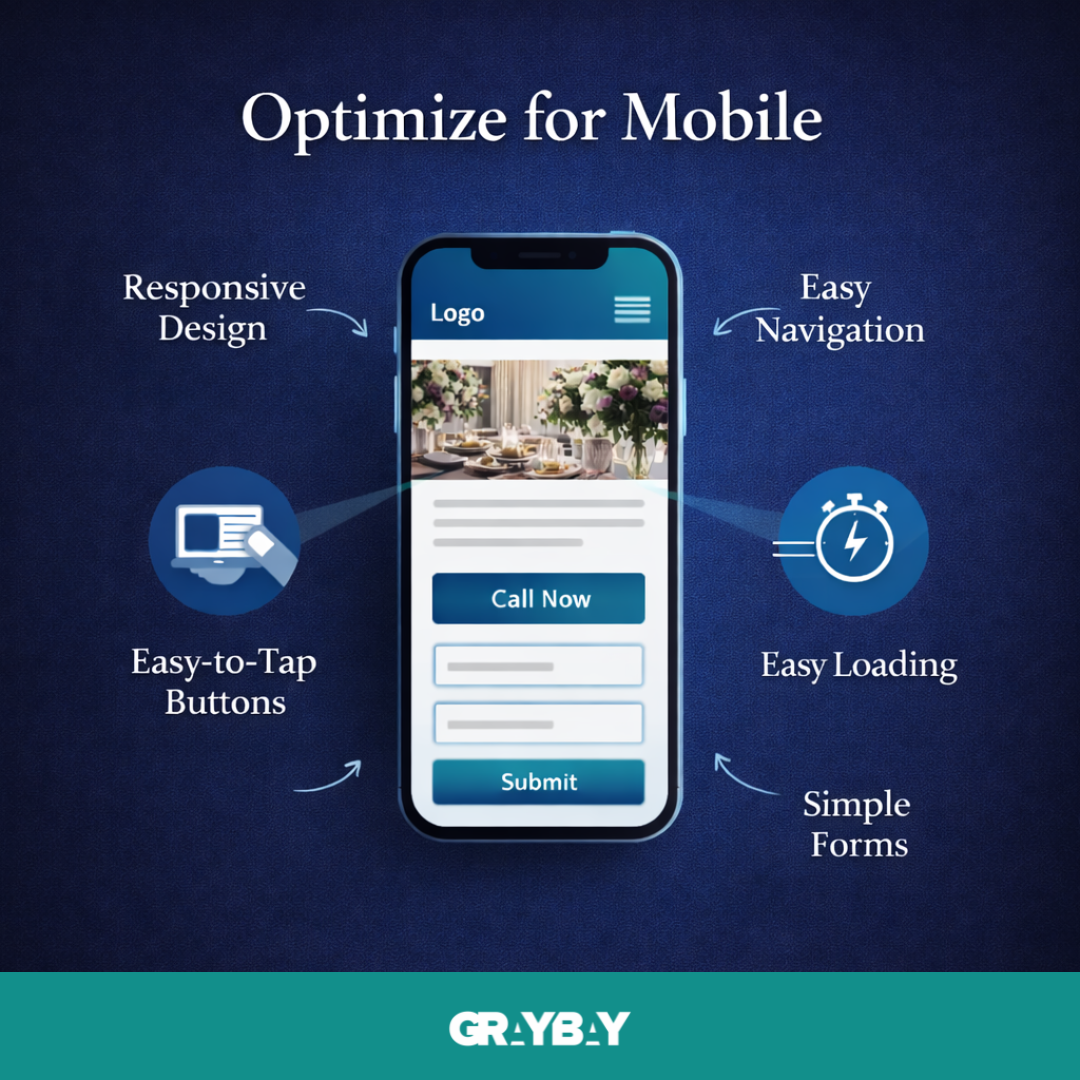
Key elements for mobile optimization:
Responsive Design: Images, text, and buttons adjust automatically to different screen sizes.
Fast Loading: Pages that load quickly reduce bounce rates and keep users interested.
Easy-to-Tap Buttons: Call-to-action buttons should be large enough for thumbs to click easily.
Simple Forms: Short forms that fit on the screen without scrolling make submissions painless.
A mobile-optimized landing page ensures that visitors have a seamless experience, no matter the device. This approach increases the chances of inquiries.
Align Google Ads Copy
Consistency between your Google Ads and landing page can make a huge difference in results. This means the landing page should feel seamless when visitors click an ad and immediately see what they were promised. When the message matches, trust builds instantly, and visitors are more likely to take action.
PPC landing page best practices to align your landing page with ads include:
Matching Headlines and Keywords: Ensure the headline on your landing page mirrors the ad copy. This reinforces the promise that attracted the click in the first place.
Consistent Benefits and Messaging: If an ad highlights stress-free weddings or custom menus, the landing page should echo those points clearly.
Visual Continuity: Use images that reflect the ad visuals or the type of events promoted in your campaigns.
Call-to-Action Consistency: If the ad encourages “Get a Free Quote,” the landing page should have the same CTA visible above the fold and throughout the page.
Alignment between ads and landing page improves Quality Score, reduces bounce rates, and ensures clicks are more likely to convert.
Track and Improve Performance
Tracking performance is a core part of PPC landing page best practices. A landing page doesn’t stop working once it’s live. It continues to get better when performance is tracked and improvements are made. Even small tweaks can make a big difference in turning clicks into real catering leads.
Ways to monitor and optimize your page:
Conversion Tracking: Tools like Google Analytics or Google Ads conversion tracking show which ads and pages generate leads. This helps identify what’s working and what needs attention.
A/B Testing Headlines and CTAs: Trying different headlines, subheadlines, or button texts reveals which version resonates most with visitors.
Layout and Visual Testing: Experimenting with image placement, section order, or form positioning can improve engagement and form submissions.
Monitoring Bounce Rate: Pages with high bounce rates may have confusing content, slow loading, or unclear next steps. Adjustments based on visitor behavior can reduce exits.
Regular tracking and testing ensure that the page keeps improving over time. Visitors respond better when content feels relevant, buttons are clear, and the page loads quickly. Optimizing in this way makes sure every click has the highest chance of turning into a catering lead.
Common Mistakes to Avoid When Creating PPC Landing Page Strategy
Even small mistakes can stop a landing page from turning clicks into leads. Some mistakes to watch out for include:
Sending Traffic to the Homepage: Visitors who click an ad want a page that directly matches their search intent. Generic homepages confuse and lose potential leads.
Too Much Text or Clutter: Walls of text overwhelm visitors. Short, clear sections with bullet points or visuals keep people engaged.
Weak or Hidden Call-to-Action: Buttons that are hard to find or unclear reduce submissions. Make the next step obvious with action-oriented text like “Get a Free Quote.”
Slow Loading Speed: Pages that take too long to load increase bounce rates. Fast, mobile-friendly pages keep visitors engaged.
Ignoring Mobile Users: With many visitors browsing on phones, a non-responsive design or hard-to-tap buttons can stop conversions.
Final Words
A landing page is more than just a destination for clicks—it’s the bridge between interest and action. A high-converting landing page guides visitors step by step, makes them feel understood, and builds enough trust to turn curiosity into real catering inquiries.
The steps covered here, from understanding visitor intent to aligning the page with ads, simplifying forms, and optimizing for mobile, work together to create a seamless experience. Each element reinforces your value and encourages visitors to take the next step without hesitation.
Build Landing Pages That Drive Real Results
Your landing page is only one piece of a successful marketing strategy. Gray Bay Marketing offers Paid Media Services, including Google Local Service Ads Management, Facebook marketing services, SEO Services in San Francisco & other parts of the world, plus a full range of digital marketing solutions to help catering businesses attract qualified leads, improve conversion rates, and turn more website visitors into confirmed bookings.
Schedule your free landing page audit today and discover how small improvements can lead to more catering inquiries!
FAQs
Can I really turn ad clicks into catering leads with a landing page?
Yes! A well-designed landing page guides visitors step by step, highlights your unique offerings, and makes it easy to take action. Following PPC landing page best practices ensures ad traffic converts into real inquiries.
How important is matching my landing page with my Google Ads?
Extremely important. When headlines, benefits, and visuals on your page match the ad that brought visitors, trust builds instantly. Consistency reduces bounce rates and increases the chance that visitors will submit a form or request a quote.
What’s the ideal length for a catering landing page?
Content should be clear and scannable. Enough information to answer questions and show value is important, but avoid clutter. Use headings, bullet points, images, and short sections to make it easy for visitors to engage.
What are the key PPC landing page design best practices?
A successful landing page combines clear structure, fast loading, and a mobile-friendly design. Focus on a strong headline, visible call-to-action buttons, minimal clutter, trust signals like testimonials, and visuals that match your ad. Following these PPC landing page design best practices helps turn clicks into real leads efficiently.
Do I need a mobile-friendly landing page?
Absolutely. More than half of visitors browse on mobile devices. A fast-loading, responsive page with easy-to-tap buttons ensures visitors have a smooth experience and are more likely to convert.
How often should I test or update my landing page?
Regular testing is key. Headlines, images, CTAs, and form placement can all impact performance. A/B testing and monitoring conversions help make small tweaks that keep your page performing at its best.
Can social proof really increase conversions?
Yes. Testimonials, star ratings, event photos, and client logos make your service feel credible. Visitors are more likely to trust a page when they see proof that others have had positive experiences.
What are the best PPC landing page tips to improve a low-performing landing page?
Focus on clarity and action. Simplify the form, highlight unique selling points, match the ad message, and make the CTA obvious. Even small changes can significantly boost conversions.