
Google Ads Strategy for Catering Companies in the San Francisco Bay Area
Are you struggling to get more bookings for your catering business in the San Francisco Bay Area? Maybe you’ve poured hours into social media posts, emailed past clients, or tried running ads, but the phone still isn’t ringing as much as you’d like. You know your food and service are top-notch, yet finding new clients feels like an uphill battle.
You’re not alone. Many catering companies face the same challenge: amazing offerings but limited visibility when potential customers are actively searching for catering services. That’s exactly where Google Ads for catering companies can make a real difference. When used strategically, Google Ads can put your business in front of the right audience at the right time, driving inquiries and bookings that actually convert.
In this guide, we’ll show you how to create a step-by-step Google Ads strategy that works for your catering business.
Let’s start.
What Is Google Ads for Catering Companies?
Google Ads for catering companies is a paid advertising strategy that targets high-intent search queries to generate leads, inquiries, and event bookings.
How Google Ads for Catering Companies Drive More Bookings
Google Ads for catering companies allows you to appear at the exact moment potential clients are searching for catering services. Unlike social media or organic posts, these campaigns capture high-intent users who are actively planning events and ready to book.
Why a Catering Google Ads Strategy Matters for Your Business
If you’ve been relying solely on word-of-mouth or organic posts, you might be missing out on clients who are actively searching for catering services right now. A catering Google Ads strategy allows you to reach people at the exact moment they’re planning events, booking venues, or looking for a menu that fits their needs. By targeting high-intent audiences, you can turn clicks into real bookings and avoid wasting time on leads that aren’t ready to commit.
Here’s why investing in Google Ads for catering companies can make a difference for your business:
Reach high-intent local search traffic: Your ads show up when people are actively searching for catering services in the Bay Area, so every click has a higher chance of converting into a booking.
Stand out in a competitive market: Even if other caterers offer similar menus, strategically crafted ads can highlight your unique offerings, like custom menus, signature dishes, or years of experience.
Drive inquiries and bookings: Well-targeted campaigns can generate phone calls, form submissions, and website inquiries, helping you secure more clients without relying solely on referrals.
Complement organic marketing: Google Ads works hand-in-hand with your social media, website content, and SEO efforts, creating a consistent presence that builds trust and visibility.
Show off your dishes and events: Using visuals, such as high-quality images of plated dishes, buffet setups, and event décor, helps potential clients envision their own celebrations with your catering.
When you implement a thoughtful strategy, Google Ads for catering companies doesn’t just increase traffic—it attracts the right traffic. This means more leads, more bookings, and a stronger presence in the San Francisco Bay Area catering scene.
Read more: How to Build an Email Marketing Funnel That Books Catering Events
How Catering PPC Advertising Drives High-Intent Leads?
A catering ppc advertising plan allows you to organize your efforts, track performance, and continuously optimize for bookings and inquiries. Below are the essential steps to get your campaigns off the ground:
Step 1: Define Goals for Google Ads for Catering Companies
Before launching any Google Ads for catering companies, it’s crucial to be clear about what you want to achieve. Are you aiming to generate more leads, drive traffic to your website, or increase brand awareness in the San Francisco Bay Area?
Each goal requires a slightly different approach, and defining it early ensures your campaigns. One of the most effective ways to do this is by setting SMART goals—Specific, Measurable, Achievable, Relevant, and Time-bound.
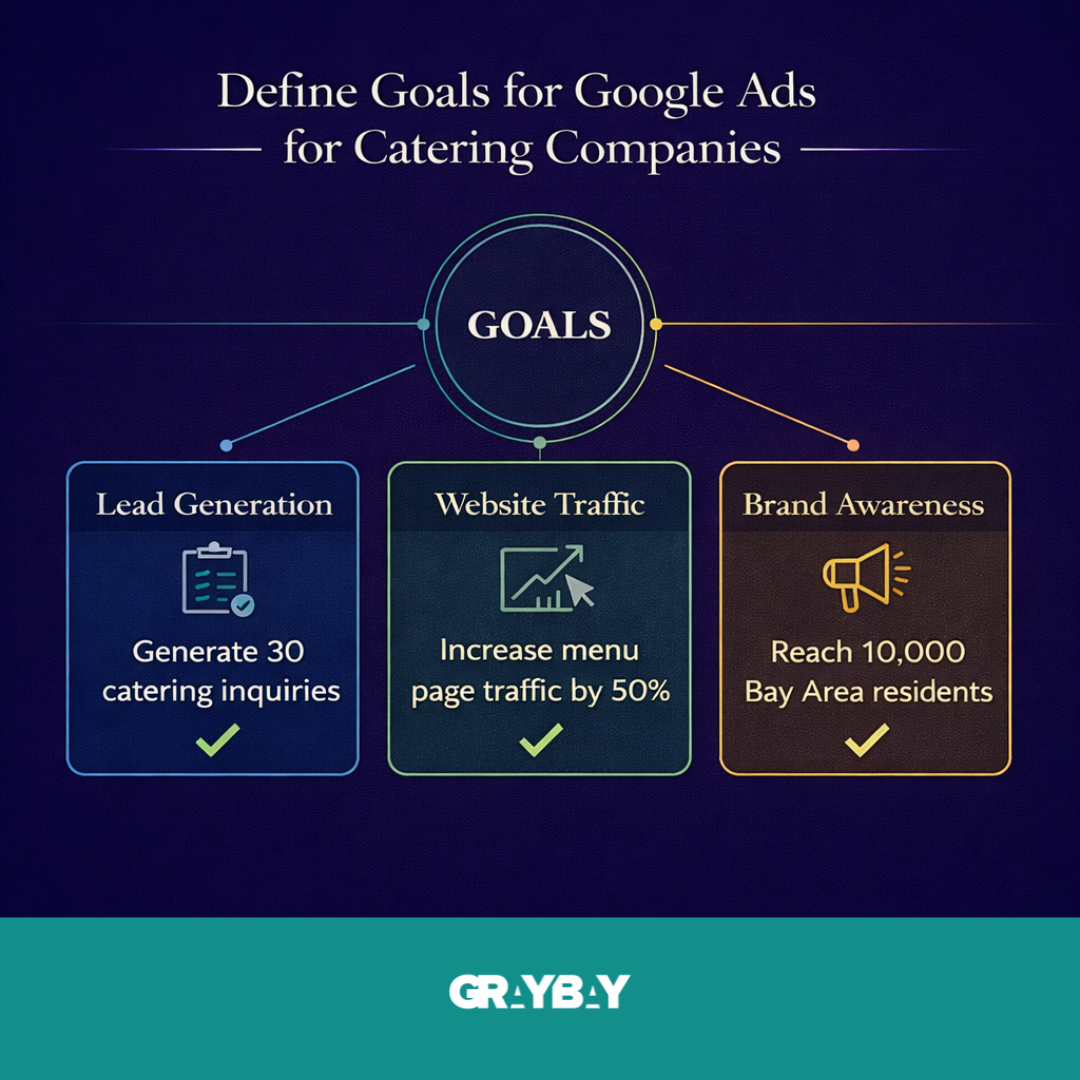
Here’s how different goals can transform your campaigns:
Lead Generation – If your goal is to get more inquiries or bookings, focus on conversions. Set a SMART goal like “Generate 30 catering inquiries in the next 30 days from San Francisco weddings.” This helps you choose the right keywords, optimize ad copy, and design landing pages that encourage visitors to take action.
Website Traffic – When you aim to drive people to explore your menu or services, the focus is on clicks and engagement. A SMART goal might be “Increase traffic to our wedding catering menu page by 50% in the next month.” This goal influences ad targeting, bidding strategies, and even the visuals you use to attract clicks
Brand Awareness – If your business is new or you want to establish a stronger presence, your goal could be “Reach 10,000 Bay Area residents with catering ads over the next 60 days.” In this case, your campaign will prioritize impressions and visibility over immediate conversions.
Combination Goals – Sometimes, businesses want multiple outcomes, such as brand awareness plus lead generation. Setting layered SMART goals ensures each campaign has a clear purpose and measurable metrics.
By defining clear SMART goals, you can align your campaign structure, keyword selection, ad copy, and landing pages with exactly what you want to achieve. This approach prevents wasted ad spend, increases efficiency, and ensures every part of your catering ppc advertising campaign contributes directly to measurable results.
Step 2: Understand Your Catering Audience and Search Behavior
Knowing who you’re targeting is just as important as knowing what to promote. Start by identifying your key client segments, such as corporate clients, weddings, private parties, or special events. Each segment has unique preferences, budgets, and expectations that should shape your ad messaging and targeting.
Next, consider demographics and search behavior. Think about questions like:
Are your ideal clients searching for catering services on mobile devices during work hours?
Do they tend to plan events weeks in advance?
Which neighborhoods in the Bay Area are most likely to book your services?
Collecting this data allows you to tailor your campaigns for maximum impact. Tailoring copy for Google Ads for catering companies and creatives to match different client segments increases relevance and engagement. For instance, corporate clients might respond to ads highlighting professional, timely service, while wedding clients may be drawn to luxury menus and visually stunning presentations.
Step 3: Keyword Research for Catering PPC Advertising Campaigns
Choosing the right keywords is the backbone of any successful campaign for Google Ads for catering companies. For catering businesses, this means targeting the terms your potential clients are actually typing into Google when looking for services. Focus on local and event-specific keywords to reach people who are ready to book.
To get a complete picture, analyze what competitors are bidding on. Which keywords are driving their traffic? Which services are highlighted in their ads? This insight can help you find gaps and opportunities for your own campaigns.
Here are some practical ways to approach keyword research:
Use Google’s Keyword Planner to find search volumes and competition
Look for long-tail keywords that reflect specific events or client needs
Check competitor ads to identify high-performing phrases
Organize keywords into themes for each campaign or ad group
Incorporate visual cues in ads with ads on Google for catering services to enhance engagement
Step 4: How to Structure a Catering Marketing Strategy for Google Ads
A well-structured catering marketing strategy for Google Ads for catering companies makes it easier to manage ads, track performance, and optimize results. Start by deciding on campaign types: Search campaigns help capture intent-based leads, Display campaigns showcase your visuals across websites, and Remarketing campaigns re-engage visitors who didn’t convert the first time.
Next, organize campaigns by service type, location, or event category. For example, create separate campaigns for weddings, corporate events, and private parties. This approach ensures your ads speak directly to the needs of each audience. Within each campaign, structure ad groups around keyword themes to improve relevance and Quality Score.
Here’s how to organize campaigns effectively:
Separate campaigns for different event types like weddings, corporate events, or parties
Group ad variations by theme, keyword, or audience segment
Use dedicated landing pages for each campaign to match search intent
Include visuals to highlight your unique offerings
Set clear goals for each campaign, such as inquiries, calls, or bookings
Step 5: Write Compelling Ad Copy
Once your campaigns for Google Ads for catering companies are structured, the next crucial step is crafting ad copy that grabs attention and drives action. Your ads need to communicate your unique value while speaking directly to the needs of your audience. In the competitive San Francisco Bay Area catering market, generic ads won’t stand out—you need messaging that converts.
Focus on these key elements when writing your ad copy:
Highlight Unique Selling Points (USPs) – Mention signature dishes, customizable menus, or years of experience. For example, “Delicious custom menus for weddings & corporate events – Trusted in San Francisco for 10+ years.”
Strong Calls-to-Action (CTAs) – Encourage immediate action with phrases like “Book Your Event Today,” “Get a Free Menu Consultation,” or “Reserve Your Date Now.”
Ad Extensions – Use call extensions to let clients dial directly, location extensions to show proximity, site link extensions for specific services (weddings, corporate, private events), and lead form extensions for quick inquiries.
A/B Testing – Test multiple headlines and descriptions to see what resonates best. For instance, one ad might emphasize “Luxury Wedding Catering,” while another highlights “Affordable Corporate Lunch Packages.” Track which generates more clicks and conversions.
Visual Engagement – Include online ads with high-quality images of your dishes or event setups. People respond to visuals that help them imagine their own event with your catering.
Read more: Email Marketing for Catering Companies: How to Build a List That Actually Converts
Step 6: Optimize Landing Pages
Even the best Google Ads for catering companies won’t convert if your landing pages don’t deliver. Optimizing your landing pages ensures that when someone clicks on your ad, they immediately find what they’re looking for, which increases the chances of booking. Each campaign should have a dedicated page tailored to the ad’s messaging and target audience.
Focus on clear, compelling messaging that aligns with the search intent. Include high-quality images of dishes, event setups, or client testimonials to build trust. Make forms simple, mobile-friendly, and easy to submit, reducing friction for potential clients.
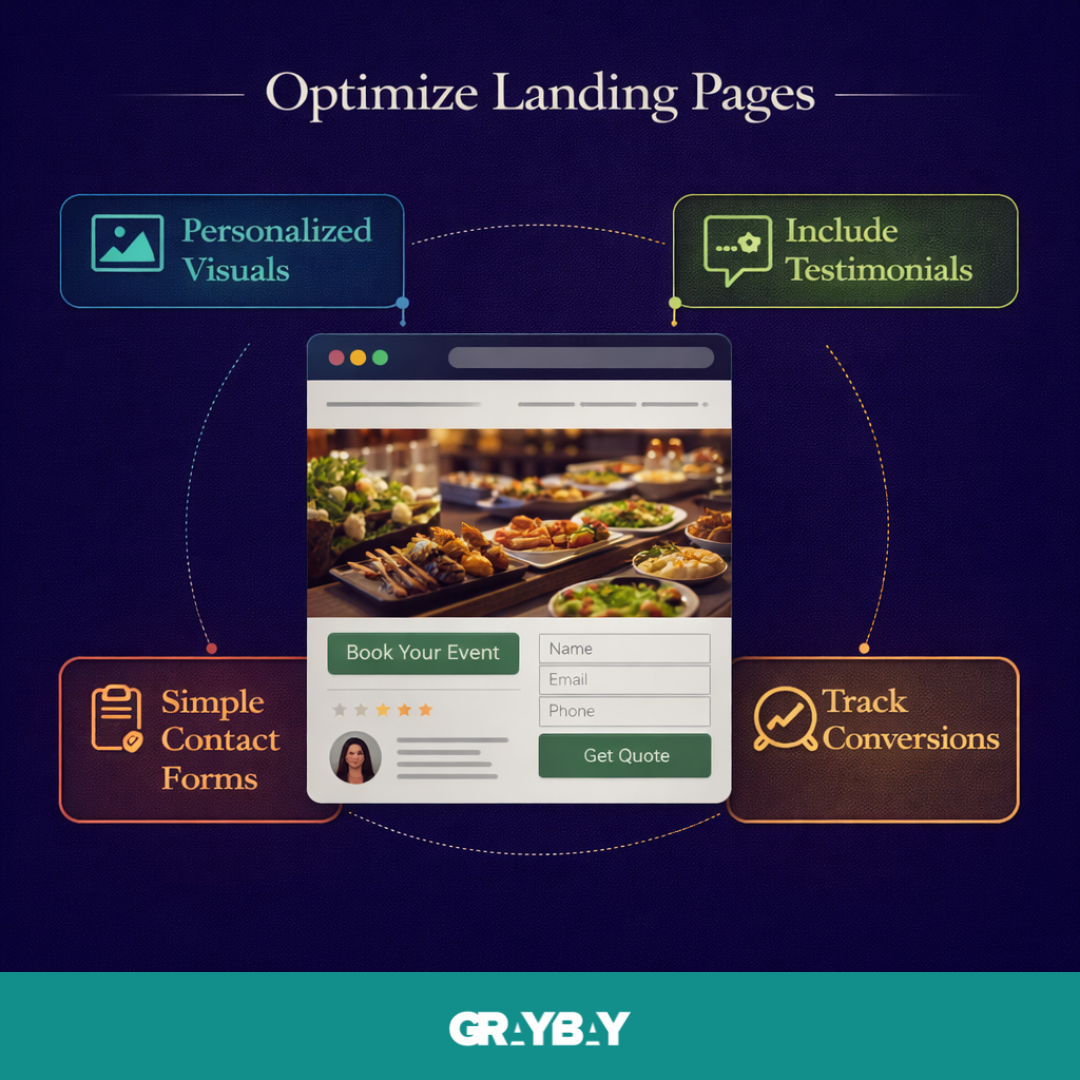
Here’s how to make your landing pages more effective:
Create dedicated pages for each service or event type to match the campaign focus
Highlight personalized visuals and menus that reflect your catering offerings
Include testimonials and reviews to add credibility
Make contact forms simple, mobile-friendly, and lead-focused
Use clear calls-to-action, such as “Book Your Event Today” or “Get a Free Menu Consultation”
Track conversions using Google Analytics or tag manager to measure which pages drive bookings
Integrating online ad visuals directly into the landing pages helps clients visualize their events and reinforces the message from your ads. Optimized landing pages not only improve conversions but also strengthen your overall Google Ads performance.
Step 7: Set Location Targeting and Ad Scheduling
To maximize your ad spend, it’s essential to reach the right people at the right time. Location targeting ensures your campaigns focus on neighborhoods and areas in the San Francisco Bay Area where your services are available. This prevents wasted clicks from areas you don’t serve.
Ad scheduling allows your ads to appear when clients are most likely to book. For example, research may show that people searching for catering services do so during business hours or on weekends when planning events. Aligning your schedule with search patterns increases the likelihood of engagement.
Tips for effective targeting and scheduling:
Use geo-targeting to focus on high-potential Bay Area neighborhoods
Exclude areas outside your service radius to save budget
Schedule ads to appear during peak search times for your audience
Adjust bids for high-performing times or locations to maximize ROI
Include Google advertising for caterers' imagery to attract attention in specific regions
Step 8: Define Budget and Bidding Strategy
Once your campaigns are structured and targeting is set, it’s time to determine how much to spend and how to bid for ad placements. Your budget should align with your goals, whether it’s lead generation, website traffic, or brand awareness.
Different bidding strategies help achieve specific outcomes:
Maximize Conversions: Automatically optimizes bids to get the most leads within your budget
Target CPA (Cost Per Acquisition): Ensures each conversion stays within a set cost
Manual CPC (Cost Per Click): Gives control over bids for specific keywords or audiences
Other important considerations include:
Adjust bids for high-performing segments, such as wedding clients or corporate accounts
Allocate higher budgets to campaigns or ad groups that show strong results
Monitor spending daily or weekly to prevent overspending
Step 9: Track, Analyze, and Optimize
Once your campaigns are live, tracking performance is crucial. Without monitoring, you won’t know what’s working and what needs adjustment. Analytics allows you to understand which ads, keywords, and landing pages are driving bookings, so you can continuously improve your results. This ongoing optimization is one reason many businesses choose to work with a paid advertising agency, where campaign data is reviewed regularly to improve performance and maximize return on ad spend.
Start by setting up conversion tracking through Google Ads and Google Analytics. Track phone calls, form submissions, and clicks to ensure every interaction is measured. Monitor key metrics such as click-through rate (CTR), cost per lead, and return on investment (ROI) to identify high-performing and underperforming campaigns.
Tips to optimize campaigns effectively:
Regularly review campaign performance and pause low-performing keywords or ads
Adjust bids based on the best-performing segments to maximize ROI
Test new ad copy or visuals to improve engagement
Optimize landing pages for higher conversions based on user behavior
Expand campaigns that are performing well to similar audiences or locations
Use ads to reinforce branding and attract more clicks
Step 10: Explore Advanced Strategies
After mastering the basics, advanced strategies can take your campaigns to the next level. These tactics help you stay competitive and capture leads that standard campaigns might miss.
Consider incorporating Google Local Services Ads if available, which puts your catering business directly in front of local searchers. Remarketing is another powerful approach, allowing you to reconnect with visitors who didn’t convert the first time. Seasonal or event-specific campaigns can also be effective, targeting holidays, corporate seasons, or wedding peaks.
Other strategies to enhance campaigns include:
Showcase client reviews and social proof to build trust
Create limited-time offers for peak event seasons to drive urgency
Use remarketing lists to re-engage past visitors with tailored messaging
Test display ads with high-quality images of your dishes and setups
Implementing these strategies ensures your catering company's Google Ads campaigns reach more potential clients, convert more leads, and ultimately maximize bookings.
Additional Tips for Catering Companies
Even after setting up and optimizing your Google Ads for catering companies, a few extra strategies can give your catering business a competitive edge. These tips focus on enhancing visibility, building trust, and maximizing the effectiveness of every ad dollar spent.
Showcase High-Quality Visuals – People eat with their eyes first. Include professional images of your dishes, event setups, and buffet arrangements. Visual content in ads and landing pages helps potential clients imagine their own events with your catering.
Encourage Client Reviews and Testimonials – Positive feedback from satisfied customers boosts credibility. Highlight reviews on landing pages, ads, and social media to show new clients why they should trust your services.
Pair Google Ads Campaigns with Social Media Marketing – Integrating campaigns with Instagram, Facebook, or Pinterest can amplify reach and reinforce your brand message. Retarget clients across platforms for better engagement.
Track Seasonal Trends for Event Planning – Pay attention to peak booking times for weddings, corporate events, or holiday parties. Adjust your ad schedule and budget to capitalize on high-demand periods.
Regularly Test and Refine Campaigns – Small tweaks in headlines, images, or call-to-actions can significantly improve performance. Use A/B testing to determine what resonates best with your audience.
These tips complement your core Google Ads strategy, making campaigns more visually appealing, trustworthy, and aligned with client needs.
Final Words
Launching a Google Ads for catering companies for your catering business is more than just placing ads—it’s about connecting with clients at the exact moment they are planning events. By setting clear goals, understanding your audience, selecting the right keywords, and structuring campaigns thoughtfully, your ads can attract high-intent leads and convert them into real bookings.
Take your Digital Advertising to new heights with Gray Bay Marketing. From Google Local Service Ads Management that generates qualified local leads to Facebook marketing services that build awareness and engagement, we create advertising strategies that help catering businesses attract more bookings and grow with confidence. Let’s connect and turn your next campaign into a steady stream of loyal clients and unforgettable events!
FAQs
Why should my catering business use Google Ads?
Google Ads allows your catering business to reach clients who are actively searching for catering services. Unlike organic marketing, ads appear at the right moment when potential clients are ready to book, increasing the chances of inquiries and confirmed events.
How much should I budget for Google Ads for my catering company?
Your budget depends on goals, competition, and target locations. It’s best to start with a monthly budget aligned with your goals (lead generation, website traffic, or brand awareness) and adjust based on campaign performance to maximize ROI.
What type of campaigns work best for catering businesses?
Search campaigns capture high-intent clients actively looking for services, Display campaigns showcase visuals to attract attention, and Remarketing campaigns re-engage visitors who didn’t book the first time. A combination often works best.
How do I choose the right keywords for my catering ads?
Focus on local and event-specific keywords that potential clients are likely to search. Long-tail keywords like “wedding buffet catering San Francisco” or “corporate lunch catering Bay Area” often have higher intent and lower competition.
Can I track if my Google Ads are actually generating bookings?
Yes. By setting up conversion tracking in Google Ads or Google Analytics, you can measure phone calls, form submissions, and website clicks. Tracking ensures your campaigns are bringing in real leads and helps you optimize for better results.
How can visuals improve my catering Google Ads campaigns?
High-quality images of dishes, buffet setups, and past events help clients visualize their own celebrations with your catering. Including catering business online ads visuals in ads and landing pages boosts engagement and conversion rates.