
Google Ads vs Facebook Ads for Catering Companies: Which Generates More Leads?
If you run a catering business, you already know how unpredictable bookings can feel. Some weeks are packed, while others slow down without warning. On top of that, competition keeps growing, and getting consistent leads starts to feel harder than it should be. That is where understanding Google Ads vs Facebook Ads becomes a real solution, not just another marketing decision.
Many catering companies ask whether to invest in Google ads or Facebook ads, but the answer depends on timing, intent, and budget.
This blog is designed to help you figure out what actually works. Instead of guessing where to spend your budget, you will learn how both platforms bring in leads, where they fit in your growth strategy, and how to choose the right approach based on your goals. By the end, you will have a clear direction to follow so you can stop wasting money and start bringing in steady catering inquiries.
Why Digital Advertising for Catering Companies Matters
The catering world is bustling, and standing out requires more than just good food. That’s where digital advertising for catering companies comes in—it makes sure people notice a business at the right moment. Ads help highlight what’s unique about a service, whether it’s creative menus, event setups, or fast delivery, so bookings don’t depend on luck or word of mouth alone.
Here is Why Paid Advertising Works for Catering:
Visibility at the Right Moment: Ads make it possible to appear when someone is searching for catering services or browsing for event ideas online.
Attract People Before They Search: Social media platforms allow businesses to spark interest and curiosity, often before someone even types a query.
Highlight What Makes a Service Unique: Eye-catching visuals, menu options, and event setups can all be showcased through well-designed ads.
Create a Consistent Flow of Leads: Instead of waiting for inquiries to trickle in, ads maintain attention and engagement steadily across seasons.
In short, digital advertising doesn’t just fill seats or orders—it helps a catering business stay present, reach the right people, and guide them from curiosity to booking without relying on chance.
How Google Ads for Event Catering Drives High-Intent Leads
For catering companies looking to attract serious leads, Google Ads for event catering offers precise targeting. It connects with potential clients exactly when they are searching for services, making campaigns highly efficient.
Campaigns can be optimized through keyword selection, location targeting, and scheduling, ensuring ads reach the right audience. Tracking performance metrics allows ongoing refinements to maximize conversions. Google ads for event catering are especially effective for last-minute bookings and high-intent corporate inquiries.
Advantages of Google Ads
Keyword-Level Targeting: Ads can be tailored to match exact phrases such as “wedding catering near me” or “corporate catering services [city].” This reduces irrelevant clicks and ensures the audience is already in decision mode.
Location Precision: Targeting can focus on a specific city, ZIP code, or a defined radius around an event venue. This ensures that every impression is seen by someone who can actually book your services.
Ad Scheduling and Timing: Ads can run during peak hours when searches for catering are highest, such as evenings or weekends. This prevents wasted spend during low-traffic periods.
Advanced Bid Strategies: Google Ads allows automated or manual bidding to maximize conversions within budget constraints. Strategies like target CPA or maximize conversions help achieve cost-efficient results.
Conversion Tracking and Analytics: Track leads, form submissions, or phone calls to measure campaign success. Adjust bids, keywords, or ad copy in real time based on performance data to improve ROI consistently.
Remarketing Capabilities: Re-engage users who visited your website but didn’t convert. Customized ads can remind them of your services, increasing the chances of booking.
Read More: How Catering Companies Can Reduce Cost Per Lead in Google Ads
How Facebook Ads for Catering Businesses Build Demand and Awareness
Unlike search-based campaigns, Facebook and Instagram ads let businesses capture attention before someone actively searches for catering services. This makes it ideal for building interest and nurturing leads over time.
With Facebook ads for catering businesses, campaigns can be precisely targeted based on demographics, interests, and behaviors. For example, ads can focus on engaged couples, corporate event planners, or party organizers in a specific city, ensuring that visual content reaches a relevant audience. With Facebook ads for catering businesses, you can consistently reach new audiences, and Facebook ads for catering businesses also help nurture long-term bookings.
Advantages of Facebook Ads
Advanced Audience Targeting: Narrow audiences by age, location, life events, and interests, such as weddings, corporate events, or party planning. This ensures ads reach people most likely to engage.
Visual Storytelling: Carousel ads, videos, and high-quality images allow catering companies to showcase food presentation, event setups, and service quality effectively.
Custom Audiences and Retargeting: Retarget website visitors or past clients to maintain engagement. Customized messages can remind users of upcoming events or seasonal offers.
Campaign Optimization Tools: Use A/B testing for ad creative, copy, and placement. Facebook’s algorithm automatically prioritizes high-performing ads to maximize results within budget.
Lead Generation Forms: Facebook lead forms simplify inquiries by collecting details without leaving the platform, increasing conversion rates.
Performance Analytics: Track impressions, clicks, conversions, and cost per lead to continually adjust campaigns for higher efficiency.
Google Ads vs Facebook Ads: Key Differences That Impact Lead Generation
Deciding where to invest marketing budget is easier when you understand the differences between Google Ads and Facebook Ads. Each platform attracts and nurtures leads differently, which is crucial for catering companies looking to generate consistent inquiries. While Google Ads targets high-intent searchers, Facebook Ads engages users at the discovery stage. Using both strategically can maximize bookings and ROI.
Here are the key differences:
1. Intent vs Interest
One of the most important distinctions in lead generation is intent versus interest. Google Ads captures high-intent users—people searching for terms like “wedding catering near me” or “corporate catering services” are actively looking to hire a catering service. This means that campaigns are likely to generate leads that are ready to convert. Using Google Ads for event catering allows for precise keyword targeting, location settings, and ad schedules, ensuring every impression is meaningful.
Facebook Ads, in contrast, work on generating interest rather than capturing immediate intent. With Facebook ads, visually engaging content is used to spark curiosity and awareness among potential clients who may not yet be actively searching. Carousel ads, video showcases, and lead forms help introduce the brand and build trust over time.
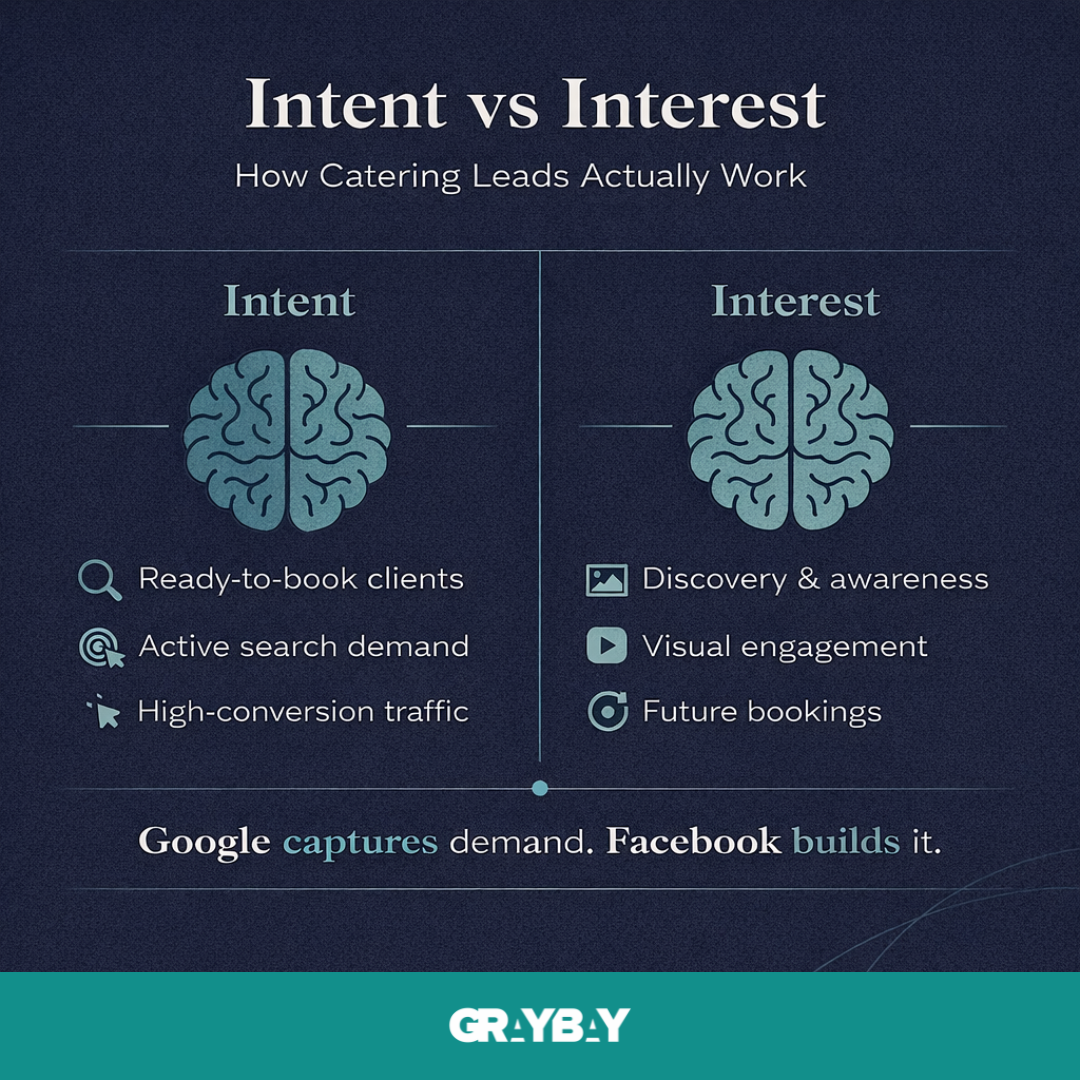
Benefits of Intent-Driven Campaigns (Google Ads)
Connect with ready-to-book clients
Track conversions easily
High-quality clicks
Benefits of Interest-Driven Campaigns (Facebook Ads)
Build brand awareness early
Engage audiences before the search
Retarget website visitors
When considering Google Ads vs. Facebook Ads, it is clear that the two approaches complement each other. Google captures immediate demand while Facebook nurtures future leads.
2. Demand Capture vs Demand Creation
Another core difference lies in how each platform deals with demand.
Google Ads is excellent for demand capture. People using search engines are looking for catering solutions right now, making campaigns highly effective for time-sensitive events like weddings, corporate events, or holiday parties. With Google Ads, businesses can target specific keywords, optimize bids, and schedule ads to appear exactly when potential clients are searching.
Facebook Ads focuses on demand creation, using social media advertising for catering to introduce services to a wider audience who might not yet be aware they need catering. Eye-catching visuals, videos of menus or setups, and carousel ads encourage engagement and awareness.
This difference explains why Google Ads or Facebook Ads shouldn’t be treated as substitutes. Combining both ensures a catering business captures immediate leads while simultaneously creating interest among future clients.
3. Buyer Journey Stages
Understanding where your audience is in the buyer journey is critical for lead generation. Google Ads primarily targets users at the decision stage. People searching for “wedding caterers near me” are evaluating options and are ready to take action. Google Ads lets businesses present clear offers, menus, or booking options that meet this stage directly.
Facebook Ads engage users earlier in the funnel—awareness and consideration stages. Through Facebook ads, campaigns can showcase food styling, event setups, client testimonials, or seasonal promotions to spark interest. Over time, retargeting strategies can nurture these users into leads.
Integrating both platforms ensures a full-funnel approach. In Google Ads vs. Facebook Ads, Google converts interest into immediate action, while Facebook nurtures audiences for future bookings.
4. Speed of Results
Speed is often underestimated when choosing a marketing channel. Google Ads delivers almost instant results because it targets users with clear intent. Once campaigns are live, leads can start coming in within hours for high-priority keywords. By using Google Ads, businesses can optimize bidding, adjust keywords, and schedule ads to hit peak search times for maximum efficiency.
Facebook Ads, however, generally produce slower results since they rely on engagement and nurturing. Users see visual ads, engage with posts, and may only convert after multiple exposures. Through social media advertising for catering, remarketing campaigns help move these users along the funnel, but it typically takes longer than search-based conversions.
This timing difference is key in deciding which platform to prioritize, depending on whether a business needs immediate bookings or wants to create a pipeline of future leads.
Read more:How Much Should Catering Companies Spend on Google Ads? (Budget Guide)
5. Cost Structure Differences
Cost is another critical factor when comparing Google Ads vs Facebook Ads. Google Ads typically has a higher cost per click (CPC) because it targets high-intent users. However, these leads often convert faster, improving ROI. Using Google Ads, businesses can implement strategies like target CPA or maximize conversions to control spending.
Facebook Ads usually offers a lower CPC, but leads may require additional nurturing before booking. Campaigns for Facebook ads for catering businesses can leverage A/B testing, audience refinement, and visual storytelling to improve conversion rates over time.
By understanding these cost differences, catering businesses can allocate budget efficiently, ensuring the right balance between immediate lead capture and long-term audience engagement.
Which is the Best Marketing Channel for Catering Businesses?
For immediate, high-intent inquiries, Google Ads is the ideal choice. People searching for phrases like “wedding catering near me” or “corporate catering services [city]” are actively looking to book. Keyword targeting, precise location settings, and scheduled campaigns make Google Ads effective at reaching clients at the exact moment they are ready to take action.
On the other hand, Facebook Ads focuses on discovery and engagement. Through Facebook ads, businesses can reach audiences who may not yet realize they need catering services. High-quality visuals, videos, and carousel ads spark curiosity and build awareness over time. Retargeting keeps engaged users top-of-mind so that when they are ready to book, the business is already familiar.
Key Considerations for Choosing the Best Marketing Channel for Catering Businesses
Lead Intent: Google captures high-intent users ready to book, while Facebook nurtures early-stage interest and curiosity.
Budget Allocation: Google typically has a higher CPC but faster conversions, whereas Facebook reaches a broader audience with lower CPC but may need follow-up campaigns to convert leads.
Business Stage: New businesses benefit from Facebook to generate awareness, while established businesses often see better ROI with Google’s search-driven campaigns.
Event Timing: For last-minute or seasonal bookings, Google drives immediate results. For long-term planning, Facebook builds familiarity and engagement over time.
In the comparison of Google Ads vs Facebook Ads, most catering companies find the best results by integrating both. Google secures ready-to-book leads, while Facebook nurtures interest and builds brand recognition, creating a full-funnel strategy that maximizes bookings and ROI consistently.
Google Ads vs Facebook Ads: Quick Summary for Catering Companies
Google Ads: Best for high-intent leads actively searching for catering
Facebook Ads: Best for awareness, engagement, and long-term bookings
Best Strategy: Combine both for a full-funnel approach
Budget Tip: Use Google for immediate ROI, Facebook for pipeline building

Final Words
After exploring the strengths of each platform, it’s clear that Google Ads vs Facebook Ads isn’t about picking one over the other—it’s about knowing how and when to use each. Google Ads captures high-intent leads ready to book, while Facebook Ads nurtures curiosity and builds awareness. When combined strategically, they create a full-funnel system that consistently fills calendars with new inquiries.
At Gray Bay Marketing, the goal is to help catering businesses turn online marketing into tangible results. Whether you need Google Local Service Ads Management to connect with nearby customers actively searching for catering or Facebook marketing services to build awareness and generate demand, our Paid Media Services help unify search and social campaigns into a strategy that delivers qualified leads and measurable ROI.
Don’t let potential leads slip away. Schedule a consultation or strategy session with us today, and start generating consistent, high-quality catering inquiries that grow your business.
FAQs on Facebook Ads vs Google Ads
What’s the main difference between Google Ads and Facebook Ads for catering?
The main difference lies in intent versus discovery. Google Ads targets people actively searching for catering services, making it ideal for high-intent, ready-to-book leads. Facebook Ads focuses on discovery, using visuals and engagement to spark interest and nurture potential clients before they start searching.
Are Google Ads better than Facebook Ads for catering companies?
Both have strengths. Google Ads captures ready-to-book clients, while Facebook Ads nurtures interest and builds awareness. Most successful businesses use a combination for full-funnel results.
How much should I spend on catering ads?
Budgets vary by business size and goals. For Google Ads, high-intent campaigns may need higher CPC, while Facebook allows broader reach at lower costs. Gray Bay can help optimize budget allocation.
Do Facebook Ads work for local catering services?
Yes. Facebook allows targeting by location, interests, and behaviors, making it effective for local events and niche audiences.
Can I run both Google and Facebook Ads together?
Absolutely. Integrating Google Ads vs Meta Ads ensures immediate leads from search and long-term engagement from social media, creating a balanced, high-performing strategy.