
Email Marketing for Catering Companies: How to Build a List That Actually Converts
Ever wondered why some catering companies always seem to get booking requests while others struggle to fill their schedules? The answer often comes down to one simple thing: they know how to use email marketing for catering companies the right way. Many catering businesses focus only on social media photos of delicious food, but forget that real customer relationships are often built inside the inbox.
Think about it. People planning weddings, corporate events, or family celebrations usually need time to decide. They may browse menus, compare prices, and check service quality before placing an order. That is where smart email marketing steps in and keeps your brand on their radar.
Without a list, it feels like sending menu promotions out into the wind and hoping someone catches them. But when you learn how to build the right email list, everything changes. Your messages start reaching people who actually want your catering services instead of random readers who may never book. In this guide, we will talk about practical ways catering businesses can grow their audience, improve engagement, and turn subscribers into real event bookings.
Let’s get started.
Why Catering Email Marketing Still Works for Event Businesses
Here are several reasons why email marketing remains effective for catering businesses:
Direct communication with potential clients: Email gives catering companies a direct line to people who have already shown interest in their services. Unlike social media posts that depend on algorithms, emails land straight in the subscriber’s inbox and create a more personal connection.
Perfect for long event planning cycles: Many events, such as weddings, corporate gatherings, and birthday celebrations, require weeks or even months of planning. Catering email marketing helps businesses stay top of mind by sending helpful updates, menu ideas, and reminders during the planning journey.
Highly cost-effective marketing: Compared to paid advertising or event promotions, email marketing requires a relatively small budget. Catering companies can reach hundreds or thousands of potential customers at once without spending heavily on ads.
Great for showcasing menus and event ideas: Emails provide space to highlight seasonal menus, special packages, themed catering ideas, or limited-time offers. This visual and informative content helps clients imagine how the catering service can fit into their upcoming events.
Encourages repeat business and referrals: Many catering clients return for future events or recommend services to friends. Email newsletters help maintain that relationship by sharing updates, holiday menus, and exclusive offers that keep previous customers engaged.
Builds long-term brand trust: Consistent and helpful email communication positions a catering business as professional and reliable. When customers regularly see useful content in their inbox, they begin to trust the brand and feel more confident choosing it for important occasions.
Allows personalized marketing messages: Catering businesses can segment their email lists based on event type, location, or customer preferences. This allows them to send tailored content such as wedding catering tips, corporate lunch options, or party menu suggestions.
For event-based businesses, staying connected with potential clients is just as important as providing great food. Catering email marketing continues to work because it keeps the conversation going, builds trust over time, and gently guides clients toward booking the service when their event plans become final.
How to Build an Email List for a Catering Business
Growing your subscriber list is the foundation of successful catering marketing. Here are the proven steps for this:
Step 1: Offer Something Valuable to Join Your List
Building a strong subscriber base starts when people feel they are getting something useful in return for sharing their email address. Many catering businesses make the mistake of asking visitors to subscribe without clearly explaining the benefit, and this often leads to low signup rates because people do not see a reason to join.
If you want to improve email marketing for catering companies, think about what event planners, families, and corporate clients usually search for when they need food services. Most people planning celebrations are looking for help with menu selection, cost planning, or event food ideas. That means your subscription offer should solve a small but important problem for them.
You can use several practical catering marketing ideas to encourage visitors to join your email list:
Free party menu planning guide
First catering order discount
Wedding or corporate event checklist
Seasonal food recipe suggestions
Celebration menu package updates
Bonus Tip:
Use digital tools to create subscription forms whenever you want to build an email list for catering business. This will 10x your speed and even help in tracking real-time features. Popular tools include:
Mailchimp – Simple email signup form builder and automation
HubSpot – Advanced CRM and marketing tracking features
ActiveCampaign – Smart segmentation and follow-up automation
When you follow smart catering email marketing practices, your signup offer should always feel useful, simple, and related to real event needs rather than looking like a hard sales promotion.
Read more on: Content Gap Analysis: The Strategy to Rank Higher on Google
Step 2: Use Website and Social Media Together
Growing your email audience becomes much easier when you combine website marketing with social media promotion. Instead of depending on one marketing channel, successful catering businesses spread their message across multiple platforms to attract more subscribers.
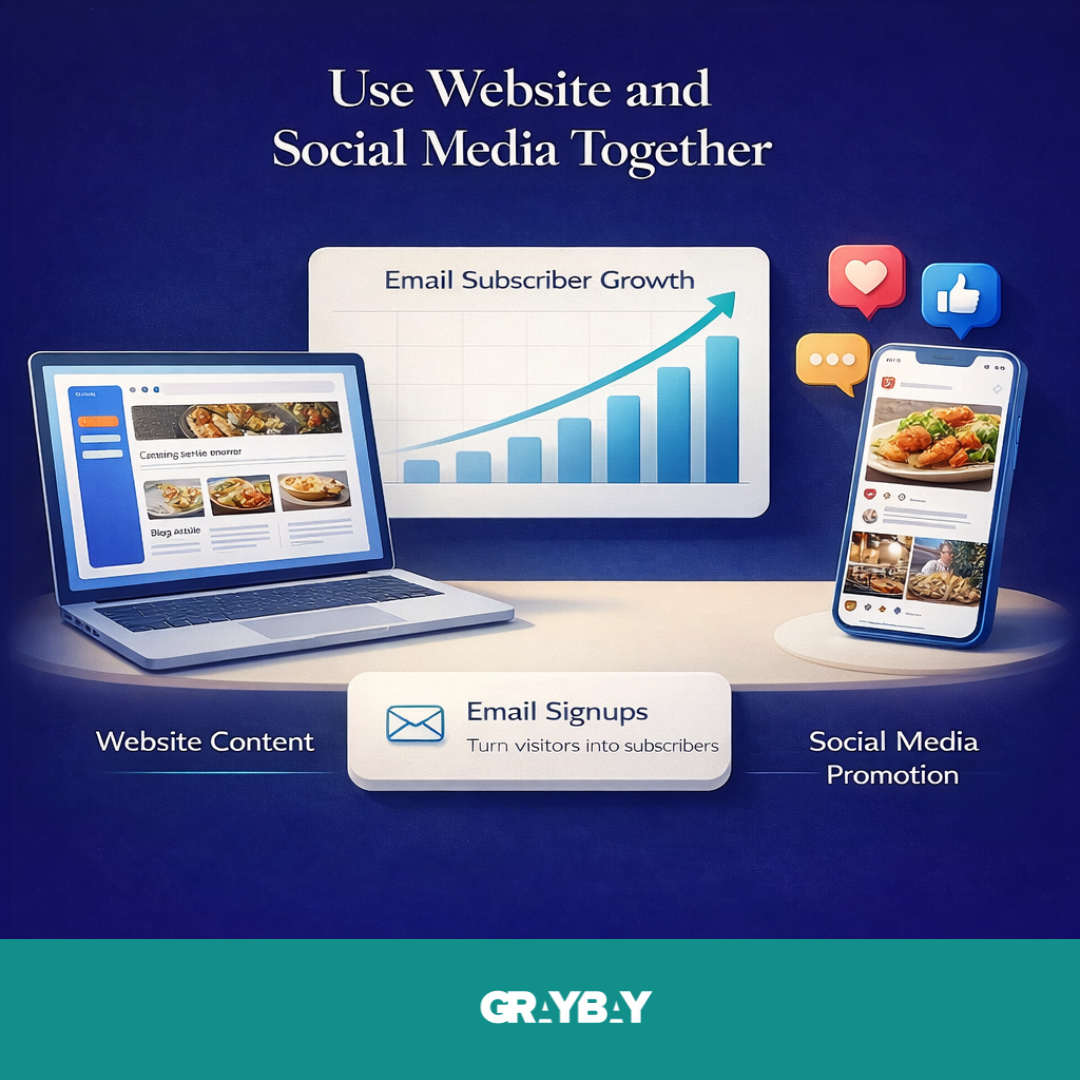
If your goal is to improve email marketing for catering companies, you should place subscription opportunities where potential customers are already looking for catering information.
You can add email signup forms to:
Catering service pages on your website
Blog articles about event food planning
Menu gallery sections
Pricing or package information pages
Plus, use platforms like Facebook and Instagram to share:
High-quality food presentation photos
Customer event testimonials
Behind-the-scenes kitchen preparation videos
Seasonal catering offers
Then add a simple subscription link in your profile bio or post caption.
This approach works well in catering email marketing because it turns social interest into long-term customer communication.
Step 3: Create Simple but Attractive Email Signup Offers
When you want to improve email marketing for catering companies, the signup experience should feel natural and easy, rather than complicated or overwhelming. Customers interested in catering services usually prefer messages that are clear, helpful, and directly related to their event planning needs.
Instead of using long promotional text, focus on explaining the value of joining your mailing list. You can easily build an email list for catering business when people start understanding what they will receive after subscribing. The offer should feel like a small, helpful gift rather than a sales push.
Some ideas that work well include:
Early access to catering menu updates
Event planning tips for food preparation
Seasonal catering package announcements
Tools such as Mailchimp, HubSpot, and ActiveCampaign can help automate welcome messages and manage subscriber communication. These platforms also allow businesses to organize customer lists based on interest levels, which helps deliver more relevant catering promotions.
Another important point is making sure the signup form appears in places where potential customers naturally look for information. Placing subscription options near menu pages, service descriptions, or blog content can help capture visitor attention without feeling intrusive.
Step 4: Share Useful Content and Catering Marketing Ideas
Keeping subscribers engaged is just as important as gaining new ones because inactive subscribers may stop opening emails over time. If you want to do smart email marketing for catering companies, you should focus on sharing useful information instead of sending constant sales messages.
Customers planning events usually appreciate content that helps them make better food and service decisions. That is why your catering marketing ideas should include helpful guidance about celebration food choices, seasonal menu updates, and service availability.
Regular email communication can include:
Menu highlights for upcoming seasons
Catering service improvements
Booking availability announcements
The goal is to keep your catering brand visible while maintaining customer trust. Too many promotional messages can feel annoying, but helpful information helps subscribers stay connected and interested in your services.
Read more on: B2B PPC Advertising Tips for Campaigns That Drive Big Impact
Step 5: Test and Improve Your Catering Email Performance
No email marketing strategy works perfectly from the beginning. Successful businesses always analyze results and improve their campaigns over time. Testing helps you understand what your audience prefers and how they respond to different catering offers. Instead of guessing, you should rely on real data to improve campaign performance.
You can evaluate several important factors when measuring email success:
Open rates to check subject line performance
Click rates to measure content interest
Inquiry or booking responses
Subscriber growth patterns
As businesses review these results, many catering companies gradually introduce email automation and segmentation to refine their campaigns. These tools allow them to send more targeted messages based on subscriber interests, which naturally improves open rates, increases click-through activity, and keeps subscribers engaged with relevant content.
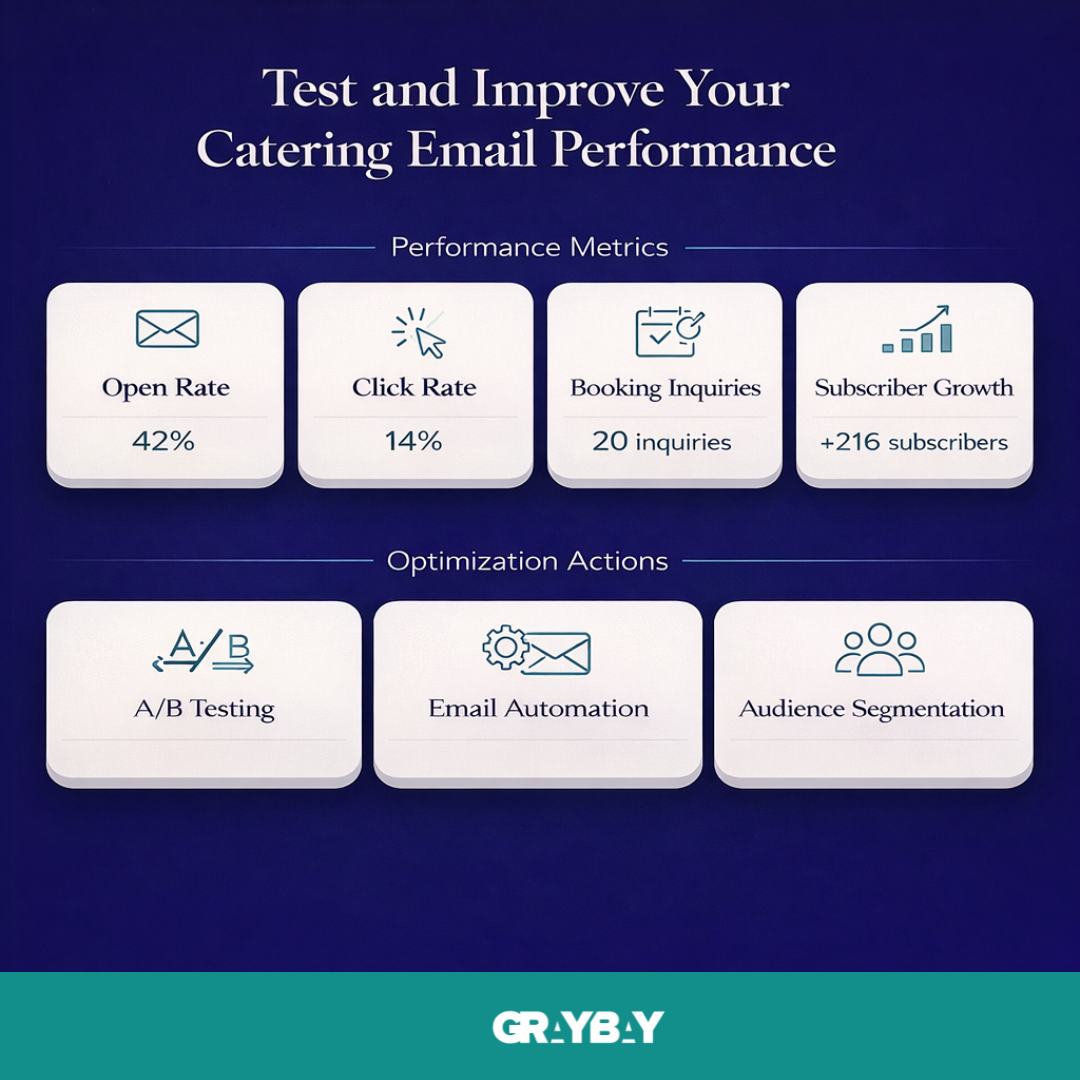
Continuous improvement is essential if you want to effectively build an email list for a catering business. Small adjustments in messaging, timing, or design can gradually increase customer engagement and booking inquiries.
Wrapping Up
Growing a successful catering business today is not only about preparing great food but also about building meaningful customer communication through smart marketing. When you focus on email marketing for catering companies, you create a direct connection with people planning events, celebrations, and corporate gatherings.
Building stronger customer relationships starts with the right marketing mix. Gray Bay Marketing offers LLM SEO agency solutions, Google Ads Management Services, Facebook ads marketing agency expertise, and comprehensive digital marketing services designed to help catering businesses attract more local customers, strengthen brand recognition, and increase event bookings.
Partner with Gray Bay Marketing today, and let's build a marketing strategy that supports your next stage of growth.
FAQs on Catering Email Marketing
What is email marketing for catering companies?
Email marketing for catering companies is a strategy that helps catering businesses communicate directly with event planners through targeted email campaigns, menu updates, and booking offers..
How can I build an email list for my catering business?
You can build an email list by offering valuable signup incentives such as event planning guides, first-order discounts, or seasonal menu updates. Adding subscription forms to your website, blog pages, and social media profiles also helps attract potential catering customers.
How often should catering businesses send emails?
Catering businesses can send one or two emails per week, depending on customer engagement. The focus should be on sharing useful information rather than sending too many promotional messages, which may cause subscribers to lose interest.
Which tools are best for building a catering email strategy?
Popular tools include Mailchimp, HubSpot, ActiveCampaign, and Google Analytics. These platforms help manage subscriber lists, automate email campaigns, and track customer engagement metrics such as open rates and click behavior.