
How AI Is Changing Google Ads Campaign Management for Service Businesses

Every month, service businesses invest in Google Ads expecting consistent leads—but the results often don’t justify the spend. Budgets get drained by low-intent clicks, and manual bid adjustments quickly turn into a time-consuming guessing game.
Well, for many service businesses, managing ad spend manually is stressful, time-consuming, and often frustrating. That’s where AI in Google Ads transforms how campaigns are managed, optimized, and scaled.
In this blog, we’ll show how AI-Powered Google Ads can help you make every advertising dollar count. You’ll learn how AI optimizes your spend, targets the right customers, and improves campaign performance automatically.
Let’s begin.
What Is AI in Google Ads?
AI in Google Ads uses machine learning to automatically optimize bidding, targeting, ad copy, and budget allocation based on real-time data and user behavior.
How AI in Google Ads Has Evolved from Automation to Smart Campaigns
Many service businesses may not realize how far AI in digital advertising has come. Google Ads didn’t always include intelligent automation. Early campaigns required manually setting bids, choosing keywords, and constantly monitoring performance—tasks that were not only time-consuming but also prone to human error. Over time, Google and other platforms introduced AI-powered features that slowly transformed campaign management.
Key milestones in the evolution of AI in Google Ads include:
2009–2013: Introduction of automated bidding strategies to adjust bids based on performance signals.
2014–2017: Machine learning started helping with audience targeting and remarketing, improving lead quality.
2018–2020: Smart Campaigns and responsive ads began suggesting keywords, headlines, and ad placements automatically.
2021–Present: Advanced AI tools now optimize bids, budgets, ad copy, and audience segments simultaneously, predicting outcomes with greater accuracy.
Today, service businesses may rely on AI ppc campaign optimization to automatically adjust campaigns, forecast trends, and target the right customers, which drastically reduces wasted spend and helps them make smarter advertising decisions.
How AI-Powered Advertising Is Transforming Google Ads Campaigns in 2026
Service businesses may spend hours trying to adjust bids, test ad copy, and manage budgets manually—but results often fall short. AI-powered advertising allows service businesses to automate complex campaign decisions while improving performance in real time.
Here’s how AI may transform Google Ads campaigns for service businesses:
Automated Bidding and Budget Optimization: AI may analyze historical data and user behavior to predict the best bids, adjusting budgets in real time for peak hours, locations, or services.
Audience Targeting and Segmentation: AI may identify high-intent leads and segment audiences based on behavior, demographics, and interests, ensuring ads reach the right people.
Ad Copy and Creative Optimization: AI may suggest ad variations, test headlines, and personalize ad copy for different audiences to increase engagement and conversions.
Performance Monitoring and Reporting: AI dashboards may track campaign metrics automatically, providing actionable insights without manual analysis.
Predictive Campaign Scaling: AI may identify which campaigns may expand successfully, helping businesses scale without overspending or losing efficiency.
Continuous Campaign Refinement: AI may spot trends, detect underperforming ads, and suggest improvements to maintain peak performance over time.
As AI-powered advertising continues to evolve, campaigns become more predictive, efficient, and scalable.
Read more: Email Marketing for Catering Companies: How to Build a List That Actually Converts
Benefits of Using AI Google Ads Automation for Service Business Campaigns
With AI Google Ads automation, service businesses can eliminate manual guesswork and rely on data-driven decisions.
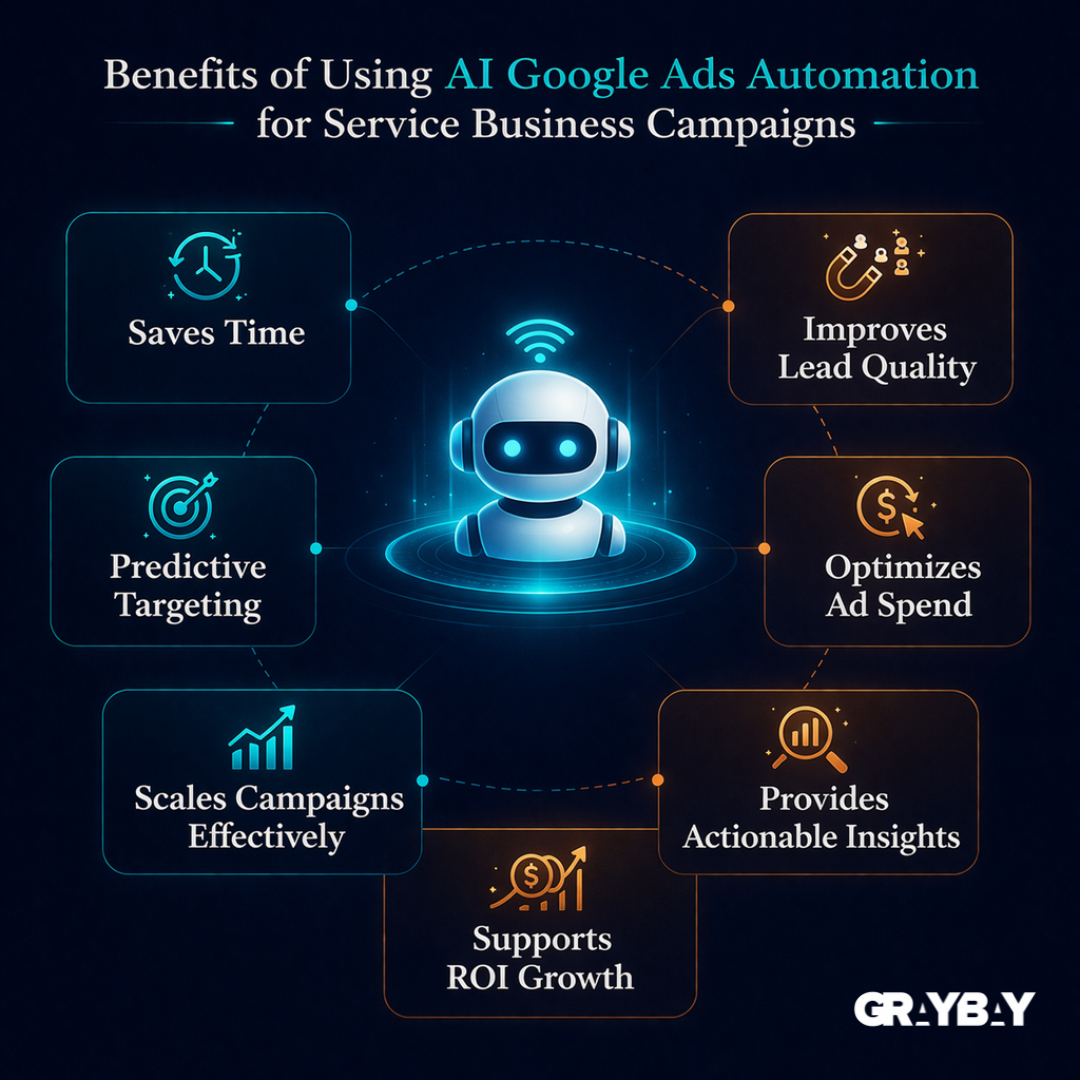
Here are the key benefits service businesses can experience when leveraging AI Google Ads automation:
Saves Time: AI may automate repetitive tasks like bid adjustments, keyword suggestions, and performance monitoring, freeing up time for strategic planning.
Improves Lead Quality: By analyzing user behavior and intent, AI-Powered Google Ads helps target customers who are most likely to convert, increasing the value of each lead.
Optimizes Ad Spend: AI may identify high-performing campaigns and allocate budgets efficiently, reducing wasted clicks and maximizing ROI.
Provides Actionable Insights: With AI-driven reporting, businesses may gain clear insights into what works and what doesn’t, making it easier to refine campaigns continuously.
Scales Campaigns Effectively: Businesses may confidently scale their campaigns, expanding reach without overspending, while AI manages budgets and ensures growth remains cost-efficient and targeted.
Predictive Targeting: AI may anticipate which users are most likely to convert based on behavior patterns, interests, and previous interactions for better results.
Enhances Ad Relevance: Ads may be matched precisely to audience intent, improving engagement, click-through rates, and ensuring potential customers see the most relevant offers.
Supports ROI Growth: Every advertising dollar may be guided toward generating meaningful leads, improving return on investment, while maximizing the efficiency of Google Ads campaigns.
Read more: Email Marketing Strategy: 4 Steps to Promote Your Catering Services Successfully
AI PPC Campaign Optimization Tips for Service Businesses
Managing multiple Google Ads campaigns may feel overwhelming, especially when budgets are tight and every click counts. AI optimization can take the guesswork out of campaign management, helping service businesses spend smarter and get better results.
Here’s how AI may optimize PPC campaigns effectively:
1. Automated Bid Adjustments
With AI, bid management may no longer require constant manual changes. AI optimization can automatically analyze historical data, user behavior, and device trends to set optimal bids for each keyword. Key advantages include:
Maximizes exposure to high-intent users without overpaying.
Saves hours of manual work weekly.
Adapts automatically to seasonal trends or shifting competition.
By automating bids, campaigns remain competitive, efficient, and scalable. Every advertising dollar may work toward meaningful leads while reducing errors caused by manual adjustments. Over time, AI may continuously refine strategies, ensuring consistent performance without the stress of constant human oversight.
2. Keyword Prioritization
AI identifies which keywords drive the most qualified traffic, allowing businesses to focus their budgets strategically. With AI optimization, benefits include:
Prioritizing high-intent keywords based on historical performance.
Suggesting long-tail keywords that are cost-effective and relevant.
Pausing or modifying underperforming keywords automatically.
This dynamic approach ensures campaigns target users actively searching for services, reducing wasted clicks and improving ROI. AI may also continuously monitor keyword performance and reallocate resources to top performers, keeping campaigns agile and responsive to market trends.
3. Dynamic Audience Segmentation
AI can go beyond basic demographics, analyzing behavior to create precise audience segments. Using AI optimization, businesses may:
Target individuals based on past engagement and search patterns.
Identify micro-segments within broader audiences.
Continuously refine segments as AI learns from interactions.
This ensures ads reach the right people with high conversion potential, minimizing wasted spend. Dynamic audience segmentation allows service businesses to maximize every advertising dollar while building meaningful engagement with potential clients.
4. Ad Copy Testing
Creating ad copy manually is time-consuming, and guessing what works can be costly. AI optimization may:
Generate multiple ad variations automatically.
Test headlines, descriptions, and calls-to-action for best performance.
Suggest personalized copy for audience segments or locations.
AI continuously learns which messaging drives engagement and conversions, adjusting campaigns automatically. This reduces wasted spend on underperforming ads and keeps campaigns fresh, engaging, and optimized for maximum results.
5. Budget Allocation
AI may manage budgets in real time, directing funds to the campaigns that deliver the highest returns. With AI PPC campaign optimization, businesses may:
Avoid overspending on low-performing campaigns.
Scale investment in high-performing campaigns automatically.
Adjust budgets based on peak hours, locations, or demand spikes.
By reallocating funds intelligently, campaigns remain efficient, and every advertising dollar contributes to meaningful leads, maximizing ROI while reducing waste.
When Should You Start Using AI in Google Ads?
Service businesses often wait too long before adopting AI. If your campaigns feel unpredictable or inefficient, it may be time to switch.
Signs include:
- Rising cost per lead
- High ad spend with inconsistent results
- Manual optimization taking too much time
- Difficulty scaling campaigns profitably
At this stage, AI in Google Ads can help stabilize performance and improve ROI.
What Are the Best AI Marketing Tools for Google Ads Management?
When it comes to managing campaigns efficiently, AI in Google Ads can be a game-changer for service businesses. Leveraging the right AI-powered platforms allows marketers to automate tedious tasks, make data-driven decisions, and maximize ROI.
Some of the most effective AI Marketing tools are:
Google Smart Campaigns: Automatically optimizes bids, targeting, and ad placements to improve campaign performance.
Third-Party AI Platforms: Tools like WordStream Advisor or Adzooma may analyze campaigns, suggest keyword improvements, and forecast trends.
Predictive Analytics Features: AI identifies which audiences and ad types may perform best, reducing wasted spend.
Automated Recommendations: Platforms may suggest ad copy tweaks, budget adjustments, and keyword reallocations to maximize conversions.
By integrating these tools, service businesses can harness AI in Google Ads to reduce manual workload, target high-intent customers, and continuously improve campaigns. Every advertising dollar may work smarter, driving meaningful leads while keeping ad spend efficient.
What Are the Challenges and Considerations?
While AI in Google Ads can transform campaign management, service businesses should be aware of potential challenges to maximize effectiveness. Understanding these considerations ensures AI works as a helpful assistant rather than a risky replacement.
Key challenges include:
Over-Reliance on Automation: Fully depending on AI may overlook subtle human insights or creative strategies.
Learning Curve: Setting up AI tools and understanding their recommendations may require time and training.
Data Privacy Concerns: Ensuring compliance with privacy regulations is critical when AI analyzes user behavior.
Budget Misallocation Risks: AI may occasionally favor campaigns that perform well historically, potentially neglecting new opportunities.
Technical Glitches: Errors or misconfigurations in AI tools may lead to wasted spend if not monitored.
By acknowledging these challenges, businesses can leverage AI in Google Ads responsibly, combining automated insights with human oversight to optimize campaigns, reduce wasted spend, and maintain high-quality leads.
Best Practices for AI-Based Google Ads
To get the most out of AI in Google Ads, service businesses should follow best practices that combine automation with human strategy. Implementing these approaches ensures campaigns run efficiently, conversions improve, and ad spend is optimized.
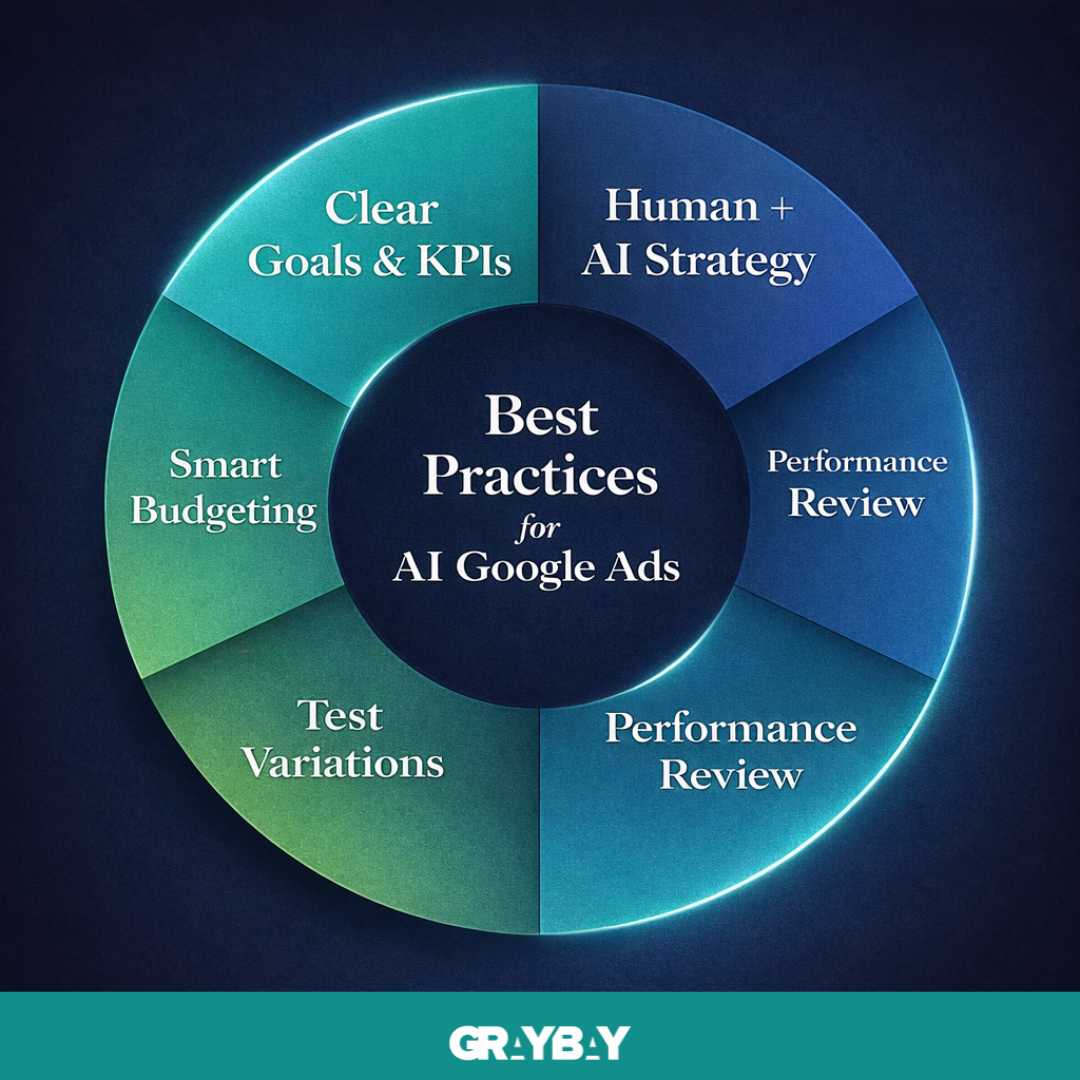
Key best practices include:
Set Clear Goals and KPIs: Define campaign objectives and track performance to guide AI-driven decisions effectively.
Combine AI Insights With Human Oversight: While AI-Powered Google Ads can make recommendations, human judgment ensures relevance and creativity.
Regularly Review Campaign Performance: Monitor AI suggestions, check for anomalies, and adjust strategies to align with business goals.
Continuously Test AI-Generated Ad Variations: Experiment with headlines, descriptions, and visuals suggested by AI to find the highest-performing combinations.
Optimize Budget Allocation: Focus spending on high-performing campaigns while pausing or adjusting low-performing ones.
Following these best practices allows service businesses to use AI in Ad Campaigns strategically, boosting efficiency, reducing wasted spend, and driving more meaningful leads.
Final Words
Integrating AI in Google Ads allows service businesses to streamline campaigns, optimize every advertising dollar, and reach high-intent customers more efficiently. With AI handling bidding, targeting, and ad optimization, marketers save time while improving conversion rates and lead quality. Combining AI insights with human oversight ensures campaigns remain creative, strategic, and aligned with business goals.
If your Google Ads campaigns feel inconsistent or inefficient, the issue is rarely budget—it’s how the system is structured. AI in Google Ads works best when strategy, data, and execution are aligned. At Gray Bay Marketing, we combine AI-driven optimization with real operator experience to build campaigns that actually drive revenue—not just clicks. Whether you're looking for Google Local Service Ads Management, Facebook marketing services, or a paid media consultation to improve campaign performance, we help service businesses generate qualified leads and maximize every advertising investment.
FAQs
How does AI improve Google Ads campaign performance?
AI in Google Ads analyzes historical data, predicts user behavior, and automatically adjusts bids, targeting, and ad copy. This ensures campaigns reach the right audience, reduce wasted spend, and increase conversions.
Can small service businesses benefit from AI in advertising?
Yes. Even small businesses can leverage AI in Google Ads to optimize spend, identify high-intent leads, and improve overall campaign efficiency without needing a large marketing team.
Is AI fully replacing human campaign managers?
Not entirely. Google Ads with AI provides actionable insights and automation, but human oversight is essential to ensure creativity, strategy, and quality control are maintained.
How quickly can businesses see results using AI?
Results depend on campaign complexity and data volume. AI in Google Ads may optimize bidding, targeting, and ad copy in real-time, but measurable improvements often appear within weeks of proper implementation.
What is the role of predictive targeting in AI campaigns?
Predictive targeting within AI for Google Ads anticipates which users are likely to convert, helping service businesses focus their spend on high-value leads and improve ROI efficiently.