
Meta Ads Strategy for Mobile Food Brands: How to Drive High-Intent Leads

Imagine this: it’s Friday evening, and you’re scrolling through Instagram while waiting for dinner. You see a tempting video of cheesy pizzas being pulled from the oven, a fresh sushi platter, and even a local cafe’s weekend special. Within seconds, you’re tapping “Order Now” without a second thought.
That’s the power of Meta ads for food brands—catching hungry customers at the perfect moment and nudging them to act. For mobile food apps and restaurants, this isn’t just about pretty pictures; it’s about connecting with people who are ready to order, making every ad dollar count, and turning casual scrollers into loyal customers.
This blog will show you how food brands and mobile apps can use Meta ads to reach hungry customers, set up campaigns, and drive real orders. You’ll also get practical tips, a simple advertising strategy, and ways to turn casual scrollers into loyal app users.
What Are Meta Ads for Food Brands?
Meta ads for food brands are paid advertisements that appear across Facebook, Instagram, Messenger, and the Audience Network. They provide a way to reach the right customers at the right time, turning casual scrollers into people ready to order. With precise targeting, compelling visuals, and strong calls-to-action, these ads can help increase orders, app installs, and overall engagement.
Why Meta Ads Matter for Food Businesses
When it comes to mobile platforms, Meta ads for food brands are especially powerful. They let restaurants and delivery services show dynamic content based on user behavior—like suggesting a favorite dish someone has viewed before. This level of personalization ensures that ads feel relevant, which drives more clicks and higher conversion rates.
Key ways mobile Meta ads can boost your food business:
Real-time personalization: Show ads based on what a user has browsed or ordered before, like promoting morning specials to frequent breakfast customers.
Location-based targeting: Reach people near your restaurant or delivery area, so your ads are always relevant and actionable.
Retarget abandoned carts: Remind customers of items they viewed but didn’t order, possibly adding incentives like free delivery.
Seasonal or trending promotions: Highlight limited-time offers, holiday specials, or popular dishes to capture attention at the right moment.
Habit-building: Frequent, timely ads encourage users to return to your app repeatedly, boosting loyalty and repeat orders.
How to Set Up Meta Ads for Food Brands?
To get the most out of Meta ads for food brands, it’s essential to link your app and website so you can track user behavior accurately. Here’s how to do it:
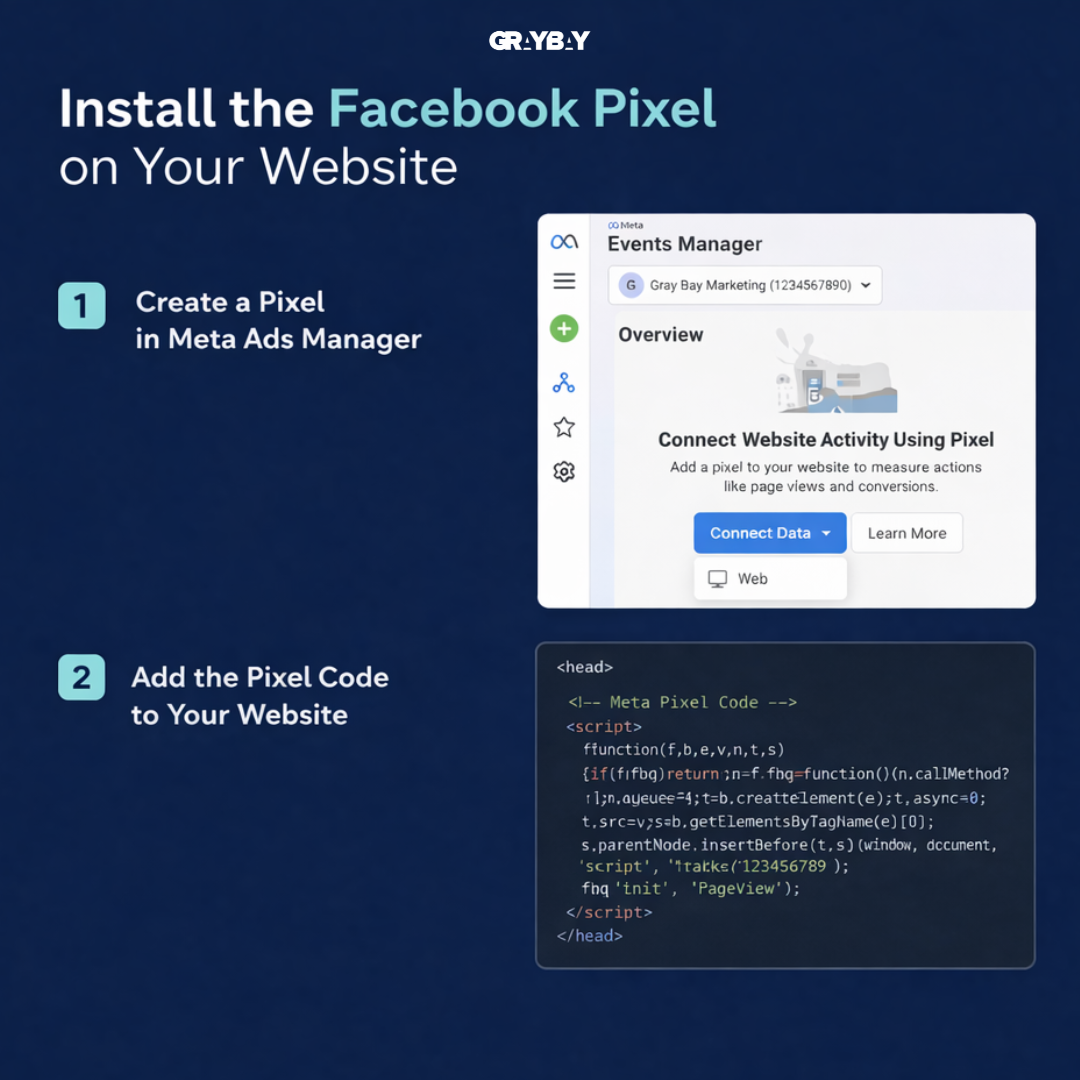
1. Install the Facebook Pixel on Your Website
Go to your Meta Ads Manager and create a Pixel.
Add the Pixel code to your website’s header or use a plugin if you’re on Shopify, WordPress, or similar platforms.
This allows you to monitor actions like page views, menu clicks, or completed orders.
2. Integrate the Meta SDK into Your App
For mobile apps, download the Meta SDK for iOS or Android.
Follow Meta’s setup instructions to track in-app events, as the app opens, add-to-cart actions, and completed orders.
This step ensures your ads can retarget users who interact with your app.
3. Verify Data Flow
Use Meta’s Event Manager to confirm that your website and app events are firing correctly.
Test key actions, like browsing the menu or placing an order, to ensure the data is being tracked.
4. Set Up Custom Audiences
Once tracking is in place, create audiences of people who visited your website, browsed items, or used the app but didn’t order.
These high-intent users can then be targeted with specific Meta ads, increasing the likelihood of conversions.
5. Launch Retargeting Campaigns
With tracking enabled, you can now run personalized Meta ads for food brands that show exactly what users have interacted with, nudging them to complete their order or try new dishes.
Food Business Advertising Strategy That Drives Orders
Running a food business in today’s mobile-first world means going beyond traditional marketing. Whether you’re managing a local restaurant, a delivery-only brand, or a mobile food app, having a structured advertising strategy is essential to attract high-intent customers and keep them coming back. Here are some tips on building the right food business advertising strategy:
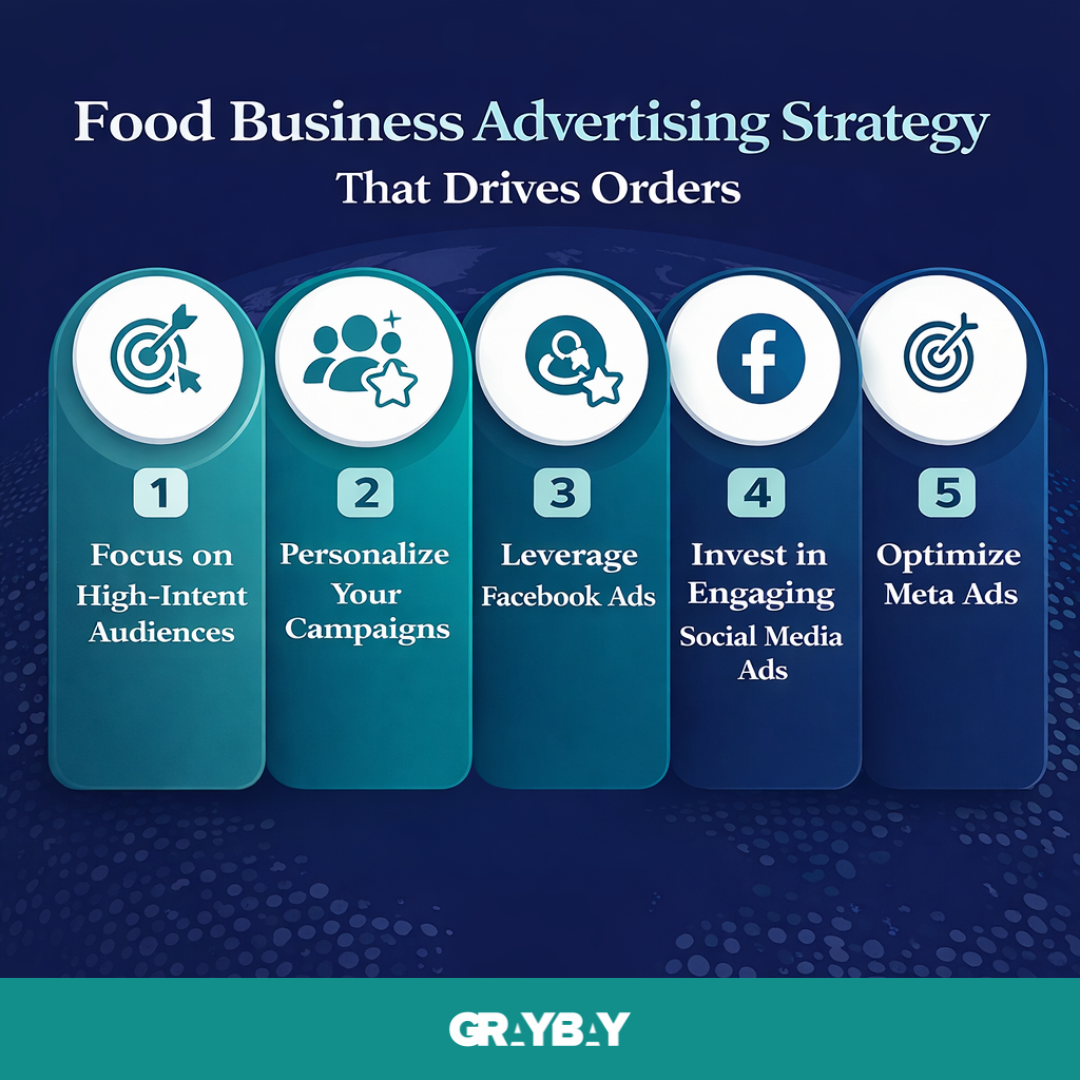
Tip 1: Focus on High-Intent Audiences
Instead of trying to appeal to everyone, zero in on people who are already showing interest in your menu or app. Use retargeting campaigns for those who have:
Viewed your menu, but didn’t place an order
Added items to a cart or saved favorites in your app
Clicked on previous ads but didn’t convert
This way, your ads stay relevant, and the people seeing them are more likely to take action. Over time, these campaigns help your brand stay top-of-mind and build customer habits around ordering from your app or restaurant.
Tip 2: Personalize Your Campaigns
Personalization is key for Meta ads for food businesses. By tailoring content to what users like or have shown interest in, you can create ads that feel relevant rather than generic. For instance:
Promote a new sushi platter to users who frequently order Japanese food
Highlight a brunch special to people who often order in the mornings
Showcase catering deals to businesses or families who have shown interest in bulk orders
Using personalization not only increases clicks but also boosts conversions because people are being shown exactly what they care about.
Tip 3: Leverage Facebook Ads for Food Delivery Businesses
Facebook is still one of the most powerful platforms for mobile food marketing. With Meta ads for food brands, you can target users with precision:
Use custom audiences to reach app users who haven’t ordered recently
Create lookalike audiences to find new customers who behave like your best existing ones
Target by interests, like “food delivery,” “takeout,” or popular food apps
This approach ensures that your campaigns reach both loyal customers and potential new ones, giving your food business a steady stream of orders and app installs.
Read more: Google Ads Strategy for Catering Companies in the San Francisco Bay Area
Tip 4: Invest in Engaging Social Media Ads for Food Apps
Visuals matter when it comes to food. Social media ads let you use eye-catching photos, videos, and carousel ads to showcase your dishes. High-quality creative paired with a strong call-to-action—like “Order Now” or “Get Free Delivery Today”—can dramatically improve engagement.
Other ways to maximize social media ads:
Post behind-the-scenes videos of your kitchen or chefs preparing meals
Use limited-time offers or seasonal promotions to create urgency
Experiment with Instagram Stories or Reels for quick, engaging content
When done correctly, social media ads not only increase orders but also strengthen your brand presence, making your app or restaurant a go-to choice.
Tip 5: Optimize Meta Advertising for Mobile Food Businesses
Once you’ve launched your campaigns, continuous optimization is essential. Meta advertising allows you to:
Test different ad creatives and formats to see what performs best
Monitor metrics like click-through rate (CTR), cost per acquisition (CPA), and return on ad spend (ROAS)
Adjust targeting, scheduling, or bids based on performance
Even small tweaks—like changing a photo, refining your headline, or adjusting the audience—can significantly increase conversions. Treat your Meta ad campaigns as a living system: set them up, monitor results, make improvements, and scale what works.
How to Get Catering Leads Online with Meta Ads
Getting consistent catering leads online requires more than just running basic ads. A focused approach helps you reach businesses, event planners, and groups who are actively looking for food services. With Meta ads for food brands, you can target high-intent users and turn interest into real inquiries.
Use Lead Forms (Meta Lead Ads)
Meta Lead Ads make it easy for potential customers to contact you without leaving the platform. Instead of sending users to a website, these ads collect details like name, phone number, and event requirements directly within Facebook or Instagram.
This works especially well for corporate catering, private events, and large group orders, where customers prefer quick and simple communication.
Strong CTA examples include:
“Request Catering Menu”
“Get a Quote”
These clear actions encourage users to take the next step without overthinking.
Retarget Corporate Visitors
Not everyone converts on the first visit. Some users check your menu, explore options, or view catering packages but leave without taking action. Retargeting helps bring them back.
Ads can be shown to people who:
Visited your catering page
Clicked on previous ads
Engaged with your content but didn’t inquire
This keeps your brand top-of-mind and increases the chances of turning interest into actual bookings.
Build Lookalike Audiences for Event Planners
Once you start getting leads, Meta allows you to find similar users through lookalike audiences. These audiences are based on the behavior and interests of your existing customers.
For catering, this means reaching:
Event planners
Office managers
People organizing corporate functions or social gatherings
By targeting users who behave like your best customers, your ads become more efficient and more likely to generate qualified leads.
A combination of lead forms, retargeting, and lookalike audiences creates a strong system for attracting high-quality catering inquiries. Instead of waiting for customers to find you, your ads actively bring the right people directly to your business.
Common Mistakes in Facebook Ads for Restaurants
Even with a solid strategy, many food brands make mistakes that prevent their Meta campaigns from performing at their full potential. By being aware of these pitfalls, you can save money, increase conversions, and make the most of Meta ads for food brands. Here’s a deeper look at the most common errors to avoid when running Facebook ads for restaurants or food businesses:
Targeting Too Broadly: One of the biggest mistakes is trying to reach everyone. While it might seem like casting a wide net will bring in more orders, it often leads to wasted ad spend. High-intent leads—people who have already interacted with your app or shown interest in your menu—are much more likely to convert. Focus on retargeting these users first and then expand gradually.
Ignoring Mobile Optimization: Most food orders come from mobile devices, so it’s crucial that your ads, landing pages, and app experience are fully optimized for mobile. Slow-loading pages, tiny buttons, or poorly formatted images can frustrate users and make them abandon their order before completing it.
Skipping Retargeting Campaigns: Retargeting is a major advantage of Meta ads. Many brands miss out by not creating campaigns specifically for people who have already shown interest—whether by browsing the menu, adding items to a cart, or interacting with a previous ad. Retargeting helps turn potential customers into paying customers, boosting your ROI.
Using Weak Calls-to-Action (CTAs): Every ad should guide the user toward the next step. Ambiguous or weak CTAs like “Check this out” won’t drive conversions. Strong, clear CTAs such as “Order Now,” “Get Delivery Today,” or “Claim Your Weekend Deal” tell users exactly what action to take.
Neglecting Data and Analytics: Running campaigns without tracking performance is like flying blind. Use Meta’s Ads Manager to monitor metrics like click-through rate (CTR), cost per acquisition (CPA), and return on ad spend (ROAS). Analyze which creatives, formats, and audiences perform best and adjust your strategy accordingly.
Not Testing Ad Creatives and Formats: Another common mistake is sticking with one type of ad or creative. Meta ads for food brands allow for dynamic testing—you can try carousel ads, video ads, and story ads to see which format resonates most with your audience. A/B testing headlines, images, and copy can reveal insights that significantly improve performance.
Ignoring Frequency and Timing: Showing the same ad too often can annoy users, while not showing it enough might mean missed opportunities. Similarly, timing matters—displaying ads when your audience is most likely to order (like lunch or dinner hours) can make a big difference in conversions.
By avoiding these mistakes and focusing on strategy, targeting, and optimization, your Meta ads for food brands can reach the right people at the right time, maximizing your ad spend and driving more orders. Remember, even small adjustments—like improving mobile experience or tweaking a CTA—can lead to measurable improvements in performance.
Read more: Email Marketing vs Social Media for Local Service Businesses
Final Thoughts
Running a successful food business today isn’t just about having great dishes—it’s about reaching hungry customers at the right time with the right message. Meta ads for food brands give you the tools to do just that, helping you connect with high-intent users, boost app installs, and drive more orders. By following a smart strategy, personalizing campaigns, and avoiding common mistakes, you can turn casual scrollers into loyal customers who keep coming back for more.
Now is the time to take action. Don’t let potential orders slip away—start crafting your Meta ads today, test what works, and watch your food brand grow. Whether it’s promoting a weekend special, highlighting a new menu item, or retargeting loyal customers, every ad can bring hungry diners right to your app or doorstep.
Ready to Fill More Carts and Increase Your Orders?
The most successful food brands don't rely on one advertising channel alone. Gray Bay Marketing combines Facebook marketing services, Google Ads Management Services, LLM SEO agency expertise, and other digital marketing solutions to help restaurants and food businesses reach new audiences, encourage repeat orders, and build sustainable growth.
Let's create campaigns that turn interest into loyal customers. Book your paid media consultation with Gray Bay Marketing today.
FAQs
How do I know if my ads are working?
Track metrics like clicks, conversions, and engagement rates. If people are interacting with your ads and completing desired actions, it’s a good sign your campaigns are performing well.
How often should I update my ad content?
It’s best to refresh visuals and copy every few weeks or when promoting new offers. Regular updates keep your audience interested and prevent ad fatigue.
Can I target different types of customers separately?
Absolutely. Segment your audience based on behavior, location, or preferences to create tailored campaigns for each group. This approach improves engagement and conversions.
How do I avoid wasting my ad budget?
Focus on reaching people most likely to take action, test different creatives, and monitor performance. Pausing low-performing campaigns can save money and improve overall results.
How long should I run an ad campaign?
Campaign length depends on your goals. Short-term promotions might last a few days, while ongoing campaigns can run continuously with regular adjustments to maintain performance.
What type of content works best in ads?
High-quality visuals, clear messaging, and strong calls-to-action usually perform well. Videos, carousel ads, or interactive content can also grab attention and increase engagement.
How can I measure ROI for my campaigns?
Track conversions, sales, or other key actions against your ad spend. Comparing results over time helps identify what’s working and where improvements are needed.