
How to Build a LinkedIn Marketing Strategy: A Step-by-Step Guide for Businesses
LinkedIn can feel frustrating when you are putting time into posts but seeing little growth in return. You may publish consistently, share useful ideas, and still struggle to reach the right audience. Low impressions, few meaningful comments, and slow follower growth make it difficult to know what needs to change. Random posting rarely solves the problem, especially when there is no clear plan behind your efforts.
Hence, a strong linkedin marketing strategy is important. It gives your business a structured system to work with instead of leaving organic reach to chance.
This guide breaks the process down step by step. You will learn how to build a profile that attracts decision-makers, write posts that people want to read, choose stronger content ideas, leverage LinkedIn newsletters, stay consistent, and track the metrics that guide your next move.
What Makes a Successful LinkedIn Growth Strategy Work?
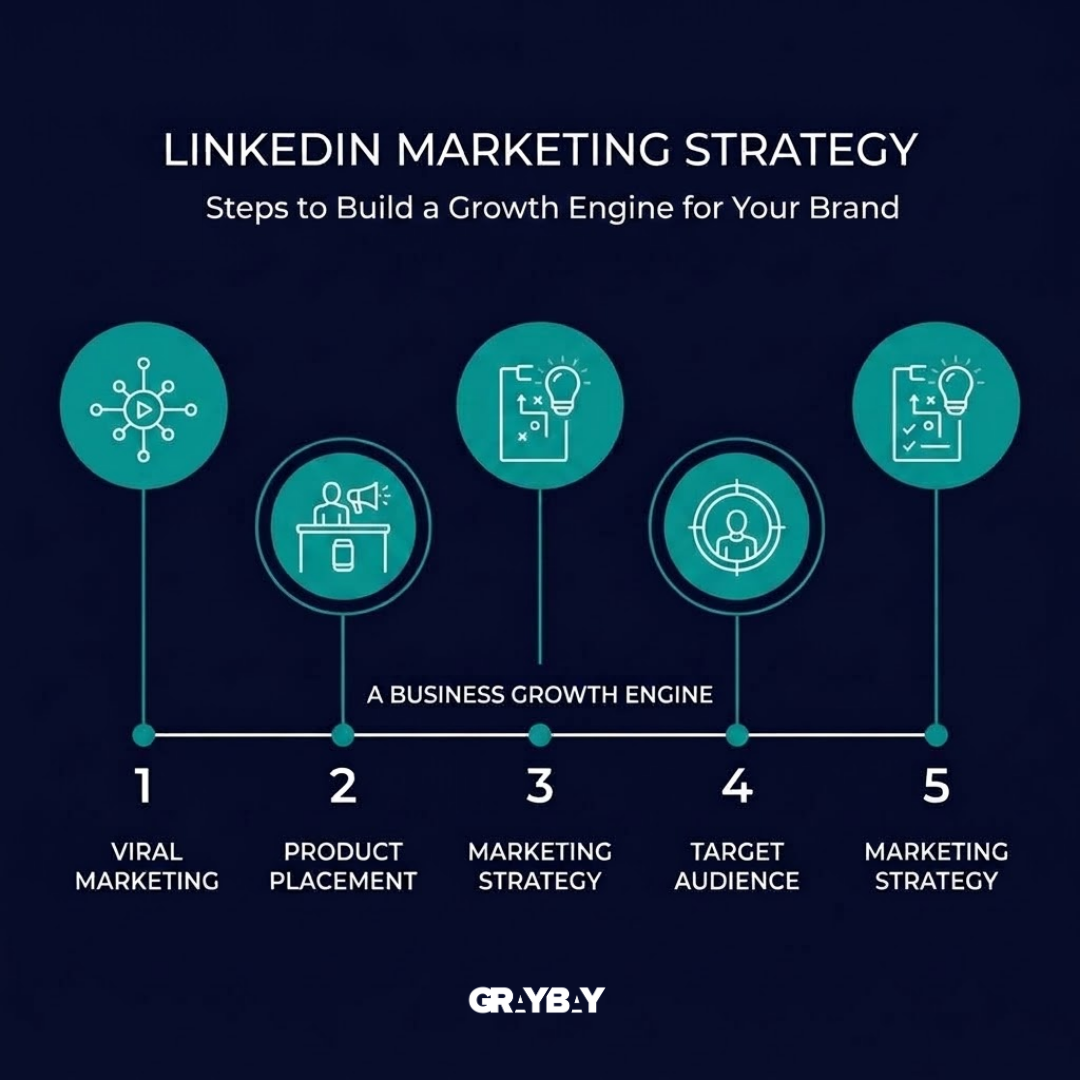
A successful LinkedIn Growth Strategy needs more than a regular posting schedule. Every element of your brand's presence should serve a distinct purpose, aligning your content directly with the professionals you want to convert.
Key elements of a high-performing execution include:
Clear audience definition: A specific understanding of your ideal customers, decision-makers, or industry peers helps you choose relevant topics and messaging.
Strong profile positioning: Your headline, About section, experience, and featured content should clarify what you do, who you serve, and what expertise you bring.
Useful content: Educational posts, practical advice, industry insights, case studies, and original observations give people a reason to follow your page or personal profile.
Strong hooks: Opening lines need to create enough curiosity or immediate value to compel readers to click "See more."
Consistent publishing: A realistic publishing routine keeps your brand visible and provides enough data to evaluate which topics resonate best.
Content variety: Diverse formats—carousels, single-image posts, text breakdowns, and newsletters—help engage prospects at different stages of the buyer journey.
Meaningful engagement: Comments, conversations, reposts, and direct messages build relationships rather than treating LinkedIn as a one-way broadcasting channel.
Performance tracking: Analytics highlight which topics, formats, and hooks generate the strongest response.
Continuous refinement: Your overall linkedin marketing strategy should evolve naturally as you learn more about audience behavior and content performance.
Read our comparison on LinkedIn Ads vs Google Ads for B2B Leads to discover which paid channel yields the best ROI for your campaigns.
How to Create a LinkedIn Strategy for Brands
Creating a sustainable LinkedIn strategy for brands starts with clear positioning and moves through structured content creation, regular posting, idea selection, long-form newsletters, and continuous performance tracking.
The following seven steps break down each stage into manageable actions.
Step 1: Build an Impressive LinkedIn Profile

Your LinkedIn presence starts with your profile. A polished profile gives visitors a quick understanding of what your company does, who it serves, and why they should pay attention. Every section must reinforce the same brand positioning.
Here are key areas to focus on:
Write a Clear Headline: Avoid vague titles. Communicate what you do, who you help, and the outcome you deliver. For example, swap "Digital Marketing Agency" for "Helping SaaS brands generate qualified leads through organic content and performance ads."
Use a Professional Profile Photo: Select a crisp, high-resolution photo with clear lighting and a simple backdrop. For company pages, display your official logo to ensure immediate brand recognition.
Create a Focused About Section: Explain what problems your company solves and who benefits. Keep language simple and structure key points into short, scannable paragraphs.
Highlight Your Products or Services: Detail your core offerings clear of excessive sales jargon. Focus on concrete benefits and actionable outcomes for target buyers.
Showcase Your Skills and Expertise: Feature skills directly tied to your core services so search algorithms and profile visitors quickly recognize your domain authority.
Add Recommendations and Social Proof: Endorsements build trust. Encourage clients, colleagues, and key stakeholders to leave honest reviews about their experience working with you.
Include Featured Content: Use the Featured block to display top case studies, viral posts, lead magnets, whitepapers, or landing pages.
Keep Your Contact Information Updated: Ensure your website, corporate email, and booking links are active and current.
Step 2: How to Write Engaging LinkedIn Posts
Even high-value insights will underperform if users scroll past them. The opening lines must capture interest immediately, while the body paragraph structure should hold attention with clean formatting and actionable advice. Learn how to write engaging LinkedIn posts by applying these structural principles:
Focus on the First Two Lines
Readers see only a tiny preview before text is truncated behind the "See more" tag. Use the opening lines to:
Present an industry problem your audience experiences daily.
Share a surprising observation or counterintuitive data point.
Challenge a widely accepted industry assumption.
Introduce a concrete case study result.
Make Content Surprising or Actionable
Before hitting publish, run your draft through two filters:
Is it surprising? Does it offer a fresh perspective that challenges common assumptions?
Is it actionable? Can the reader immediately apply this advice to their own work?
Keep Structure Easy to Scan
Dense text walls discourage mobile readers. Use short paragraphs, numbered lists, and line breaks. A clean baseline structure is:
Hook⟶Problem⟶Insight⟶Example⟶Takeaway⟶Call to Action
Write for One Audience Segment at a Time
Content aimed at everyone appeals to no one. Tailor individual posts to specific buyer personas—such as marketing directors, agency founders, or e-commerce operators—rather than generic professional groups.
Step 3: Make Your LinkedIn Content Marketing Memorable
Stopping the scroll is only half the battle. Strategic LinkedIn content marketing gives readers reasons to bookmark, share, and discuss your posts.
Tell Stories With a Clear Point: Frameworks are memorable when paired with real-world experiences. Detail the Situation, the Problem, the Action taken, the Result, and the core Lesson.
Share a Contrarian Perspective: You don't have to agree with every trending industry opinion. Respectfully challenging popular tactics with logical arguments and real data sets your brand apart.
Give Readers Reasons to Save and Share: Step-by-step frameworks, templates, checklists, and visual cheat sheets naturally generate higher save rates, extending your reach across the platform.
Step 4: Stay Consistent Instead of Quitting Too Early
Building momentum requires time and volume. A steady posting cadence gives your team the feedback loop necessary to refine messaging and content formats.
Set a Realistic Publishing Schedule: Consistency beats high-frequency posting that leads to burnout. Choose a weekly cadence—whether three posts or five—that your team can sustain without compromising quality.
Focus on What You Can Control: Impressions fluctuate with algorithm shifts, but you retain full control over post quality, research depth, hooks, and community response time.
Avoid Chasing Every Trend: While jumping on viral trends can provide temporary spikes in views, prioritize evergreen industry topics that align directly with your core products and services.
Allow Strategy Time to Compound: Early post performance offers initial diagnostic data. Use these early signals to optimize your hooks, visuals, and messaging for future content cycles.
Step 5: Choose Better Content Ideas
The best content ideas stem directly from daily operational challenges, sales conversations, and client inquiries.
Build an Internal Idea Bank
Maintain a central document capturing:
Frequent sales objections and client questions.
Campaign wins and post-mortem analysis.
Common industry mistakes and overlooked tactics.
Lessons from internal trials and product development.
Score Ideas by Effort vs. Impact
Prioritize topics using a simple matrix before moving them to production:
| Factor | Score Range | Focus Area |
|---|---|---|
| Production Time | 1 to 5 | How much writing, graphic design, or research is required? |
| Audience Impact | 1 to 5 | How relevant is this topic to active purchase decision-makers? |
| Total Priority Score | 2 to 10 | Higher combined scores take precedence on the calendar. |
Repurpose Core Topics
A single comprehensive asset—such as a client case study—can yield multiple short-form posts:
Post 1: The primary problem faced before hiring your team.
Post 2: A specific mistake avoided during project execution.
Post 3: A visual breakdown of key performance metric improvements.
Post 4: A long-form newsletter exploring the strategy behind the work.
Step 6: Use LinkedIn Newsletters to Extend Your Content
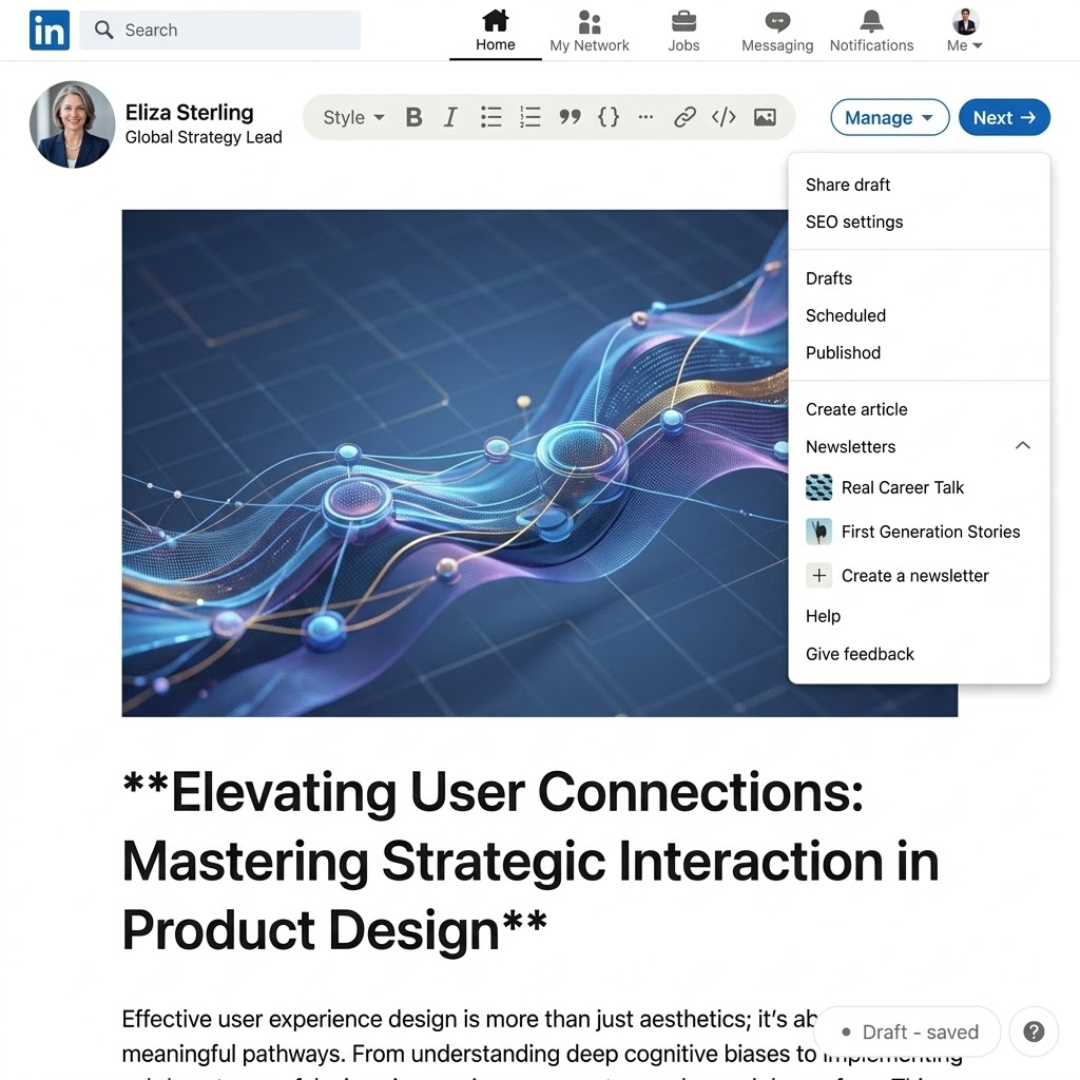
LinkedIn Newsletters allow brands to deliver long-form, in-depth content directly to subscribers' inboxes and notification feeds. Use newsletters to unpack complex frameworks, release quarterly industry research, publish detailed guides, or break down major industry updates.
Furthermore, snippets from your long-form newsletters can be easily reformatted into short-form daily posts, visual carousels, or poll discussions—maximizing content efficiency across your workflow.
Step 7: Close the Loop With LinkedIn Analytics
Publishing without tracking analytics leaves your brand's growth to guesswork. Review monthly performance to isolate high-performing topic pillars and post structures.
Track Meaningful Performance Metrics
| Metric | Primary Strategic Value |
|---|---|
| Impressions | Measures top-of-funnel reach and headline effectiveness. |
| Follower Growth | Identifies which content types convert casual readers into brand audience. |
| Saves & Reposts | Demonstrates deep content utility, authority, and viral potential. |
| Comments & Replies | Highlights topics that trigger active audience engagement and discussion. |
| Profile Views | Shows whether your content successfully drives traffic to your landing pages. |
Apply the Rule of 100
Commit to publishing 100 pieces of content, then analyze the top 10% performers. Identify recurring patterns in their hooks, topics, visual styles, and posting times, and use those insights to shape your next 100 posts.
Combining the 7 Steps Into an Integrated Execution Framework
An effective brand strategy connects all seven steps into a cohesive engine:
[Profile Optimization] ──> [Engaging Posts & Stories] ──> [Consistent Schedule] │[Analytics Optimization] <── [Long-Form Newsletters] <── [Idea Scoring Bank]
Your profile captures incoming traffic.
Posts attract targeted traffic through sharp hooks and practical lessons.
Regular publishing maintains brand presence.
Data-driven analytics ensure every iteration improves on the last.
Key LinkedIn Tools for Marketing
Using dedicated linkedin tools for marketing streamlines your content creation, scheduling, audience research, and performance analytics.
| Category | Recommended Tool | Core Functionality |
|---|---|---|
| Campaign Management | LinkedIn Campaign Manager | Build, test, and measure targeted paid ad campaigns. |
| Built-in Analytics | LinkedIn Page Analytics | Track baseline follower demographics, impressions, and engagement. |
| Scheduling & Publishing | Hootsuite / Buffer | Plan, schedule, and preview posts across multiple channels. |
| Social Management | Sprout Social | Complete social management, social listening, and custom reporting. |
| Content Research | BuzzSumo | Analyze trending industry topics and high-performing articles. |
| Design & Creatives | Canva | Design carousels, infographics, and custom post banners. |
| Lead Generation | LinkedIn Sales Navigator | Identify decision-makers, track leads, and manage outreach. |
| CRM Integration | HubSpot | Connect social touchpoints directly into your sales pipeline. |
| AI Content Assistance | ChatGPT | Brainstorm post angles, outline drafts, and reformat content. |
Choosing the right linkedin tools for marketing comes down to identifying your team's biggest operational bottlenecks—whether that's visual design, scheduling consistency, or lead tracking—and selecting software that fits smoothly into your current tech stack.
For brands building a multi-channel presence across short-form platforms, read our guide on TikTok Marketing: How to Get More Followers for additional organic audience tactics.
Common LinkedIn Marketing Mistakes to Avoid
Publishing without a defined audience: Broader messaging dilutes content relevance. Target distinct buyer roles with specialized insights.
Relying on weak opening lines: Avoid slow, generic introductions. Lead with compelling problem statements, surprising stats, or direct value.
Treating the feed like an ad board: CONSTANT self-promotion causes audiences to tune out. Lead with educational value, case studies, and actionable frameworks.
Ignoring comment sections: Leaving comments unaddressed misses valuable opportunities to deepen relationships and gather ideas for future content.
Chasing irrelevant viral trends: Off-topic trends may inflate temporary view counts, but they rarely generate qualified sales leads or decision-maker trust.
Neglecting profile maintenance: Great posts draw profile visits. Leaving your headline or About section outdated undermines hard-earned reach.
Final Thoughts
LinkedIn provides an unmatched platform for brands to establish thought leadership, generate qualified B2B leads, and build lasting industry relationships. The key is turning these opportunities into a repeatable process your team can maintain long-term.
By unifying your profile layout, content pillars, publishing schedule, newsletters, and analytics tracking into a single strategy, you build a steady growth engine that delivers compound results over time.
Build a Stronger Digital Presence With Gray Bay Marketing
Organic social reach is just one piece of a comprehensive digital marketing engine. At Gray Bay Marketing, we connect your cross-channel efforts through our specialized LLM SEO Services, data-driven Paid Media Agency Services, and targeted Google Ads Management Services.
Align your organic content, AI search visibility, and paid campaigns behind measurable business growth.
Contact Gray Bay Marketing today to build a search and social strategy tailored to your growth goals.
Frequently Asked Questions (FAQs)
How often should a business post on LinkedIn?
Consistency is more valuable than high volume followed by silence. Aim for a posting schedule your team can sustain reliably—typically 3 to 5 posts per week—while leaving time to engage in the comments.
How can a business get more engagement on its posts?
Use sharp opening hooks, break down practical frameworks, format text for mobile readability, and close with thoughtful questions. Actively replying to comments on your own posts also boosts visibility.
How long does it take to see tangible results on LinkedIn?
Initial metrics like post saves and profile views often improve within 30 to 60 days of consistent posting. Generating steady inbound business leads typically takes 3 to 6 months of audience building and content optimization.
What metrics matter most for tracking growth?
Focus on engagement rate, profile visits, post saves, reposts, and inbound direct messages from ideal clients rather than relying solely on high impression counts.
Should we prioritize our company page or executive profiles?
A hybrid strategy works best. Your company page serves as the official corporate hub, while executive and employee profiles provide authentic, personal voices that often drive higher organic reach and conversation.
How do we consistently generate fresh LinkedIn content ideas?
Log recurring client questions, review sales call transcripts, break down campaign wins, share internal lessons, and monitor industry news. Transforming these real-world events into posts ensures a steady supply of content.