
ChatGPT Ads vs. Google Ads: How Paid Search is Changing

Recent announcements around ChatGPT introducing advertising options have sparked conversations across the digital marketing industry. Many advertisers are now asking whether AI platforms could become a major customer-acquisition channel or whether Google will continue to dominate paid search.
The conversation around ChatGPT ads vs. Google Ads is not just about two platforms competing for attention. It reflects a bigger change in how people search, discover brands, and make purchasing decisions.
This shift does not mean businesses should drop their existing advertising strategies overnight. Google has spent decades building one of the most advanced advertising ecosystems, while AI platforms are still finding their place in the market. The real opportunity lies in understanding how search behavior is changing and preparing for what comes next.
This guide compares how ChatGPT Ads and Google Ads approach user intent, placement, targeting, pricing, and campaign management. It also explains where each platform may fit in the customer journey and how advertisers can prepare for a more conversational search environment.
ChatGPT Ads and Google Ads are not direct replacements for one another. Google Ads offers broad reach, mature campaign tools, and established conversion measurement. ChatGPT Ads provides an emerging way to reach users as they explore, compare, and make decisions within conversational experiences. For most businesses, Google Ads remains the more established performance channel, while ChatGPT Ads represents a new testing opportunity.
What Is OpenAI Advertising?
OpenAI advertising refers to the potential use of advertising solutions within OpenAI’s AI-powered platforms, including ChatGPT, to help businesses reach users during AI-driven conversations. OpenAI launched ChatGPT in 2022, and its rapid adoption changed how people search for information, research products, and make decisions. Unlike traditional search ads based on keyword queries,
In ChatGPT, advertising can use the context of the current conversation and, when personalization is enabled, selected signals from a user’s broader ChatGPT experience to improve ad relevance. ChatGPT Ads currently use clearly labeled sponsored placements that are presented separately from ChatGPT’s generated answers. The technology relies on natural language processing, machine learning models, and user intent signals to deliver relevant experiences.
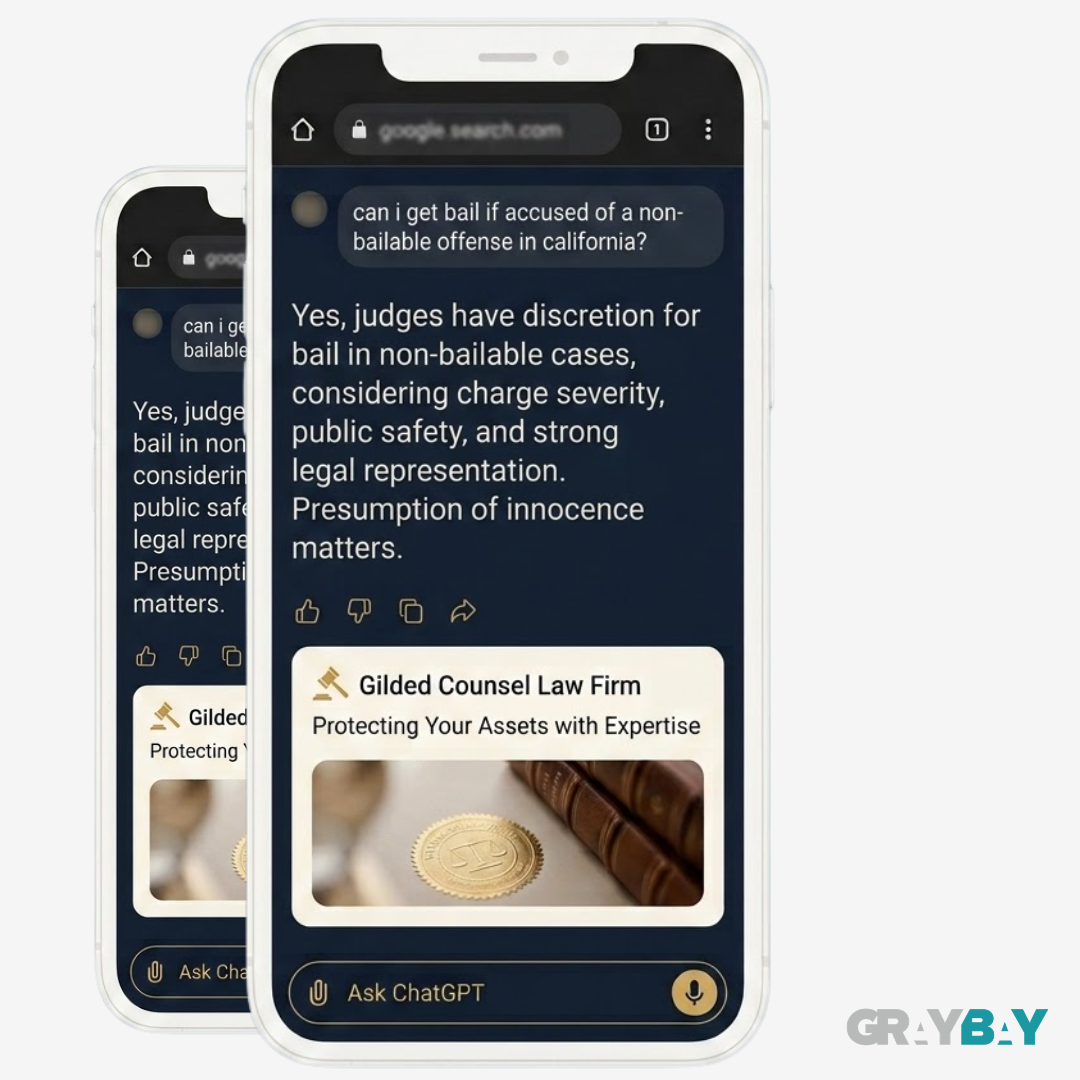
OpenAI has also introduced a beta self-service Ads Manager through which eligible advertisers can create campaigns, set budgets, organize ad groups, monitor performance and make campaign updates. The platform remains in beta and is expected to evolve as OpenAI expands its advertising program.
What Are Google Ads?
Google Ads is an online advertising platform launched by Google in 2000, originally introduced as Google AdWords. It allows businesses to display paid ads across Google Search, YouTube, Maps, Display Network, and partner websites. The platform works through a pay-per-click (PPC) model, where advertisers bid on keywords and compete in real-time auctions.
Google evaluates factors such as bid amount, ad relevance, landing page experience, and expected click-through rate to determine ad placement. Over the years, Google Ads has evolved with machine learning, smart bidding, audience targeting, and automated campaign features, becoming a core part of digital marketing strategies worldwide.
Did You Know?
Did You Know? OpenAI states that sponsored placements are clearly labeled and kept separate from ChatGPT’s answers. Ads do not determine or influence the answer generated for the user.
Read more: How to Use Claude AI to Optimize Meta and Google Ads Performance
ChatGPT Ads vs. Google Ads: Key Differences in AI Search Advertising
While both aim to connect brands with potential customers, their methods, targeting systems, and user experiences are different. Here is a look at the key differences between AI search advertising and Google Ads:
1. Search Intent vs. Conversational Intent
Google Ads primarily works around search intent. Users type keywords such as “best running shoes” or “local marketing agency” and receive a page of sponsored results alongside organic listings. Advertisers target these searches through keyword selection, bidding strategies, and audience signals.
ChatGPT Ads focuses on conversational intent. Users ask detailed questions and expect personalized answers rather than a list of websites. AI systems analyze the meaning behind the query, user context, and preferences to generate relevant responses, creating new opportunities for brands to appear during decision-making moments.
2. Keyword Targeting vs. Context-Based Understanding
Google Ads relies heavily on keywords, match types, audience data, and campaign structures. Advertisers can control which search terms trigger their ads and adjust bids based on performance metrics such as conversions, cost per click, and return on ad spend.
AI advertising depends more on natural language understanding. Large language models analyze complete conversations instead of focusing only on individual keywords. This means advertisers may need to focus more on customer questions, brand relevance, helpful information, and content quality.
3. Multiple Search Results vs. AI Generated Answers
Traditional Google Search provides users with multiple options. A search results page may include several ads, organic results, maps listings, shopping results, and other features.
ChatGPT can give users a direct response and allow them to refine their questions through conversation. When an ad is relevant, a separately labeled sponsored placement may appear near the answer. This can give advertisers an opportunity to reach users while they are actively exploring or comparing options.
4. PPC Campaign Management vs. AI-Driven Optimization
Google Ads gives advertisers detailed control over campaigns through keyword management, bidding adjustments, ad creatives, and audience targeting. Features such as Smart Bidding use machine learning to optimize campaigns based on conversion goals.
ChatGPT advertising may rely more on automated systems that understand user conversations and deliver relevant sponsored content. Advertisers will likely need strong first-party data, accurate conversion tracking, and high-quality brand signals to help AI systems understand when their products or services are relevant.
5. Established Advertising Ecosystem vs. Emerging AI Opportunities
Google Ads has decades of advertising data, a massive user base, and multiple channels including Search, Shopping, YouTube, Display, and Maps. Businesses can reach customers throughout different stages of the buying journey.
ChatGPT Ads is still developing, but it introduces new possibilities for brands to connect with users during research and decision-making conversations. As AI platforms continue to evolve, businesses may use both channels together instead of choosing one over the other.
ChatGPT Ads vs. Google Ads: Quick Overview
The table below highlights the key differences between both advertising models to help you understand how ChatGPT Ads and Google Ads compare in terms of targeting, user intent, ad placement, and future opportunities.
| Factor | ChatGPT Advertising | Google Ads |
|---|---|---|
| Search Approach | Uses conversational queries and AI-generated responses to understand user needs | Uses keyword-based searches where users actively look for information, products, or services |
| User Intent | Focuses on contextual and conversational intent based on detailed questions | Focuses on search intent based on keywords and user queries |
| Ad Placement | Ads may appear within or alongside AI-generated answers as sponsored recommendations | Ads appear across Google Search results, Shopping, Maps, YouTube, and Display Network |
| Targeting Method | Relies on AI understanding, user context, and natural language processing | Uses keywords, audiences, demographics, locations, devices, and behavioral signals |
| Customer Journey | Shortens the research process by providing direct answers and recommendations | Supports different buying stages through search, comparison, and conversion-focused ads |
| Data Signals | Depends on conversational patterns, user interactions, and AI interpretation | Uses clicks, conversions, search terms, audience data, and campaign performance metrics |
| Advertiser Control | May offer less manual control as AI systems handle more interpretation | Provides detailed control over keywords, bids, budgets, audiences, and ad settings |
| Optimization Approach | Requires strong brand signals, quality content, and accurate data for AI systems | Uses tools such as Smart Bidding, conversion tracking, and automated campaign optimization |
| Market Position | An emerging advertising channel with growing potential | A mature advertising platform with decades of search advertising experience |
| Best Use Case | Reaching users during conversational research and discovery | Capturing users with strong purchase intent and immediate search needs |
| Future Potential | Could reshape how users discover brands through AI recommendations | Likely to remain a major paid search channel while adapting to AI-powered experiences |
Will ChatGPT Ads Replace Google Ads?
ChatGPT Ads are unlikely to replace Google Ads in the foreseeable future. Google offers a mature ecosystem covering Search, Shopping, YouTube, Display, Maps and other inventory, supported by established targeting, bidding and measurement tools. ChatGPT Ads currently provide a more focused conversational advertising opportunity and remain at an earlier stage of platform development.
ChatGPT introduces a new way for users to discover information through conversations and AI-generated recommendations, but its advertising ecosystem is still developing. Instead of one platform replacing the other, businesses may use both to reach customers at different stages of their journey. The future of search will likely involve a combination of traditional search advertising and AI-driven discovery.
Read more: Google Ads AI Max Campaign Tutorial 2026 (Step-by-Step Setup for Beginners)
The Future of Paid Search: A Shift Toward AI-Driven Advertising
Paid search is moving into a new era where traditional search engines and AI platforms will work alongside each other. Google Ads will continue to play a major role because of its large user base, advanced targeting options, and established advertising infrastructure. At the same time, ChatGPT advertising will change how users discover products, services, and brands.
Conversational Search Will Change User Behavior
Users are gradually moving from short keyword searches toward detailed questions and conversations. Instead of searching multiple times and comparing several websites, people may rely on AI platforms to summarize information and suggest relevant options. This shift means advertisers will need to focus on understanding customer needs, creating helpful content, and building strong brand signals.
AI Will Influence Advertising Decisions
Machine learning will become even more important in paid search. Advertising platforms will use larger amounts of data to understand user intent, predict customer actions, and deliver more relevant recommendations. Accurate conversion tracking, quality audience data, and meaningful customer insights will become essential for businesses that want their campaigns to perform well.
Keywords Will Become Less Important Than Intent
Keywords will remain useful, but future paid search strategies will move beyond exact search terms. AI systems can understand context, meaning, and user goals, allowing advertisers to reach customers based on their actual needs. Businesses will need to create campaigns and content that answer real customer questions instead of focusing only on keyword variations.
Businesses Will Need a Multi-Platform Approach
The future of search will not be about choosing between Google Ads and AI platforms. Businesses will likely use multiple channels to reach customers throughout the buying journey. Google Ads can capture users with immediate purchase intent, while ChatGPT advertising can influence users during research and discovery stages.
Brand Authority Will Become More Important
As AI platforms provide fewer but more personalized recommendations, trusted brands may have an advantage. Businesses with strong online reputations, quality content, positive reviews, and consistent customer experiences will have better opportunities to appear in AI-driven search environments.
The future of paid search will combine automation, AI technology, and human-focused marketing strategies. Advertisers that adapt to changing search behavior will be better prepared as the digital advertising landscape continues to evolve.
How Advertisers Can Prepare for the Future
The future of paid search will require advertisers to rethink how they connect with customers. The shift toward AI-powered experiences does not mean businesses should move away from proven advertising platforms. Instead, advertisers need to improve their data quality, understand changing search behavior, and create campaigns that work across different discovery channels.
The discussion around ChatGPT ads vs. Google Ads shows that future success will depend on adaptability rather than relying on a single platform. Advertisers who prepare and follow these tips will be better positioned as search continues to evolve:
| Preparation Area | Why It Matters | Action Advertisers Should Take |
|---|---|---|
| Understand Search Intent | AI platforms are changing how users find information by focusing on questions, context, and specific needs rather than simple keywords. | Study customer problems, search patterns, and buying behavior to create campaigns that match real user intent. |
| Improve Conversion Tracking | AI-driven advertising systems rely on accurate data to understand which actions lead to valuable results. | Set up proper conversion tracking, monitor lead quality, and use reliable attribution methods to provide better campaign signals. |
| Strengthen First-Party Data | Customer data helps advertisers understand audiences while reducing dependence on third-party signals. | Collect useful customer insights through website interactions, email lists, purchases, and direct engagement. |
| Create Conversational Content | Users are increasingly asking complete questions instead of using short search terms. | Develop FAQs, guides, comparison pages, and helpful resources that answer detailed customer queries. |
| Build Brand Authority | AI systems may rely on trusted sources when generating recommendations and responses. | Invest in quality content, customer reviews, industry expertise, and consistent brand messaging. |
| Use AI Tools Effectively | Automation and machine learning are becoming central parts of modern advertising platforms. | Test AI-powered campaign features, analyze performance data, and use automation where it improves efficiency. |
| Test Emerging Platforms | New AI advertising opportunities may create additional ways to reach potential customers. | Experiment with AI search advertising while measuring results against existing campaigns. |
| Maintain a Multi-Channel Strategy | Customers may discover brands through search engines, AI platforms, social media, and other digital channels. | Combine Google Ads, AI advertising, SEO, and content marketing to reach users across different touchpoints. |
Final Thoughts
The future of search advertising is moving toward a more conversational and AI-driven experience. Businesses should evaluate each platform according to the role it plays in customer discovery, research and conversion rather than assuming one channel must replace another.
The discussion around ChatGPT ads vs. Google Ads highlights a larger shift in how people discover information and make purchasing decisions. Google Ads continues to provide scale, targeting options, and proven results, while AI platforms introduce new ways to connect with audiences during research and decision-making moments.
Advertisers that stay flexible, test new opportunities, and adapt their strategies will be better prepared for the next stage of digital advertising. The future belongs to brands that understand their customers across every search experience.
Prepare Your Advertising Strategy for the Future
Gray Bay Marketing helps brands create, manage, and improve paid advertising campaigns with data-driven strategies focused on measurable results. Our team supports businesses with expert Google Ads management, AI-focused marketing approaches, and full-funnel paid media agency services designed for today’s evolving search landscape.
Ready to improve your paid advertising results? Contact Gray Bay Marketing today and discover how a smarter approach can help your business reach the right audience.
FAQs
Will ChatGPT Ads replace Google Ads in the future?
ChatGPT Ads are unlikely to completely replace Google Ads. Both platforms serve different user behaviors and advertising needs. Google Ads has a well-established system built around search queries, targeting options, and measurable conversions. ChatGPT Ads may introduce a new way for businesses to reach customers through AI conversations and personalized recommendations. The future will likely involve businesses using multiple advertising channels instead of relying on only one platform.
What is the difference between ChatGPT ads vs. Google Ads?
The main difference between ChatGPT ads vs. Google Ads is how users discover information. Google Ads connects businesses with people actively searching through keywords, while ChatGPT Ads may focus on conversational interactions where users ask detailed questions and receive AI-generated responses. Both approaches aim to connect users with relevant businesses, but they operate around different search experiences.
Should businesses invest in ChatGPT advertising?
Businesses can consider testing ChatGPT advertising as AI platforms continue to grow. However, investment decisions should depend on business goals, target audience, and campaign performance. New advertising channels may create additional opportunities, but established platforms still provide strong reach and measurable results.
How will AI change online advertising?
AI will change online advertising by helping platforms better understand user intent, personalize experiences, and automate campaign decisions. Advertisers will need to focus more on customer needs, quality data, and relevant messaging as search behavior becomes more conversational.
Are Google Ads still worth using with the rise of AI platforms?
Yes, Google Ads remains valuable because it provides access to a large audience, advanced targeting features, and a mature advertising system. Businesses can continue using Google Ads while exploring new opportunities created by AI-powered platforms.
Do ChatGPT Ads influence ChatGPT’s answers?
No. OpenAI states that sponsored placements are clearly labeled and kept separate from ChatGPT’s generated answers. Advertising does not determine the answer ChatGPT provides.