
ChatGPT-6 Astra for Marketing Tasks: 4 Practical Workflows

Marketing teams have a lot on their plates. Between writing campaign copy, following up with leads, digging through CRM data, and pulling together weekly reports, it’s easy to fall behind.
ChatGPT-6 Astra for marketing tasks offers a way to approach that workload. But which tasks can it support, what setup does it need, and how much human review is still required?
This guide covers four marketing workflows: campaign asset creation, lost-deal analysis, blog-to-video repurposing, and weekly reporting. Each section explains the inputs, potential outputs, and checks your team needs before using the results.
What is ChatGPT-6 Astra?
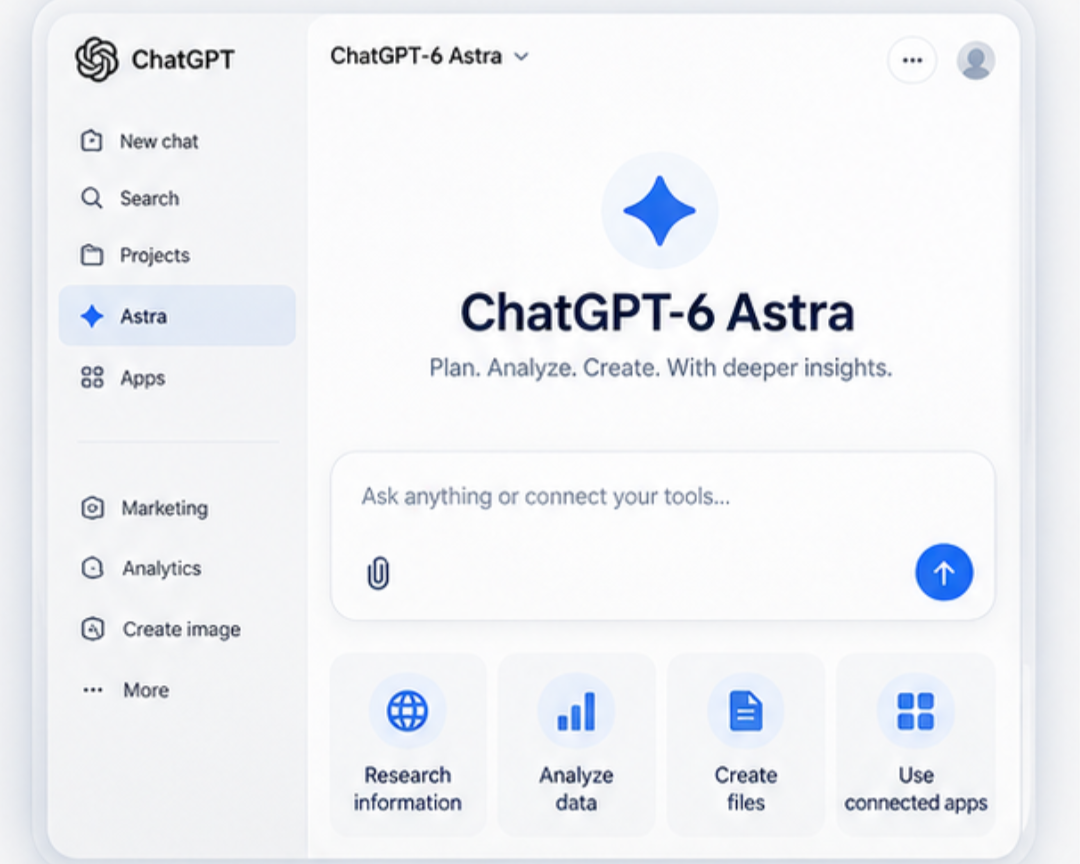
GPT-6 Astra is an OpenAI model available through supported ChatGPT experiences and the API. In ChatGPT, workflows may combine the model with connected apps and tools to research information, analyze data, and create files. The actions available depend on the product environment, enabled tools, account access, and permissions. For marketers, that could mean drafting campaign copy, reviewing CRM data, and preparing reports in one workflow. However, the results still need human review to check accuracy, brand voice, and campaign goals.
How ChatGPT-6 Astra Changes Marketing Workflows
The important change for marketing teams is the shift from isolated prompts toward connected work. Instead of repeatedly moving information between a CRM, cloud storage, analytics tools, campaign documents, and ChatGPT, a supported workflow can use relevant business context and approved connected sources as part of the same process. Connected apps can search and reference information, and supported apps can also perform selected actions according to the permissions available to the account or workspace.
In practical marketing terms, that opens several useful possibilities:
Brand guidelines, approved messaging, project documents, and reference material can provide ongoing context.
Supported business apps can supply customer records, campaign information, or working files without constant manual copying.
Copy, visual concepts, reports, and other campaign materials can be developed from the same underlying brief.
Computer use can support multi-step tasks in environments where the relevant capability is available.
Scheduled tasks can run recurring work at defined times when the account and connected sources support that setup.
A reliable workflow still needs a clear objective, the right information, well-defined deliverables, suitable access permissions, and an approval process. Astra can handle a larger part of the execution, but the quality of the result still reflects the quality of the process surrounding it.
Read more: Best AI Tools in 2026: What to Use, Why, and Who They’re For
Can ChatGPT Do Marketing? 4 Practical Astra Workflows
If your question is “can ChatGPT do marketing beyond writing copy?”, these four workflows illustrate how it can support campaign production, customer research, content repurposing, and reporting. Each requires different inputs, tools, and check.
1. Turn a Campaign Brief Into a Complete Set of Marketing Assets
A successful campaign starts with a clear brief, not a vague prompt asking AI to create a campaign. If you want Astra to produce useful assets, give it enough context to understand the audience, offer, campaign goal, brand voice, and message behind the promotion.
Before getting started, pull together these details:
Target audience: Who are you trying to reach, and what problems are they looking to solve?
Campaign objective: Are you trying to generate leads, increase sales, or get more people to sign up?
Core message: What should the audience remember after seeing your campaign?
Brand guidelines: What tone, terminology, and visual style should the content follow?
Creative requirements: Which formats, reference images, and platform specifications should the assets follow?
Content restrictions: Are there any claims, phrases, or promises the campaign needs to avoid?
Once Astra has the brief and supporting materials, ask it to put together a coordinated campaign package. Depending on the tools and capabilities available, the requested deliverables could include:
| Marketing asset | Purpose | What Astra can help produce |
|---|---|---|
| Landing page | Explain the offer and encourage conversions | Headlines, body copy, value propositions, and calls to action |
| Five-email nurture sequence | Build interest and guide leads toward a decision | Email drafts with a logical progression of messages |
| Ten social media posts | Share the campaign across social channels | Platform-appropriate captions and post concepts |
| Three ad variations | Test different messages and creative angles | Alternative headlines, descriptions, and calls to action |
| Hero imagery | Support the campaign's main message | Image concepts or visual assets, depending on available tools |
| Platform-specific visuals | Adapt creative assets for different placements | Resized or reworked visual concepts based on platform requirements |
The biggest advantage is that all these assets can start with the same campaign strategy. The landing page can introduce the main offer, the email sequence can answer questions and build trust, and the ads can bring the same message to potential customers. That way, the campaign feels connected instead of looking like a collection of unrelated pieces.
Astra can turn one detailed campaign brief into several coordinated first drafts, giving the team a starting point for each channel. The team can then refine the messaging and adapt each asset to its placement.
Still, don't take polished output at face value. Review the copy for inaccurate product details, unsupported claims, weak messaging, and anything that sounds off-brand. Give the visuals a once-over, too, checking the composition, typography, image quality, and platform requirements before publishing.
2. Use CRM Data to Find Out Why Deals Are Getting Lost

Lost deals can tell you a lot about what's holding potential customers back, but the clues often sit buried in CRM notes, sales calls, and follow-up emails. Astra can help marketers pull those details together, spot recurring objections, and turn the findings into content that addresses real buyer concerns.
To run this workflow, start by connecting Astra to a supported CRM, such as HubSpot, if the required integration and permissions are available. Give it access only to the records needed for the analysis, then set a clear goal: identify why qualified opportunities were lost during the previous quarter and recommend ways marketing can address those issues.
Rather than asking Astra for a general summary, break the task into specific steps:
Review lost-deal records: Ask Astra to examine the available deal notes, recorded loss reasons, and relevant customer interactions for the selected period.
Group recurring objections: Have it organize the findings into themes such as pricing, implementation time, product fit, missing features, or integration concerns.
Look for patterns: Ask which objections appear most often and whether they differ by customer segment, deal size, or sales stage, provided the CRM data supports those comparisons.
Turn insights into marketing assets: Request content ideas that address the verified concerns, including FAQs, objection-handling guides, email campaigns, and landing page messaging.
Check the evidence: Ask Astra to link its findings to the relevant records or quote supporting notes where possible, so your team can verify the conclusions before acting on them.
For example, Astra might find that several lost prospects mentioned a difficult onboarding process. That pattern could point to a gap in your marketing materials. You could then ask Astra to draft an implementation guide, create an FAQ about setup timelines, or suggest a landing page section that explains what customers can expect after signing up. Example prompts are given below:
| Astra workflow step | Example prompt | Expected output |
|---|---|---|
| Analyze lost deals | "Review the authorized lost-deal records from the previous quarter and summarize the documented reasons for loss." | A structured summary of recorded objections |
| Identify patterns | "Group the loss reasons into themes and show the number of records supporting each theme." | A categorized breakdown with evidence |
| Compare segments | "Compare the documented objections by deal size and sales stage. Flag categories with insufficient data." | A supported comparison of customer concerns |
| Develop content ideas | "Based on the verified findings, suggest five content assets that address the most common objections." | Prioritized content recommendations |
| Draft marketing copy | "Write an FAQ addressing implementation concerns using only the approved product information provided." | A draft FAQ for human review |
The key advantage of using Astra here is that it can help connect CRM analysis with the next steps in your marketing workflow. Instead of guessing why prospects walk away, your team gets a structured starting point for improving messaging and supporting sales conversations.
3. Repurpose a Blog Post Into a Video Draft
You've already put hours into researching and writing a blog post. Now, you want to turn it into a video for social media, but scripting, editing, captions, and transitions can quickly turn a simple repurposing job into another major project.
Astra can help shorten that process by using the existing article as a starting point for a video workflow. The goal is to reshape the content for a visual format, not simply read the entire blog aloud.
Start by providing the finished article, relevant brand guidelines, and any approved images or creative assets. Then, outline what the video needs to achieve:
Opening hook: Give viewers a reason to stick around during the first few seconds.
Main message: Focus on the most useful point instead of squeezing the whole article into the video.
Visual direction: Specify the scenes, supporting images, text overlays, and demonstrations needed.
Pacing and transitions: Keep the sequence moving without making the video feel rushed.
Captions: Make the spoken content easier to follow, especially for viewers watching without sound.
Platform format: Define the aspect ratio and dimensions for the intended channel.
Astra can help prepare a script, storyboard, caption text, and editing instructions. Producing a rendered video with motion, transitions, and vertical versions requires suitable video tools. Before starting, confirm which tools the workflow can use and whether they support the required exports and editable project files.
Here's how the workflow can move from a finished article to a video ready for review:
| Production stage | What happens | Human review needed |
|---|---|---|
| Content selection | Identify the article's main argument and strongest points | Confirm that the chosen points match the video's goal |
| Script development | Turn the article into a concise, audience-focused script | Check the hook, accuracy, tone, and pacing |
| Visual planning | Match key messages with images, demonstrations, or text overlays | Check visual relevance and brand consistency |
| First video draft | Assemble available visuals, motion, transitions, and text | Review composition, timing, and overall flow |
| Vertical cutdown | Adapt the video to a vertical format and add captions | Check cropping, caption accuracy, and readability |
| Final revisions | Apply feedback and prepare the approved version | Confirm the final edit meets platform and brand requirements |
Using ChatGPT-6 Astra for marketing tasks in this way can help teams get from a finished article to a video draft faster. It also gives existing content another chance to reach audiences on platforms where video plays a useful role in the marketing mix.
4. Automate a Weekly Marketing Performance Report
Weekly reporting is another task that can eat into a marketer's schedule. Teams may need to pull figures from advertising platforms, website analytics, and CRM tools, then organize everything into the same report every Friday. The process is repetitive, so it's a strong candidate for automation.
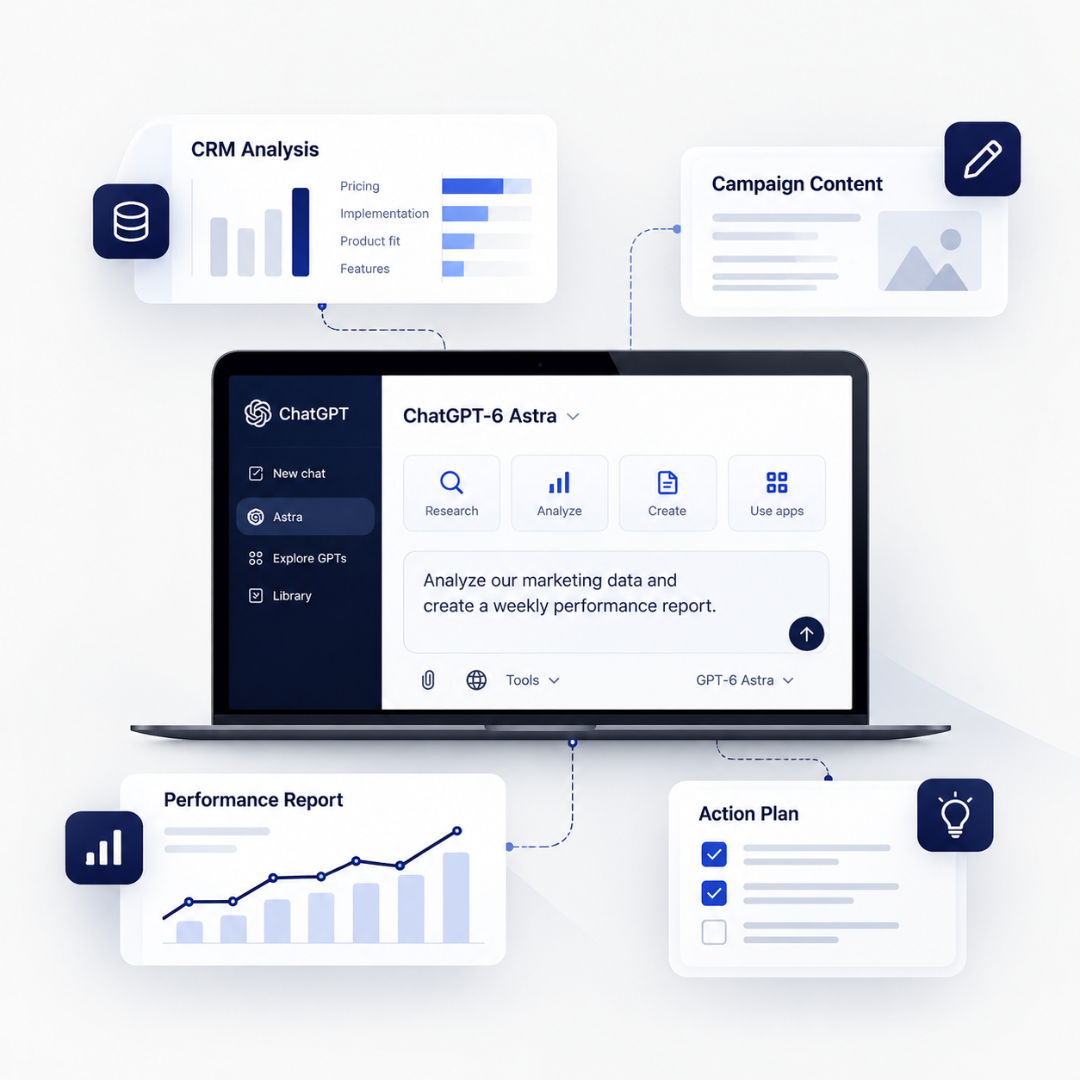
ChatGPT offers scheduled tasks, and connected apps may provide access to supported data sources. Availability depends on the account, app, permissions, and workspace settings. You can check the scheduled tasks documentation for details on the feature and its limitations.
To get a reporting workflow off the ground, define the data sources, reporting period, metrics, output format, and delivery schedule. A weekly report might include the following:
| Report section | Metrics or information to include | What marketers should check |
|---|---|---|
| Paid media | Spend, clicks, conversions, and cost per lead | Budget changes, campaign performance, and tracking accuracy |
| Website analytics | Traffic, conversion rate, and landing page performance | Traffic quality, page issues, and conversion trends |
| Lead generation | Lead volume, lead quality, and qualified leads | Whether the leads fit the target audience |
| Acquisition costs | Cost per lead and customer acquisition cost | Significant cost changes and possible causes |
| Performance trends | Week-over-week changes and unusual figures | Whether the movement is meaningful or caused by incomplete data |
| Recommended actions | Issues to investigate and potential next steps | Whether the recommendations are supported by evidence |
Once the workflow is set up with the required access, Astra can help organize available metrics, summarize visible trends, flag unusual changes, and prepare the report in a consistent format. If the connected tools and delivery options support it, the workflow may also run on a recurring schedule.
The real time-saver is having the information ready to review instead of pulling it all together by hand. A consistent report also makes it easier to compare performance across weeks and spot areas that deserve attention.
Read more: How to Run Ads on ChatGPT: The Complete Tutorial
ChatGPT Marketing Review: Strengths and Limitations to Evaluate
These four workflows illustrate where Astra may help: tasks with clear inputs, repeatable steps, and outputs that a team can check. Campaign production requires repeated adaptation of the same message, CRM analysis requires organizing large quantities of customer information, content repurposing requires translating an existing idea into a new format, and reporting requires collecting similar metrics on a recurring schedule.
This ChatGPT marketing review also shows why business context makes those workflows considerably stronger. Brand guidelines can improve campaign consistency, CRM records can ground messaging recommendations in customer evidence, approved articles can guide video scripts, and established report templates can give recurring analysis a stable format. Astra performs best when it receives useful source material instead of being expected to invent the business context itself.
The common limitation is judgment. Creative taste, ambiguous customer behavior, strategic priorities, factual verification, and business accountability remain human responsibilities. Astra can reduce the volume of manual work surrounding those decisions, which gives marketers more time to focus on the decisions themselves.
How to Build an Astra Marketing Workflow That Holds Up in Practice
The safest starting point is one established process that the team already understands. Automating an unclear workflow usually preserves the confusion instead of solving it, so the first version should be narrow enough to test properly.
Step 1: Supply Meaningful Context
Brand guidelines, audience definitions, offers, approved content, reference imagery, formatting rules, and prohibited language give Astra a clearer operating boundary. Good examples are especially useful because they show the standard the final output needs to meet.
Step 2: Connect Only the Necessary Data
A workflow may need HubSpot records, Google Drive files, analytics information, or reporting documents, depending on the task and supported integrations. Permissions should stay limited to the information required for the job, particularly when customer or company data is involved.
Step 3: Define the Output Before ExecutionThe instructions should specify the objective, audience, deliverables, format, quality criteria, source requirements, and review process. A vague request produces a vague standard for success.
Step 4: Run the Workflow Manually First
A real test reveals missing context, weak instructions, unnecessary steps, inconsistent results, and areas that require human intervention. Those findings can be used to tighten the process before scheduling or scaling it.
Step 5: Automate the Stable Version
Lower-risk reporting, research, summarization, or read-only workflows are sensible starting points. Publishing content, modifying records, or performing consequential actions should include appropriate approvals.
Step 6: Assign Final Responsibility
Someone on the team should own factual accuracy, brand compliance, source quality, creative standards, and the final business decision. Automation works best when the approval path is as clear as the task itself.
Where Should Your Team Start With Astra?
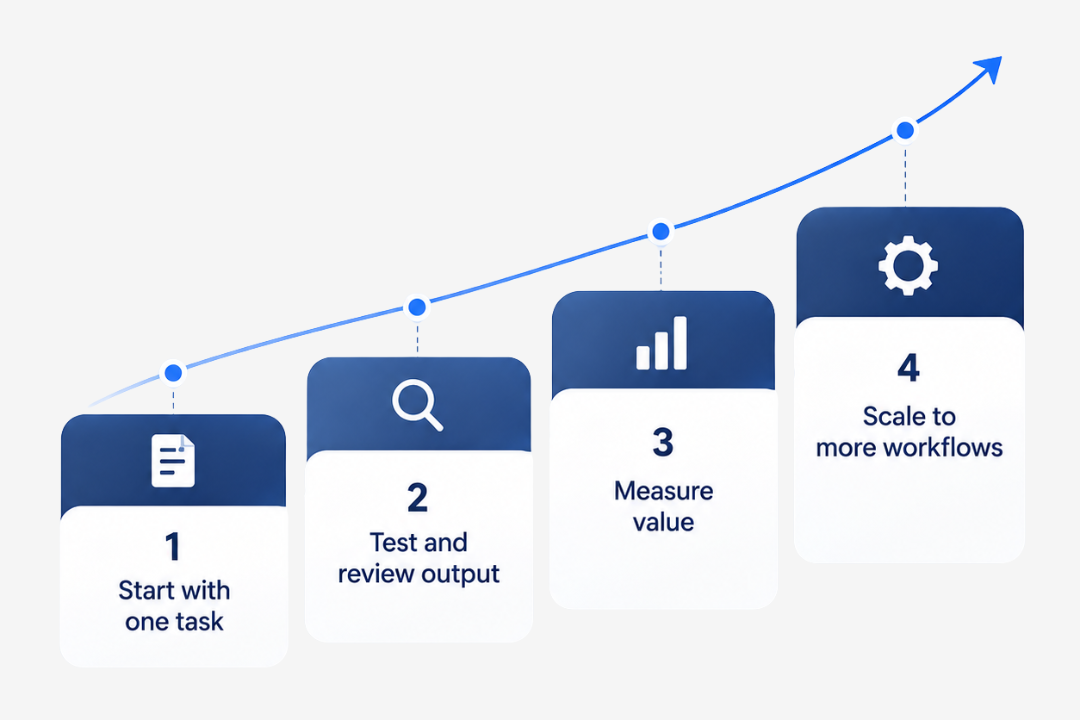
Start with one task that has clear source material and an output your team can evaluate, such as drafting campaign assets from an approved brief. Test the workflow before expanding it to CRM analysis, video production, or recurring reporting, where access requirements and tool dependencies become more complex.
Its value is less convincing when the task depends heavily on subjective creative decisions, incomplete data, uncertain causation, or strategic tradeoffs that require business context beyond the available sources. Those areas still need a marketer who can decide what matters, challenge an attractive but unsupported conclusion, and accept responsibility for the result.
For most teams, the best starting point is one repetitive workflow with an obvious quality standard. After the team tests that process manually, measures the usefulness of the output, and fixes the weak points, automation can take over the predictable portions without removing the human checkpoint that protects quality.
Build Practical AI Marketing Workflows With Gray Bay Marketing
At Gray Bay Marketing, we turn AI-powered marketing workflows into practical business opportunities. Our team helps businesses apply ChatGPT-6 Astra for marketing tasks, streamline campaign production, and make better use of customer and performance data.
Beyond AI, our LLM SEO Services, Google Ads Management, and paid media strategy support stronger search visibility, targeted customer acquisition, and more focused campaign management. Ready to make your marketing more effective? Contact us today to discuss your goals and build a strategy around your business.
FAQs: ChatGPT-6 Astra for Marketing Tasks
Can ChatGPT-6 Astra Create an Entire Marketing Campaign?
ChatGPT-6 Astra can support a large portion of campaign production when it receives a detailed brief and relevant brand context. It can help develop landing-page copy, email sequences, social posts, advertising concepts, and creative assets, but a marketer should review claims, positioning, visuals, audience fit, and final publication quality.
Can ChatGPT-6 Astra Analyze HubSpot CRM Data?
It can work with authorized CRM information when the required HubSpot connection, permissions, and relevant capabilities are available. The analysis can identify recurring themes and support messaging ideas, although teams should verify the source records before treating an AI-generated pattern as the basis for a strategic decision.
Can ChatGPT-6 Astra Generate Marketing Reports Automatically?
Automatic reporting is possible when the scheduled workflow can access the required data sources and tools. Verify those connections first, define the reporting period and metrics, and test a complete run. The team should check the figures and investigate unusual changes before acting on recommendations.
Does ChatGPT-6 Astra Replace Marketing Teams?
ChatGPT-6 Astra can reduce repetitive production, organization, research, and reporting work, but it does not remove the need for marketing judgment. Strategy, positioning, creative standards, factual verification, prioritization, and accountability still need experienced people who understand the company and its customers.
How Can Marketers Start Building AI Workflows?
A practical starting point is one repeated task that already has a clear process and measurable standard. The team can provide the relevant context, run the workflow manually, review its accuracy and consistency, refine the instructions, and introduce automation only after the process produces dependable results.
What Should a ChatGPT 6 Marketing Test Measure?
A ChatGPT 6 marketing test should measure factual accuracy, brand consistency, completion of requested assets, and the editing needed before approval. Use the same campaign brief for each run, record the tools and account configuration, and compare total working time—including review and corrections—with your existing process.