
6 Facebook Ads Updates Marketers Should Know
Meta has changed how advertisers build, measure, and optimize campaigns in 2026. New attribution rules, AI-powered tools, data-use policies, and ad-ranking systems can affect both campaign performance and reporting.
Staying current with Facebook Ads updates matters because even a reporting or attribution change can alter how marketers interpret their results. Other developments can influence targeting, creative testing, measurement, and budget decisions.
This guide explains six important changes, when Meta announced them, what they mean for advertisers, and what marketers should review in their existing campaigns.
How Facebook Ads Work in 2026
Facebook Ads increasingly rely on Meta Advantage+ tools to automate elements of audience selection, placements, budgets, creative, and campaign delivery. Advertisers begin by choosing an objective: Awareness, Traffic, Engagement, Leads, App Promotion, or Sales. Meta then looks for people who are likely to complete the action connected to that objective.
Data sent through the Meta Pixel and Conversions API helps Meta measure website activity, attribute conversions, and optimize campaign delivery. Creative matters too. The system evaluates the images, videos, copy, and formats available as it decides what to show.
Once a campaign launches, Meta’s ad auction considers factors such as the bid, estimated action rate, and ad quality. It uses those signals to determine which ads to deliver across Facebook, Instagram, Messenger, and Audience Network. Marketers choose the direction; Meta’s systems make many of the delivery decisions in real time.
For a closer look at campaign planning, read Meta Ads Strategy for Mobile Food Brands: How to Drive High-Intent Leads.
Latest Facebook Ads Changes Marketers Should Know
Meta is changing how advertisers create, measure, and deliver campaigns. These latest Facebook Ads changes affect campaign setup, reporting, creative testing, audience data, and day-to-day account management.
1. Meta Ads Updates Put More Campaign Decisions in AI’s Hands
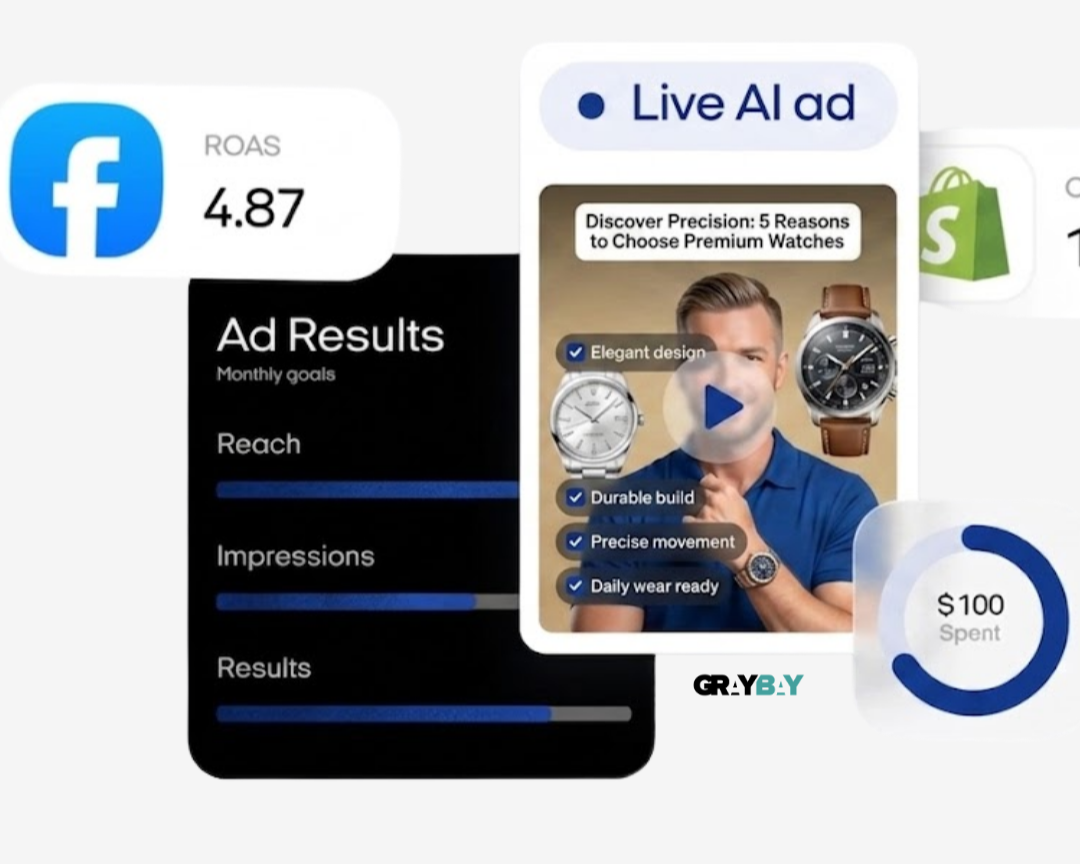
Advantage+ now plays a larger role across audience selection, placements, budgets, creative, and delivery. The exact automation available depends on the objective and campaign type, but the direction is clear: Meta wants advertisers to spend less time adjusting every delivery variable by hand.
Meta began testing a Meta AI business assistant with advertisers in late 2025 and expanded its beta availability in 2026. The assistant provides account support, optimization suggestions, performance benchmarks, and personalized recommendations inside tools such as Ads Manager, Meta Business Suite, and Business Support Home.
For marketers, the job is shifting. They need to give the system a clear objective, a credible offer, strong creative, and reliable conversion signals. Automated recommendations still require judgment; a suggestion that suits a large ecommerce account may not work for a local service business.
2. Click-Through Attribution Now Requires a Destination Link Click
Beginning in 2026, Meta changed how it categorizes click-through attribution. A conversion now counts under click-through attribution only when someone clicks a link that leads to an advertiser-selected destination. Likes, shares, saves, and clicks that do not lead to that destination can instead fall under engage-through attribution.
For example, suppose someone likes a product ad, remembers the brand, and purchases later without clicking the ad’s destination link. Meta may report that conversion under engage-through attribution rather than click-through attribution.
That distinction can make newer reports look different from older ones. Before judging performance, compare the same date range and attribution window, then review click-through, engage-through, and view-through results separately.
3. AI Is Taking a Bigger Role in Ad Creative
Meta is expanding its use of AI across creative production, asset adaptation, and ad delivery. Advantage+ creative can adapt eligible assets for different placements, including expanding certain images into a vertical 9:16 format for Reels and Stories. Other tools can generate variations or adjust visual elements for the person and placement receiving the ad.
This does not mean marketers should upload one image and leave the rest to automation. The system still needs worthwhile material. Test different audience problems, benefits, offers, hooks, images, videos, and formats. Changing only a background color or one line of copy may not give Meta enough meaningful variation to identify which idea resonates.
Preview every enabled enhancement before launch. Automated expansion can produce a useful vertical asset, but it can also place text awkwardly or alter the composition.
For practical tools that can speed up this work, see5 Facebook Ads AI Tools to Solve 90% of Problems.
4. Meta Is Using Business Activity Data Beyond Advertising
In June 2026, Meta announced changes to its Activity from other businesses setting, with the rollout beginning in the United States and selected countries in July. Under the change, information businesses already share with Meta—such as website activity and purchases—can help personalize Feed content and AI responses in addition to ads.
Meta said it was not collecting new categories of data as part of this update. The change concerns how the company uses information businesses already provide. Meta also expanded the Activity from other businesses control and announced that it would discontinue the overlapping Your activity off Meta technologies setting.
This is primarily a consumer-data and personalization update, not a new campaign switch that advertisers need to turn on. Businesses should still review consent practices, event accuracy, and the information sent through the Pixel and Conversions API. If an event is unnecessary, duplicated, or mapped incorrectly, broader automation will not fix the underlying data problem.
5. Meta Ads Manager Changes Put More Focus on Incremental Conversions
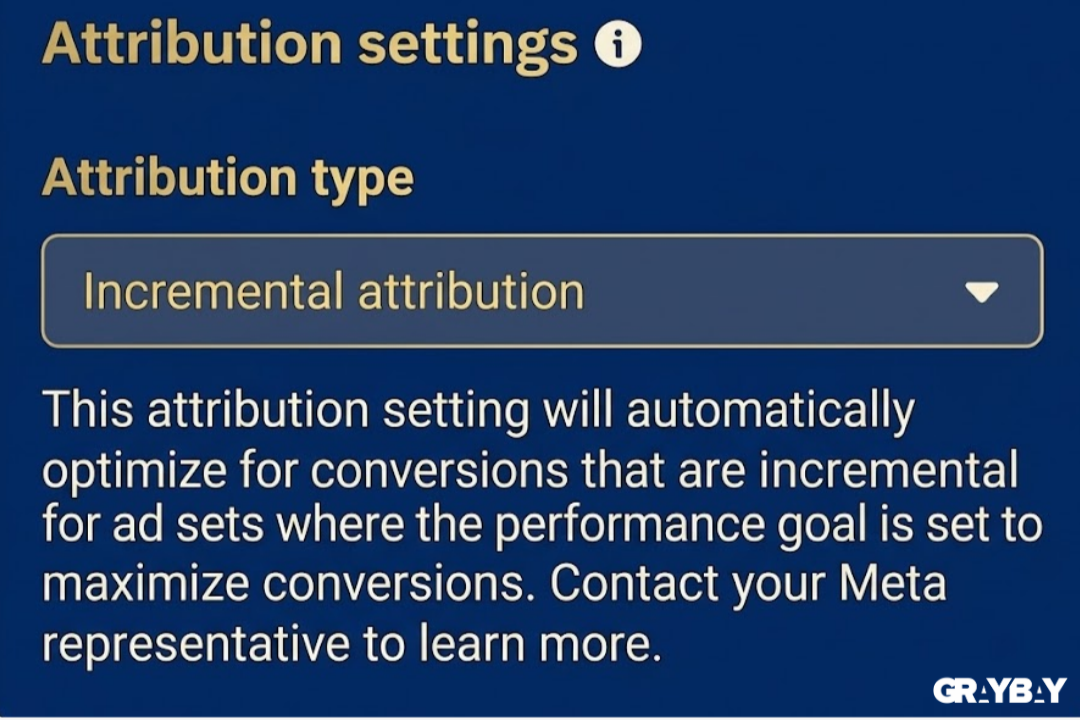
Meta is placing greater emphasis on incremental attribution, which estimates which conversions occurred because of an ad rather than assigning credit solely because a conversion happened within an attribution window.
That difference matters. A customer may see an ad and purchase during the reporting window, but that does not necessarily mean the ad caused the sale. The customer might already have been planning to buy. Incremental measurement tries to separate conversions influenced by advertising from those likely to have happened anyway.
Meta reported that its Q4 2025 model rollout produced a 24% increase in incremental conversions compared with its standard attribution model. That was a platform-level result reported by Meta, not a promised performance lift for every advertiser.
ROAS shows attributed revenue relative to campaign cost. Incremental attribution asks how much additional behavior the advertising caused. Looking at both can indicate whether a campaign is creating demand or collecting credit for demand that already existed.
6. Meta’s Ad-Ranking Systems Are Becoming More Advanced
Meta continues to improve the AI models behind its ad-ranking system. One model it has highlighted is the Generative Ads Recommendation Model, or GEM. Its updated architecture can process longer sequences of user behavior and additional organic engagement data to improve ad selection.
Meta reported that Q4 2025 improvements to GEM produced a 3.5% lift in Facebook ad clicks and a gain of more than 1% in Instagram conversions. Those figures describe improvements across Meta’s systems; they do not mean every advertiser should expect the same result.
For marketers, the practical lesson is familiar but important. A more advanced ranking model still depends on the inputs available to it. Relevant creative, accurate conversion events, a suitable optimization goal, and enough data to learn give the system a better foundation. Weak offers or inaccurate tracking remain weak inputs, no matter how sophisticated the ranking model becomes.
Facebook Advertising Updates at a Glance
These Facebook advertising updates show Meta moving toward AI-led campaign management, broader automation, stronger conversion signals, and more advanced measurement.
| Update | What Changed | What Marketers Should Do |
|---|---|---|
| More AI Campaign Automation | Advantage+ and the Meta AI business assistant handle or recommend more campaign decisions. | Concentrate on the objective, offer, budget, creative, and reliable conversion signals. |
| Revised Attribution Categories | Click-through attribution now requires a click to an advertiser-selected destination. | Separate click-through, engage-through, and view-through results before comparing periods. |
| AI-Assisted Creative | Meta can adapt eligible assets and generate or deliver creative variations across placements. | Supply distinct concepts and preview every enabled enhancement before launch. |
| Broader Use of Business Activity Data | Existing business-shared data can personalize Feed content and AI responses as well as ads. | Review consent, event accuracy, data mapping, and regional requirements. |
| Incremental Attribution | Meta is emphasizing modeled conversions estimated to have occurred because of advertising. | Review incrementality alongside ROAS, CPA, revenue, and conversion volume. |
| More Advanced Ad Ranking | GEM uses richer behavior sequences and engagement data to improve ad selection. | Give the system relevant creative, accurate events, and an appropriate optimization goal. |
What the New Facebook Ads Features Have in Common
These updates and new Facebook Ads features share one direction: Meta is giving AI a larger role in setup, creative adaptation, delivery, and measurement. Marketers still control the offer, objective, budget, creative direction, and definition of success. Those choices now carry more weight because Meta’s automation uses them as its starting point.
What These Facebook Ads Updates Mean for Marketers
These Facebook Ads updates do not require every advertiser to rebuild every campaign. They do, however, make a careful account review worthwhile.
Build Distinct Creative Concepts
Start with real differences in audience, message, benefit, or offer. One concept might demonstrate a product, another might answer an objection, and a third might show a customer outcome. Those variations give Meta more to learn from than ten versions of the same image with slightly different copy.
Check Tracking Before Changing the Campaign
Make sure important events fire correctly, purchase values are accurate, and browser and server events are deduplicated. Compare Meta’s totals with website or ecommerce records using the same time zone, currency, date range, and event definition. The numbers may not match perfectly, but large unexplained gaps deserve attention.
Match the Objective to the Business Result
Choose the action you actually want Meta to find. An ecommerce business seeking purchases would generally use Sales, while a business seeking form submissions or inquiries may use Leads. A Traffic campaign can bring visitors, but it is not designed to prioritize buyers simply because the landing page sells something.
Review Attribution Before Comparing Periods
The click-through definition can make reports from different periods appear inconsistent even if the underlying performance has not changed much. Record the attribution settings used in recurring reports, especially when presenting month-over-month or year-over-year results.
Treat Automation as a Tool, Not the Strategy
Advantage+ can automate many delivery decisions, but it cannot repair an unclear offer, a weak landing page, inaccurate tracking, or the wrong objective. Marketers remain responsible for strategy, quality control, and business outcomes.
Final Thoughts
Meta’s priorities in 2026 are easy to see: more AI automation, expanded creative tools, revised attribution categories, broader use of business activity data, incremental measurement, and more advanced ad ranking.
The practical response is not to chase every new switch in Ads Manager. Review the foundation first: campaign objectives, creative variety, Pixel and Conversions API events, attribution settings, landing pages, and reporting comparisons. Meta may automate more of the execution, but advertisers still decide what the campaign should accomplish and how success should be measured.
Need Help Managing Meta and Paid Media Campaigns?
Keeping up with attribution, automation, creative testing, and campaign measurement takes time.Gray Bay Marketing helps businesses plan and manage campaigns around clear objectives and measurable results.
Explore ourFacebook Ads agency services,paid media agency services, andGoogle Ads management services to build a connected strategy across paid social and search. Contact us to discuss your campaign goals.
FAQs About Facebook Ads Updates
Why did my results drop after Meta changed attribution?
The campaign may not have declined. Meta’s updated definition can move some conversions from click-through attribution to engage-through attribution. Compare the same date range, attribution window, and attribution categories before judging performance.
Should I still use detailed audience targeting with Advantage+?
Detailed targeting can still provide useful audience suggestions, but Meta may expand beyond them in eligible Advantage+ campaigns. Use relevant customer data and suggestions while monitoring lead quality, CPA, and revenue.
Why are my ads getting clicks but few sales?
Check the campaign objective, offer, landing page, checkout process, and purchase event. A Traffic campaign may find people likely to click without prioritizing people likely to buy.
How many creative concepts should I test?
There is no universal number because the right volume depends on budget, audience size, objective, and conversion volume. Prioritize several genuinely different concepts rather than numerous minor variations.
Are the Meta Pixel and Conversions API still necessary?
Yes. They remain important for measurement, attribution, and campaign optimization. When both tools send the same event, configure deduplication so Meta does not count browser and server events twice.
Why do Meta and my website show different conversion totals?
The platforms may use different attribution rules, reporting windows, time zones, and conversion definitions. Compare them using the same date range, event, time zone, and currency. Some differences may remain because the systems assign credit differently.
Should I judge a campaign by ROAS alone?
No. Review ROAS alongside CPA, conversion volume, profit margin, customer acquisition cost, attribution, and incrementality. A high ROAS does not always mean the campaign produced sales that would not otherwise have occurred.
What should I change first when performance declines?
First determine whether the decline comes from reporting, tracking, creative fatigue, the offer, or the landing page. Check each area before changing budget, targeting, and creative at the same time.