
Technical SEO Checklist: Complete Guide for 2026
You could have the most beautiful website and brilliant content, but if search engines can’t read it, none of it matters. That’s where the technical SEO checklist comes in.
At Gray Bay Marketing, we know SEO marketing isn’t just about content or links – it’s about the invisible mechanics that make your site findable, fast, and future-ready. Technical SEO is the foundation. It determines how search engines crawl, index, and interpret your pages.
In 2026, technical SEO has evolved beyond fixing broken links or robots.txt errors. It’s now about site performance, structured data, and how your content interacts with AI-driven search results. This complete guide walks you through every essential step, showing how the technical SEO checklist can protect and elevate your visibility online.
What Is Technical SEO and Why It Still Matters in 2026
At its core, technical SEO is how your website communicates with search engines. It’s the infrastructure that lets crawlers find, read, and rank your content efficiently. A complete technical SEO checklist ensures your website is accessible, optimized, and secure.
In 2026, Google’s systems are more sophisticated than ever, but the fundamentals haven’t changed. If your website isn’t technically sound, it doesn’t matter how engaging your content is – it won’t rank.
Technical SEO focuses on structure and delivery. It’s about making sure your content loads fast, adapts to mobile devices, and uses a secure HTTPS connection. Most ranking issues begin here. Fix these first, and your SEO marketing efforts instantly become more effective.
Key Website Foundations for Healthy Performance
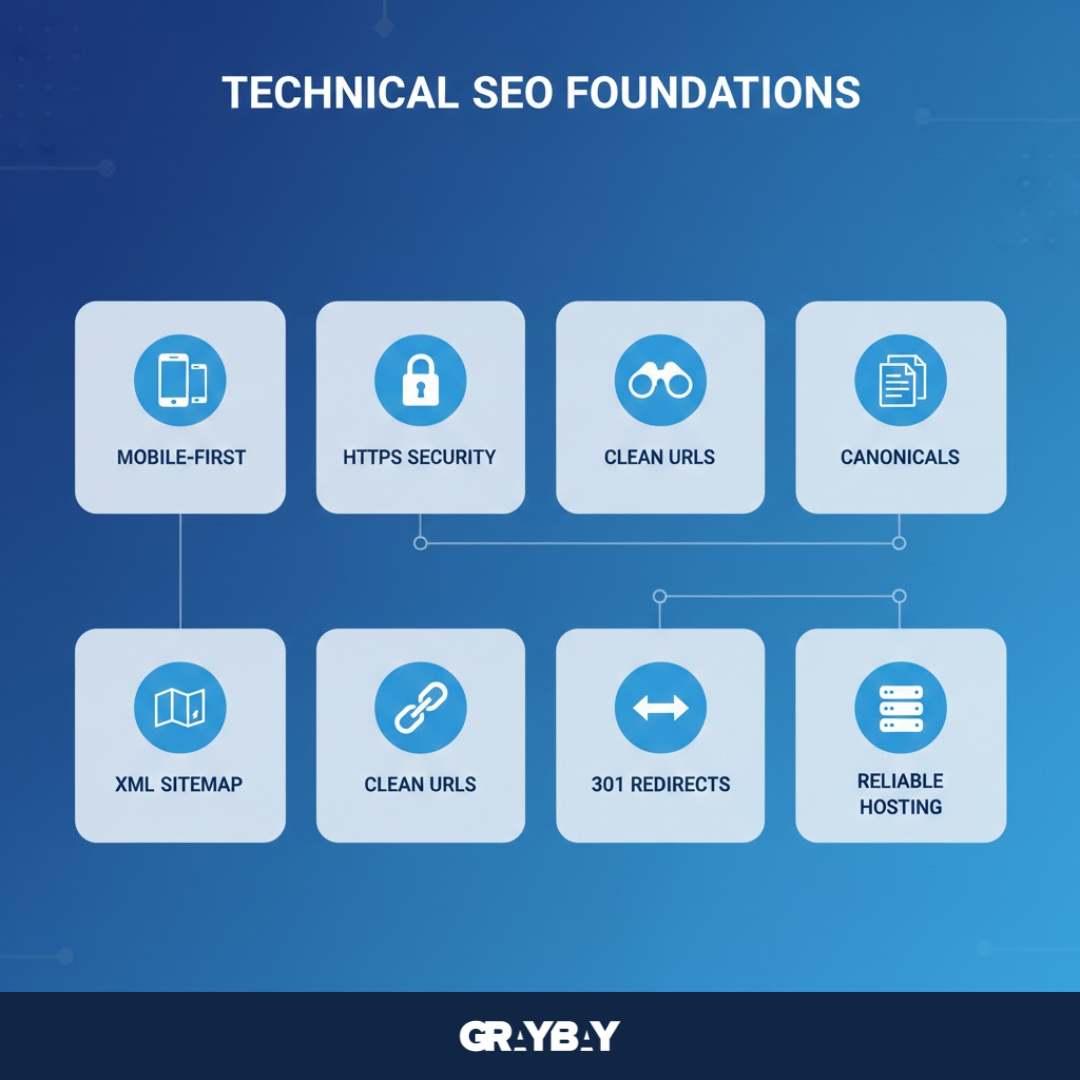
Before diving into advanced optimization, get the basics right. A strong technical SEO checklist starts with structural stability.
Mobile-first design: Google now indexes primarily from the mobile version of your site.
HTTPS security: Encryption isn’t optional. Sites without HTTPS lose trust and rankings.
Clean URL structure: Short, descriptive URLs help both users and search engines.
Canonical consistency: Prevent duplicate content issues by setting clear canonical URLs.
XML sitemap accuracy: Keep your sitemap up to date and error-free.
Redirect discipline: Use 301 redirects properly, and avoid redirect chains or loops.
Reliable hosting: Server uptime and CDNs improve both user experience and crawlability.
These foundations support everything else on your technical SEO checklist. They’re the difference between a site Google trusts and one it ignores.
Detecting and Fixing Crawling and Indexing Issues
Many websites fail not because of bad content but because search engines can’t access it. Understanding crawling and indexing issues is critical for visibility.
Googlebot discovers pages by crawling links and sitemaps, but technical barriers can block it. Common crawl problems include misused robots.txt files, broken links, messy URL parameters, or incorrect canonical tags. If your pages aren’t indexed, your SEO marketing stops dead.
Here’s what to review regularly:
Check crawlability: Use Google Search Console to ensure all important URLs are accessible.
Audit robots.txt and meta tags: Don’t accidentally block key pages.
Fix pagination and orphaned pages: Ensure every page connects logically through internal links.
Analyze server logs: Identify crawl frequency and wasted crawl budget.
Resolve duplicate content: Eliminate conflicting canonical references.
When you handle these issues early, you prevent ranking gaps and wasted effort. A healthy crawl path ensures every part of your site can compete fairly.
Assessing Comprehensive Technical SEO Factors
To stay competitive, your optimization must cover comprehensive technical SEO factors – the elements that now define modern visibility.
In 2026, technical SEO goes far beyond fixing meta tags. It blends performance, semantics, and AI compatibility. Here’s how the technical SEO checklist breaks down:
Performance and Core Web Vitals: Focus on load speed, visual stability, and interaction readiness. Optimize for LCP, CLS, and INP scores.
Structure and Semantics: Use proper heading hierarchy and schema markup. Strong internal linking signals topical authority.
Accessibility and Experience: Ensure mobile usability, clean navigation, and ADA compliance. Search engines reward accessible design.
AI Readability and Context Clarity: Optimize for AI Overviews by structuring answers clearly. Use concise summaries and descriptive headings.
Each of these SEO factors directly influences how your pages appear in both search results and AI-driven summaries.
How JavaScript and Dynamic Content Affect SEO
Modern sites rely heavily on JavaScript frameworks like React and Vue. While these enhance design and interactivity, they can create crawlability problems. A smart technical SEO checklist ensures search engines can see what users see.
Google renders JavaScript content, but it’s resource-intensive and sometimes incomplete. Server-side rendering ensures search engines can access all critical content, so prospects and decision-makers find information reliably. Test what Googlebot sees using tools like URL Inspection or Mobile-Friendly Test.
Avoid issues like lazy-loaded content that hides key text, deferred scripts blocking rendering, or navigation hidden behind JavaScript. The goal is transparency – every important element should be accessible without user interaction.
Optimize for Site Speed and Core Web Vitals
Speed isn’t optional – it directly affects search performance and prospect engagement. A slow website kills conversions and frustrates visitors. The technical SEO checklist prioritizes speed and performance.
To stay competitive:
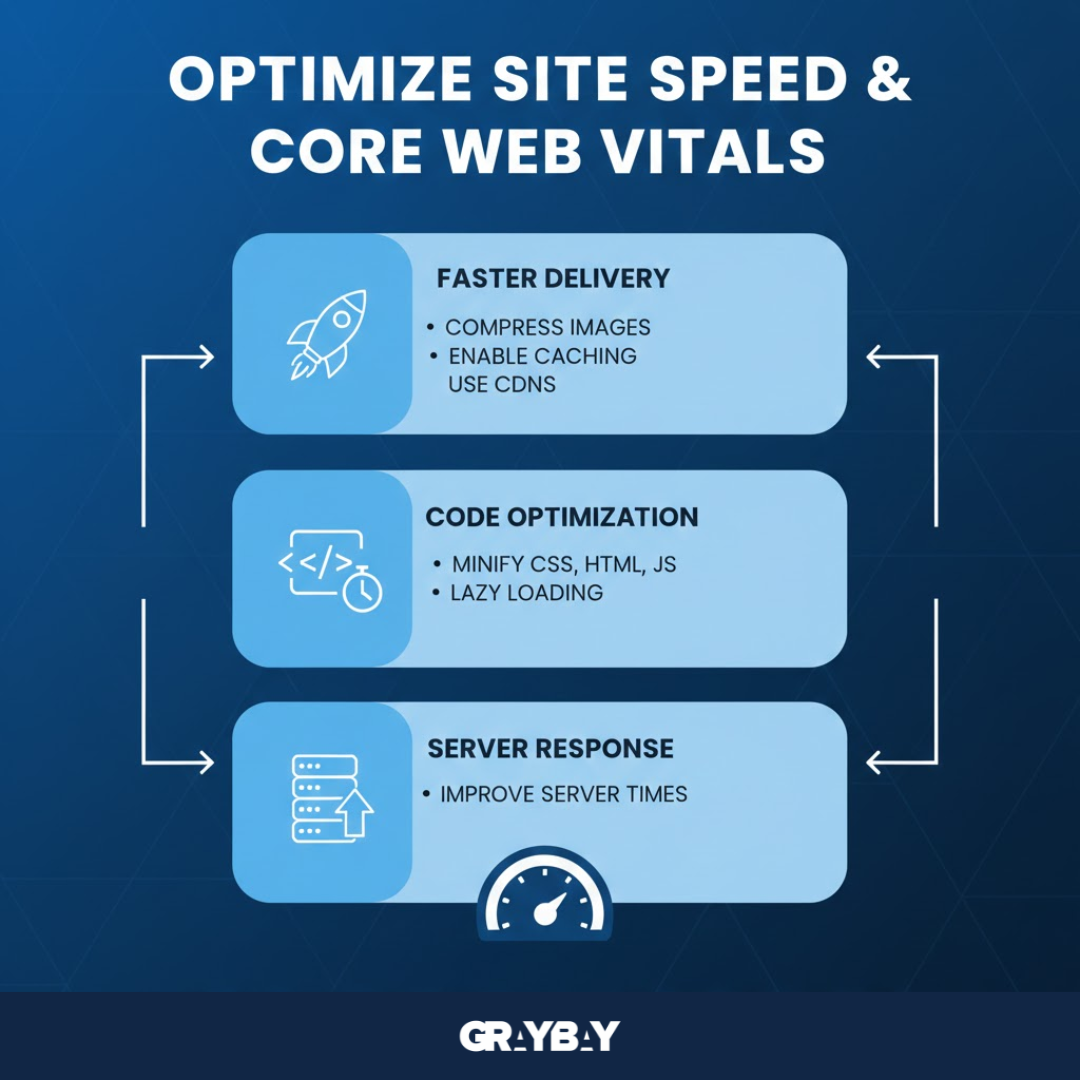
Compress images and use next-gen formats like WebP.
Enable browser caching and use CDNs for faster delivery.
Minify CSS, HTML, and JavaScript.
Implement lazy loading for heavy visuals.
Optimize server response times.
Core Web Vitals remain essential metrics: Largest Contentful Paint (LCP), Cumulative Layout Shift (CLS), and Interaction to Next Paint (INP). When these perform well, users stay longer, and rankings rise.
Implementing Structured Data for AI and Search
Structured data bridges the gap between human meaning and machine understanding. Adding schema markup helps search engines interpret your content contextually.
Your technical SEO checklist should include schema types relevant to your niche:
Article and BlogPosting: Enhance topical relevance.
FAQ and HowTo: Enable featured snippet eligibility.
Service and CaseStudy: Highlight offerings and client successes for professional audiences.
Professional Service: Signal credibility and presence for national or global clients.
Validate your structured data using Google’s Rich Results Test. Clean, consistent schema improves the odds of being featured in AI Overviews and voice search results – a growing advantage in 2026.
Common Technical SEO Mistakes That Still Hurt Rankings
Even experienced teams make technical missteps. Avoid these pitfalls on your technical SEO checklist:
Blocking pages in robots.txt accidentally.
Using “noindex” on valuable URLs.
Allowing redirect chains or loops.
Duplicating pages through parameter variations.
Forgetting hreflang on international sites.
Neglecting SSL certificate renewals.
Overusing plugins that bloat site code.
Each issue chips away at visibility and trust. Fixing them improves both user experience and algorithmic confidence.
Monitoring and Maintaining Technical SEO Health
Technical SEO isn’t a one-time project – it’s ongoing maintenance. A complete technical SEO checklist includes continuous monitoring.
Perform quarterly audits with tools like Screaming Frog, DeepCrawl, or Ahrefs. Set up Google Search Console alerts for crawl errors, indexing changes, and security warnings. After major updates or redesigns, revalidate your entire site.
Create a documentation log of every fix and configuration change. When problems arise later, you’ll know exactly what changed and why. Regular upkeep protects your hard-earned rankings from silent decay.
Technical SEO in the Age of AI and Generative Search
Search is shifting from links to language. AI-powered engines now summarize results, blending traditional rankings with synthesized answers. Your technical SEO checklist should adapt to this evolution.
To optimize for AI visibility:
Structure content with question-based headings.
Provide concise, factual summaries early in posts.
Use schema to identify author expertise and brand authority.
Focus on E-E-A-T: experience, expertise, authoritativeness, and trustworthiness.
AI doesn’t replace SEO – it reshapes it. Technical SEO now supports both human readers and intelligent models interpreting your content.
Future-Proofing Your Website With Gray Bay Marketing
A great website isn’t just functional – it’s optimized for lead generation, client acquisition, and measurable results. At Gray Bay Marketing, we don’t just provide a technical SEO checklist; we implement it strategically to drive business growth.
Our approach combines analytics, development insight, and creativity. We monitor crawling patterns, optimize site performance, and refine technical structure to ensure your website converts prospects, supports marketing strategy, and drives sustainable growth. As an LLM SEO agency, we tailor every fix to support scalable client acquisition and measurable marketing outcomes, whether you run a service-based startup or a multi-location enterprise.
We believe SEO marketing succeeds when it’s both strategic and sustainable. That’s why we pair automation with human expertise, ensuring your site stays fast, secure, and visible – even as algorithms evolve.