
Internal Linking for SEO: The Ultimate Guide, Strategies, and Tools
At Gray Bay Marketing, we’ve seen strategic internal linking for SEO driving significant growth for service-based businesses. It’s one of those under-the-radar tactics that quietly drives visibility, crawlability, and conversions. If your SEO marketing strategy feels stuck, chances are your pages aren’t linking like a team. This guide walks you through the why, how, and tools behind a powerful internal linking structure – so your site can finally start pulling its own weight.
What Is Internal Linking (and How It Works for SEO)
At its simplest, internal linking for SEO means connecting pages on the same domain using hyperlinks. It sounds basic, but it’s how Google and other search engines understand your site’s hierarchy. When you link from one page to another, you pass authority – also known as “link equity”.
Search crawlers in 2026 rely heavily on entity and topic understanding. Internal links help define those relationships. The links in your navigation, content, and footer all guide crawlers through your structure. A solid linking setup helps search engines discover new pages faster and recognize how your topics connect.
Each link acts like a signpost pointing to something important. If those signs are clear, organized, and relevant, crawlers (and users) move through your site effortlessly. That’s why internal linking isn’t just a technical move – it’s a strategy that shapes how people and bots experience your brand online.
Why Are Internal Links Important for SEO?
So, why are internal links important for SEO? Because they’re still the foundation of visibility. Without them, search engines and users hit dead ends.
Here’s what well-planned linking accomplishes:
Boosts ranking potential. Pages with more internal links are seen as more valuable, so they rise faster in search results.
Improves user experience. People find related information quickly, which reduces bounce rates.
Distributes authority. Link equity flows from high-traffic pages to the ones that need help ranking.
Speeds up indexing. Search engines can crawl your pages more efficiently.
The importance of internal linking for SEO goes beyond technical structure – it’s about clarity. Search engines now use link context to understand page purpose. When your content ecosystem is tightly linked, each page supports the next. That harmony signals both credibility and relevance.
How to Build Internal Links for SEO (Step-by-Step)
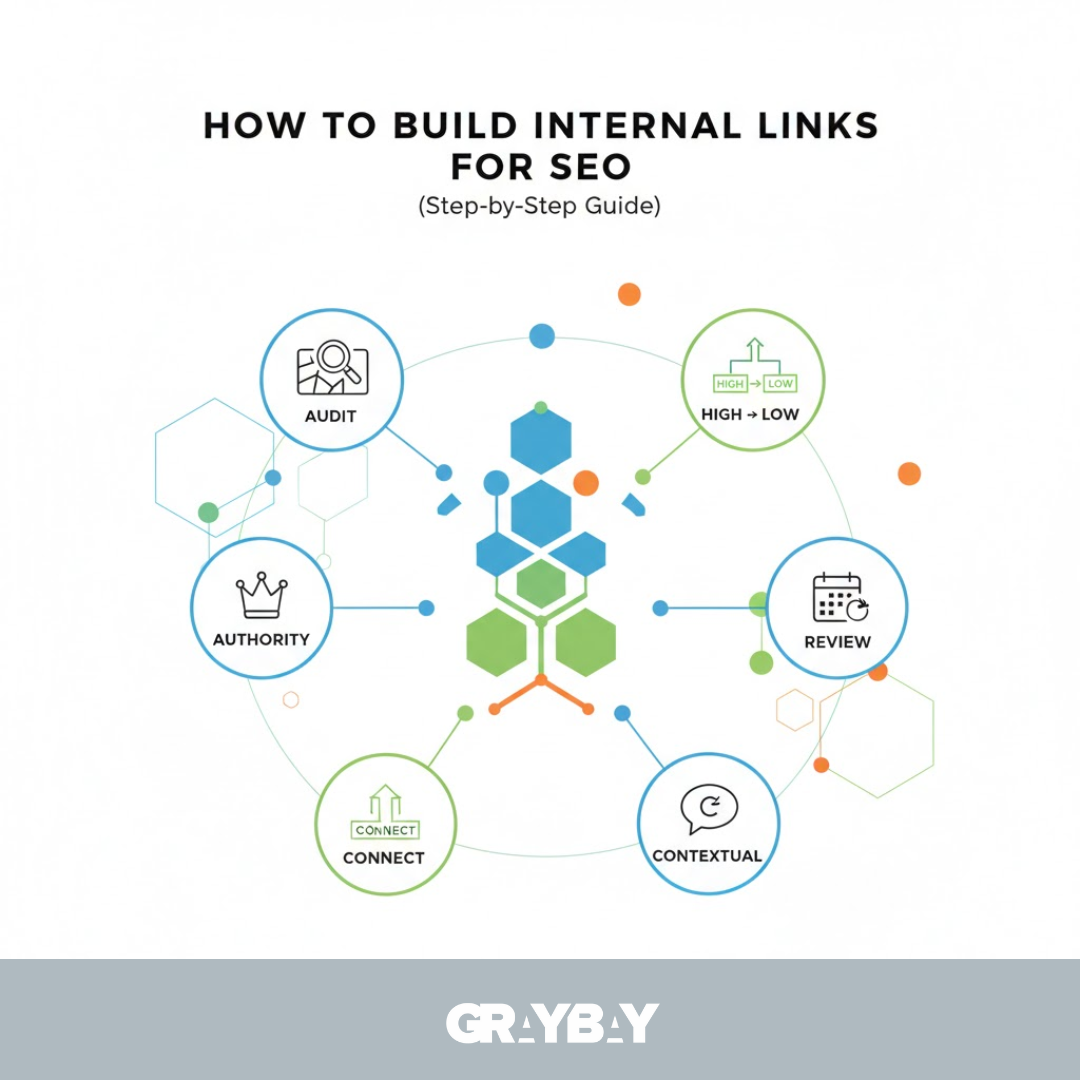
Knowing how to build internal links for SEO is where your effort pays off. The process looks simple on paper, but it’s more strategic than it seems.
Here’s a five-step framework:
Audit what exists. Use tools like Ahrefs, Screaming Frog, or Semrush to map internal paths and identify dead ends.
Find your authority pages. Spot URLs with the highest engagement, backlinks, or conversions.
Connect high to low. Link strong pages to ones needing visibility. Use descriptive anchor text for clarity.
Keep it contextual. Place links where they add value to readers. Context drives authority transfer in 2026’s algorithm updates.
Review regularly. Internal linking for SEO isn’t “set it and forget it.” Revisit quarterly to fix broken or outdated links.
Each link should feel useful, not forced. When users naturally follow your links, search engines follow too – and reward you for it.
Internal Linking Best Practices (2026 Edition)
Internal linking for SEO keeps evolving, but the fundamentals hold strong. In 2026, Google emphasizes semantic context and user engagement signals. The better your internal links support user journeys, the stronger your site performs.
Follow these best practices:
Link early and high. Crawlers still prioritize top-of-page links.
Diversify anchor text. Include branded, partial-match, and intent-based anchors for balance.
Limit frequency. Two to five internal links per 1,000 words is ideal.
Stay relevant. Every link must make sense for the reader, not just for bots.
Avoid AI-generated spam linking. Google’s 2026 updates now penalize automated link insertions that lack semantic coherence.
Think of it like city planning. You’re not building a maze – you’re designing efficient, human-friendly pathways between important neighborhoods.
Internal Linking Tools to Simplify the Process
Managing hundreds of links manually isn’t realistic in 2026. These updated tools streamline internal linking for SEO while keeping strategy in your hands:
Ahrefs Internal Link Opportunities 2.0: Uses NLP to suggest relevant contextual links.
Semrush Site Audit: Adds topic clustering to identify underlinked content groups.
Link Whisper (WordPress): AI-assisted but editable, keeping links human-sounding.
Yoast SEO Premium: Integrates with schema markup for smarter connections.
Sitebulb 6.0: Offers visual crawl maps and internal PageRank flow simulations.
Pick one that fits your workflow. Automation should enhance judgment, not replace it.
Common Internal Linking Mistakes (and How to Fix Them)
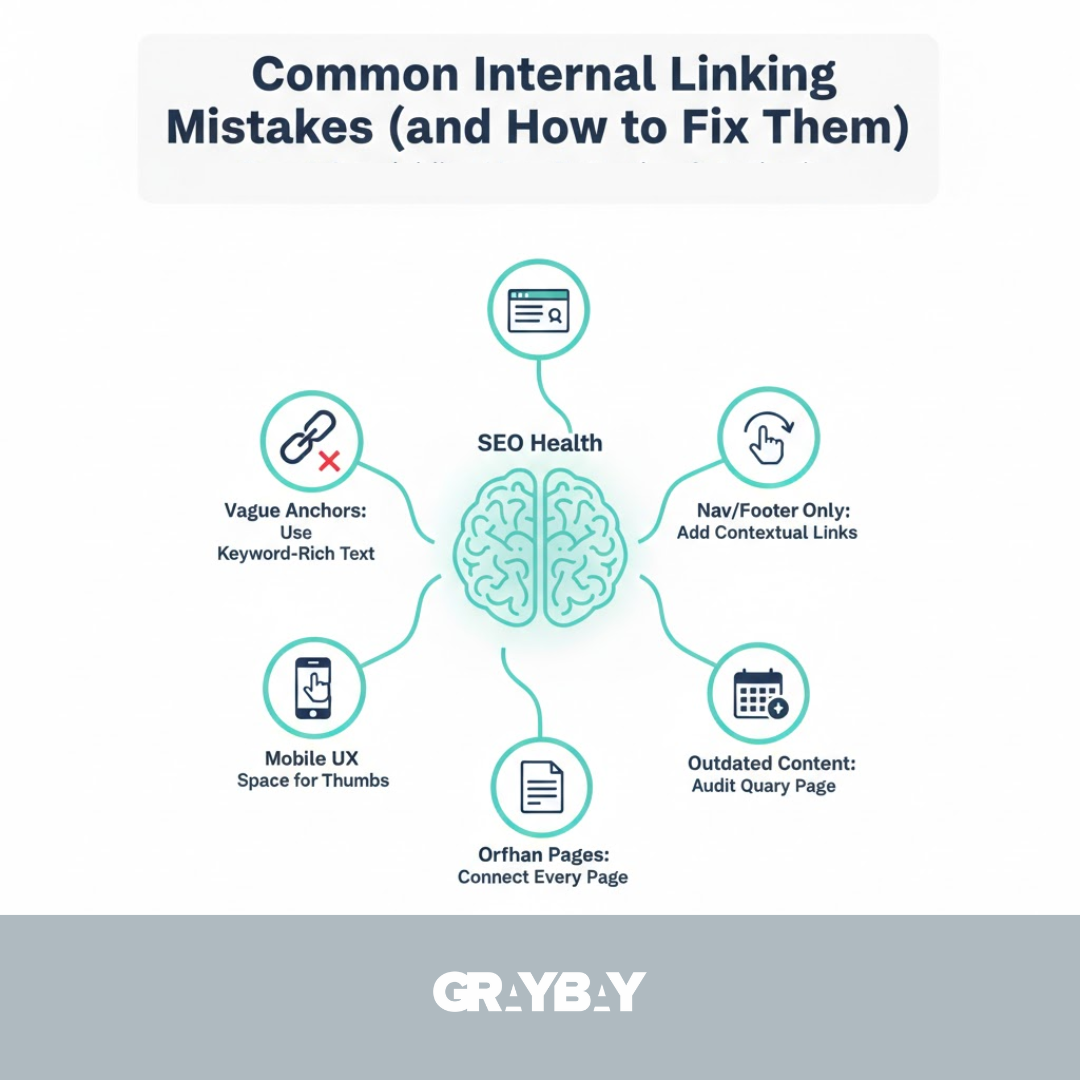
Even seasoned marketers slip up. Here are frequent mistakes that weaken internal linking for SEO, and how to fix them fast:
Using vague anchors. “Read more” adds zero SEO value. Replace it with keyword-rich, natural phrasing.
Linking only from nav or footer. Contextual in-body links carry stronger weight.
Forgetting mobile UX. Long link lists frustrate mobile readers and slow loading.
Neglecting orphan pages. Every page should connect to at least one other relevant page.
Linking to outdated content. Keep your ecosystem fresh; update or remove old links quarterly.
These small repairs compound into better crawlability, user retention, and authority distribution.
Advanced Internal Linking Strategies for Bigger Sites
As websites scale, internal linking for SEO needs smarter systems. Large-site success now depends on automation paired with intent-based linking.
Try these next-level tactics:
Topic clusters 2.0. Build hub-and-spoke models with AI assistance, ensuring internal links support user intent.
Dynamic linking widgets. Generate personalized internal links based on visitor behavior.
Schema-driven relationships. Use structured data to explicitly connect related content.
Crawl depth monitoring. Keep pages within three clicks of the homepage.
Link equity visualization. Use graph tools to ensure your top pages get the most internal links.
These strategies create an ecosystem where both humans and algorithms find exactly what they need faster.
Build a Site That Connects Itself
The magic of internal linking for SEO lies in how quietly it works. You’re not shouting louder – you’re helping Google and your users navigate smarter.
At Gray Bay Marketing, we believe in the connection between content, prospects, and business strategy. Our team of SEO Services in San Francisco helps service-based businesses grow through structured, results-driven content that attracts qualified leads.
We know every link matters because every interaction contributes to business growth. Our strategies drive measurable outcomes – more qualified leads, higher engagement, and long-term client relationships for service-based businesses.
When your site architecture supports your service offerings and content strategy, every click drives meaningful engagement. That’s not just SEO – that’s Gray Bay Marketing’s brand of growth: practical, intentional, and designed to generate measurable business results.