
SEO vs. SEM Marketing: Which Strategy Gets Better Results for Your Business?

At Gray Bay Marketing, we work with service-based companies that need to balance immediate lead generation with sustainable growth. Some clients require quick visibility, while others prioritize long-term authority and credibility. The question always comes up: which delivers better results? The answer depends on your goals, resources, and timeline. In 2026, SEO vs. SEM marketing looks very different from what it did just a few years ago. Artificial intelligence, shifting consumer behavior, and new ad models have all transformed the landscape. This blog will break it down clearly so you can decide what’s right for your business.
What is SEO in 2026?
SEO stands for search engine optimization, and it’s the foundation of organic visibility. Unlike paid search ads, SEO earns placement naturally by showing search engines your site is relevant, trustworthy, and valuable. In 2026, SEO has moved beyond ranking links on a results page. Now, success means appearing in AI-generated summaries, featured snippets, voice search answers, and even visual search results. To thrive, websites need strong technical health. Core Web Vitals, fast loading, and mobile responsiveness all matter. At the same time, Google rewards content that demonstrates expertise, experience, authority, and trustworthiness. This emphasis on E-E-A-T pushes brands to showcase credibility. SEO is no longer just about keywords. It’s about structured content, context, and authority signals that win trust with both users and algorithms. Businesses comparing SEO vs. SEM marketing need to consider how search is now shaped by AI and evolving algorithms.
What is SEM in 2026?
SEM, or search engine marketing, is the broader strategy that includes both SEO and paid ads. Pay-per-click advertising remains central, but automation has changed how campaigns run. Today, platforms like Google Ads use predictive analytics and smart bidding to optimize budgets in real time. Ads are also integrated into AI-driven search experiences. Instead of just appearing above results, they may show up within summaries or embedded answers. This makes SEM more dynamic, but also more competitive. One of SEM’s greatest strengths is transparency. Businesses can still track clicks, conversions, and ROI down to the dollar. This visibility helps decision-makers adjust campaigns quickly. For many companies, SEM provides the immediate traffic they need while SEO builds momentum in the background. That balance is key when weighing SEO vs. SEM marketing as part of a broader strategy.
The Difference Between SEO and SEM
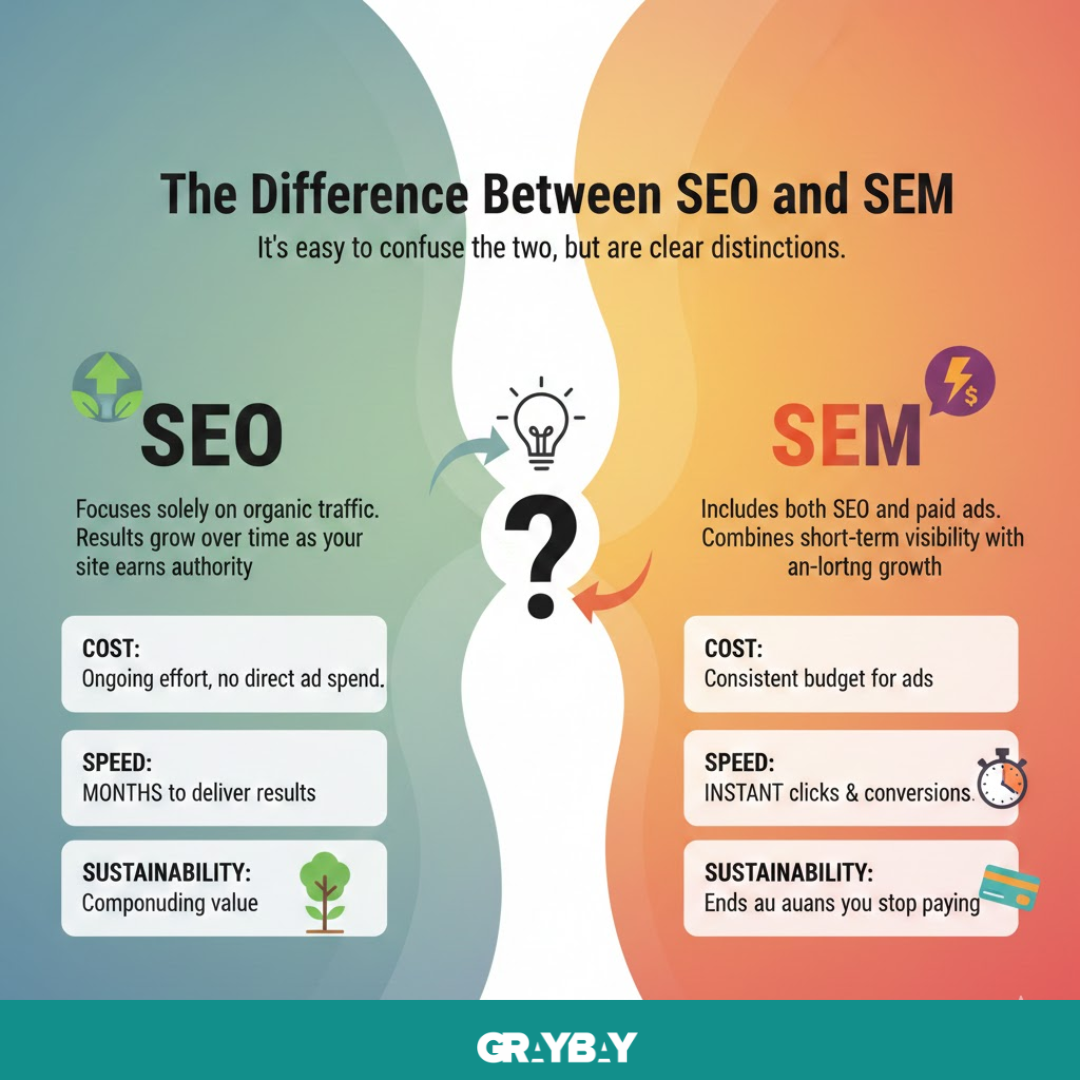
It’s easy to confuse the two, but there are clear distinctions.
SEO: Focuses solely on organic traffic. Results grow over time as your site earns authority.
SEM: Includes both SEO and paid ads. It combines short-term visibility with long-term growth.
Cost: SEO requires ongoing effort but no direct ad spend. SEM requires a consistent budget for ads.
Speed: SEO can take months to deliver results. SEM produces clicks and conversions almost instantly.
Sustainability: SEO provides compounding value. SEM ends as soon as you stop paying.
Understanding the difference between SEO and SEM allows you to choose the right mix for your goals. Some businesses rely heavily on SEO, while others need SEM to fuel fast growth. Framing this decision within SEO vs. SEM marketing ensures you see the full picture.
Benefits and Drawbacks of SEO
SEO offers powerful advantages, but it also has challenges:
Benefits:
Builds long-term visibility that compounds with time.
Strengthens brand authority and consumer trust.
Reduces cost per lead compared to paid campaigns.
Drawbacks:
Takes months before results become visible.
Requires consistent updates to keep pace with algorithm changes.
Needs expertise across content, technical, and outreach areas.
For businesses seeking sustainable growth, SEO is often essential. However, patience is required, and that’s where SEM can fill the gaps. Understanding SEO vs. SEM marketing here helps identify when to play the long game.
Benefits and Drawbacks of SEM
SEM delivers speed, but it comes with its own set of trade-offs:
Benefits:
Provides immediate visibility at the top of results.
Scales quickly with budget adjustments.
Offers measurable ROI with transparent reporting.
Drawbacks:
Costs rise as competition increases.
Campaigns end the moment spending stops.
Over-reliance on paid ads limits organic growth.
For companies launching new products, SEM can be the fastest route to attention. Yet without a long-term SEO plan, results disappear once budgets dry up. This is why many companies look at SEO vs. SEM marketing holistically.
SEO vs. SEM Marketing: Which Works Best for Your Business?
The answer depends on context. Here are a few scenarios:
Startups:
SEM works best for quick awareness.
SEO builds the foundation for long-term visibility.
Established businesses:
SEO sustains authority and credibility.
SEM helps scale during product launches or seasonal pushes.
Professional Service Firms:
SEO enhances authority and search visibility within your industry.
SEM generates timely leads and opportunities for client acquisition.
B2B organizations:
SEO thought leadership and content authority.
SEM drives targeted inquiries and supports business development campaigns.
Your business goals, budget, and competition determine the right balance. These choices reflect how SEO vs. SEM marketing serves different types of businesses.
When SEO and SEM Work Better Together
Many businesses see the strongest results by combining both approaches:
Shared insights: SEM data helps refine SEO keywords and content strategies.
Authority impact: Strong SEO reduces SEM costs by improving quality scores.
Coverage: Using both ensures visibility across organic listings and paid placements.
Flexibility: SEM drives short-term results while SEO sustains long-term growth.
Instead of choosing one, many companies integrate SEO vs. SEM marketing into a single, coordinated plan for stronger results.
The Future of Search Marketing in 2026
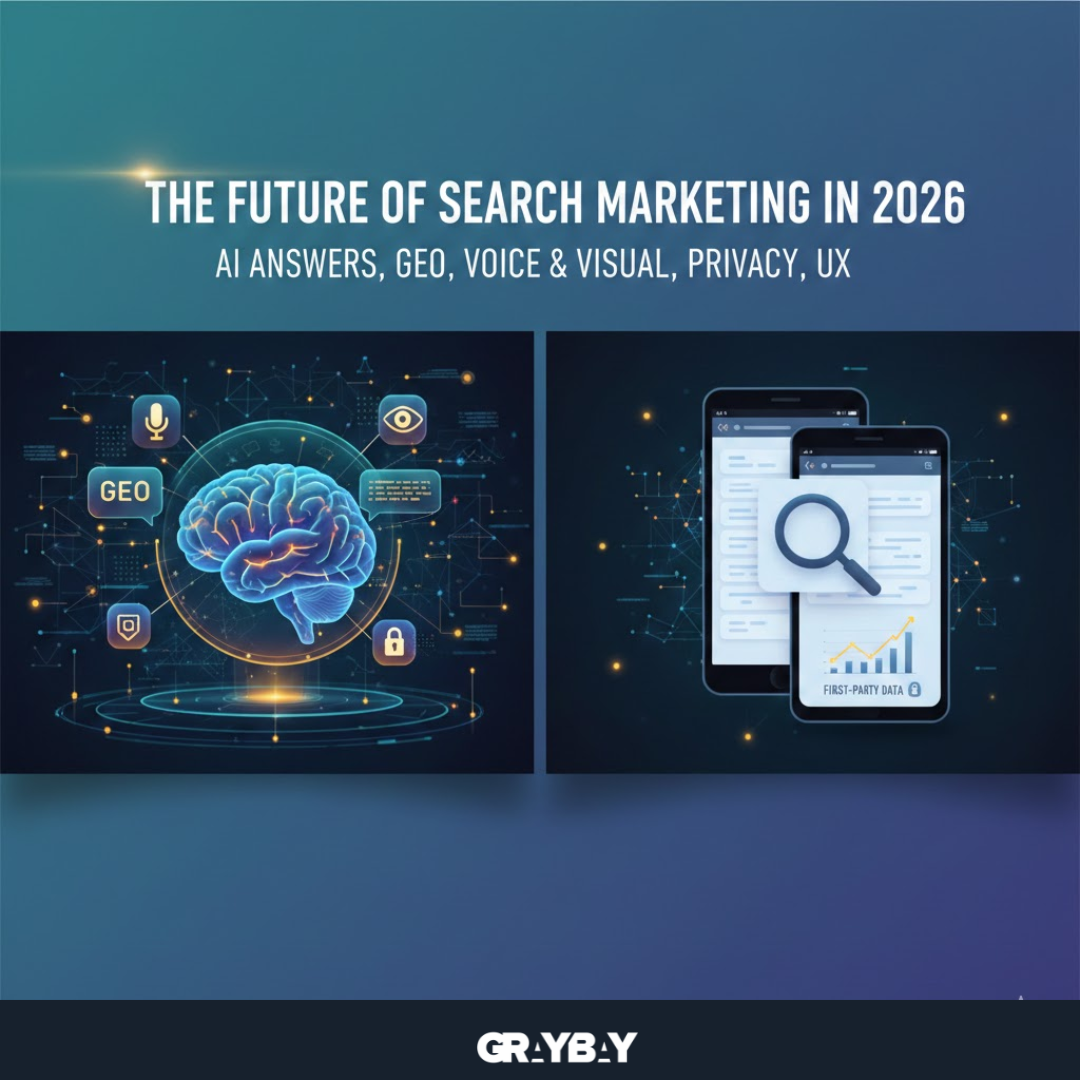
The search landscape continues to evolve quickly. Several trends are shaping the future:
AI-generated answers now dominate search experiences.
Generative Engine Optimization (GEO) helps businesses appear in AI summaries.
Voice and visual search expand how users discover content.
Privacy changes push brands to rely more on first-party data.
Search engines weigh user experience heavily, rewarding sites with seamless performance.
For companies, the lesson is clear: agility matters. SEO vs. SEM marketing will keep evolving, and businesses that adapt quickly will maintain an advantage in this shifting environment.
How Gray Bay Marketing Helps Businesses Grow
At Gray Bay Marketing, we specialize in helping local businesses navigate this balance between SEO and SEM. Whether you need immediate leads or long-term search visibility, Gray Bay Marketing is a paid advertising agency that helps businesses turn search traffic into real growth. Schedule a paid media consultation to learn how Google Local Service Ads, SEO, and other digital advertising strategies can work together to increase qualified leads and revenue.
Our team combines deep expertise in AI SEO services with hands-on campaign management for SEM. We craft strategies that build visibility, capture leads, and ultimately drive revenue. Whether you run a professional services firm, a SaaS company, or a multi-location enterprise, we tailor SEO and SEM strategies to drive qualified leads, strengthen authority, and support measurable growth. At Gray Bay Marketing, we turn search visibility into a strategic advantage, making SEO vs. SEM marketing work seamlessly for your business.