
6 AI Marketing Trends Shaping How Teams Work in 2026

Marketing teams are using AI to support research, prepare creative variations, and interpret campaign data. The harder question is how to connect those capabilities without creating more disconnected tools or extra review work.
This guide examines six AI marketing trends 2026 teams should evaluate, from connected workflows and customer data to AI search and human oversight. For each trend, you’ll learn what changes in everyday marketing work and how to decide where it could help your business.
Generative AI in Marketing: Adoption and Business Impact
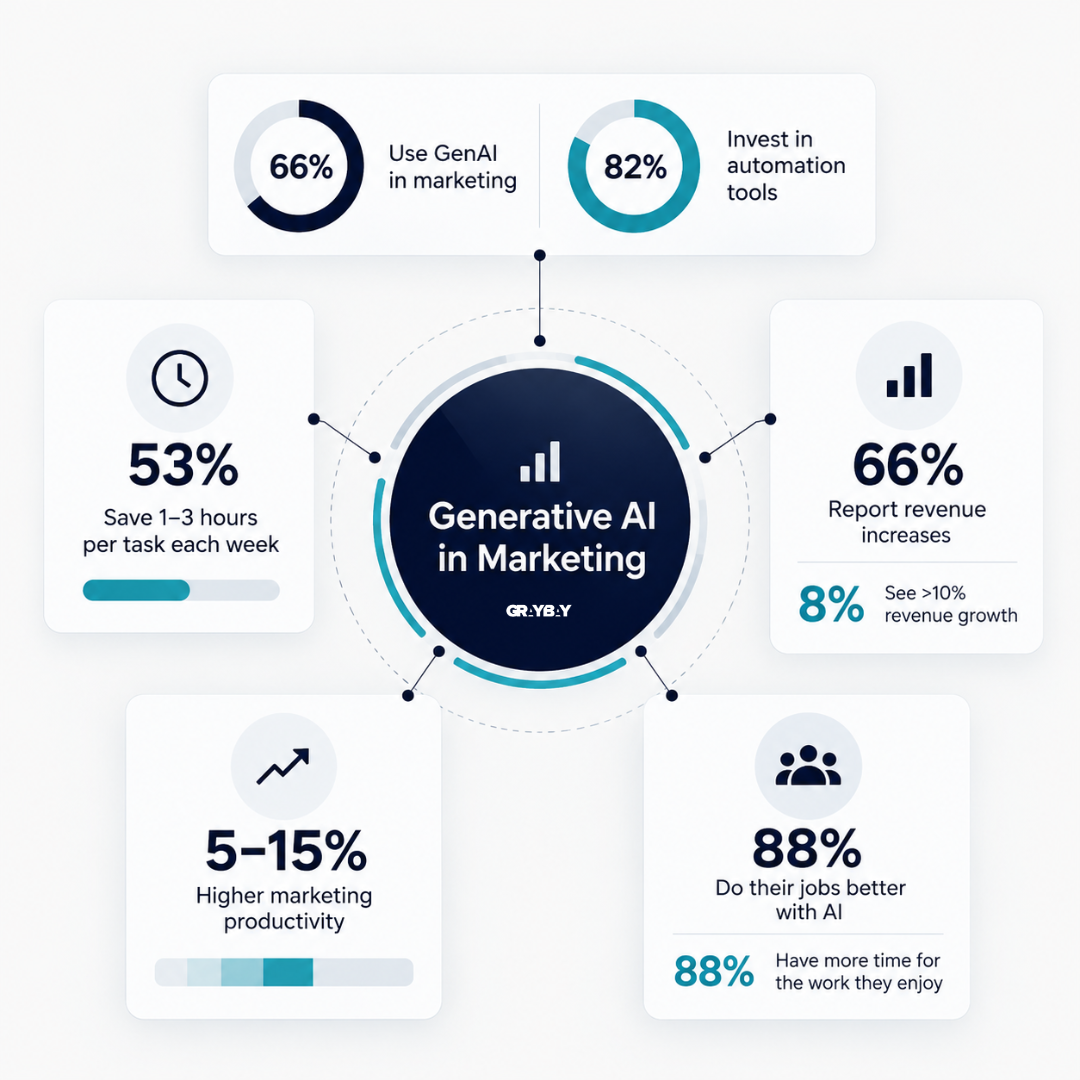
HubSpot reports that 91% of marketing leaders say employees or teams at their organization use AI to assist with their jobs. Separately, 82% of marketers say they or their company have invested in automation tools.
McKinsey’s April 2025 analysis compares surveys conducted in early and mid-2024. It reports that a greater share of respondents saw revenue increases from generative AI in the later survey, providing background on adoption before 2026.
These findings show that AI adoption is established, but they do not tell you which workflow will deliver value for your business. The next step is to examine specific uses, the data they require, and the decisions that still need a marketer’s review.
Read more: How to Use Gemini in Google Ads to Build Better Campaigns
AI in Digital Marketing: Six Trends Shaping Teams in 2026
The interesting part of AI in marketing is how it changes the work around the tools. Teams are rethinking workflows, responsibilities, customer data, and the way campaigns move forward. These six AI marketing trends 2026 stand out as this shift continues through 2026:
1. AI Moves Beyond One-Off Tasks
For years, marketers have used AI for individual tasks, such as writing headlines, summarizing research, creating social captions, or turning campaign data into quick reports. Now, AI is starting to connect several steps within the same workflow, which can change how a campaign moves from an idea to execution.
For example, AI can spot a change in customer behavior, suggest an audience to investigate, create several campaign ideas, and prepare content variations for review. The marketer still sets the direction and makes important decisions, but the system can handle more of the work between those decisions. As a result, teams can spend less time moving information between tools and more time reviewing ideas, testing strategies, and responding to useful signals. This shift makes AI part of the workflow itself, instead of another tool marketers turn to for occasional support.
2. The Marketer’s Role Is Becoming More Strategic
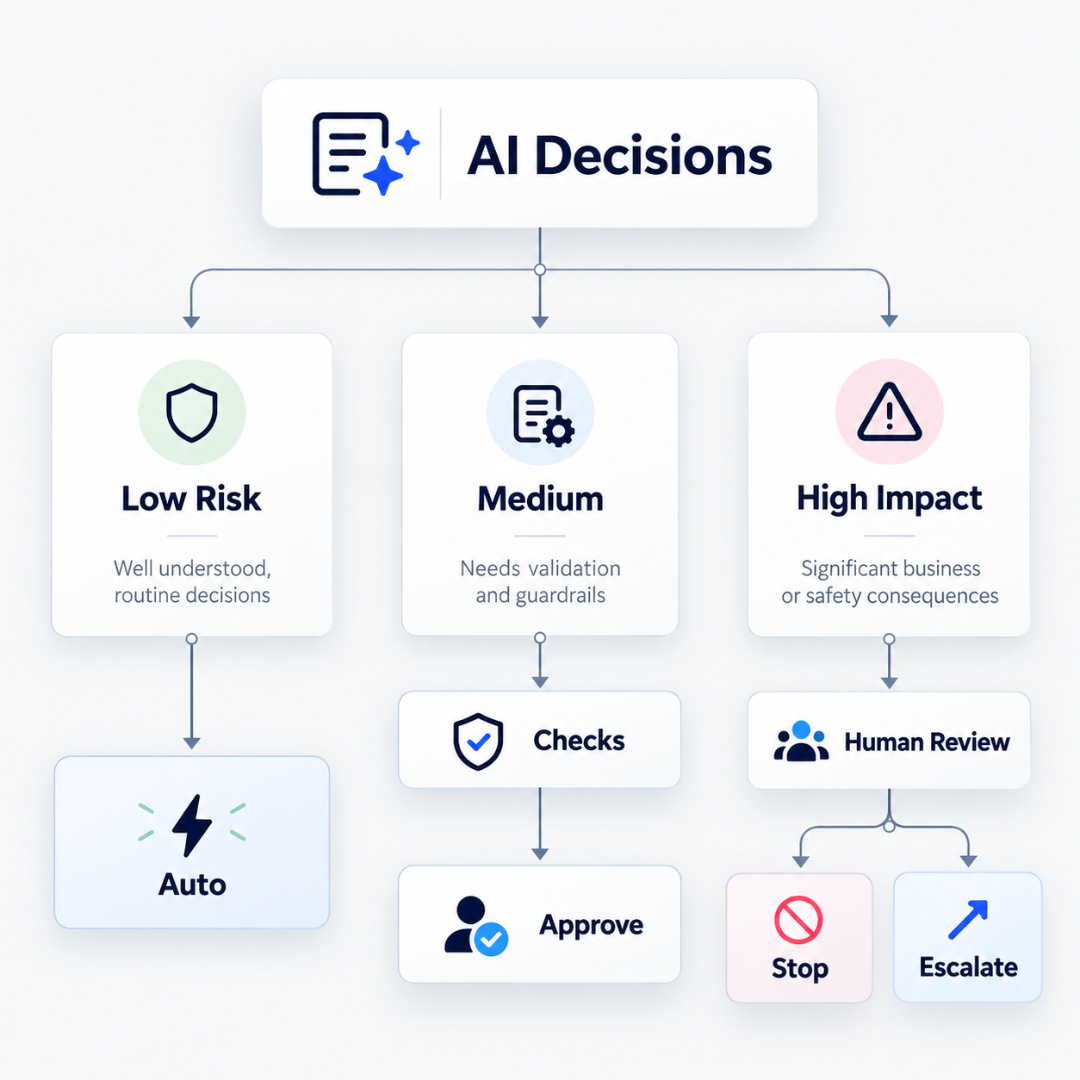
As AI takes care of more routine production work, the day-to-day role of a marketer is starting to change. A content writer may spend less time staring at a blank document, for example, and more time shaping the angle, checking the facts, and making sure the message sounds right for the audience. Similarly, a performance marketer can spend less time pulling numbers into reports and more time figuring out what those numbers mean for the next campaign.
This shift puts greater value on judgment because AI can produce several options in seconds, but it still needs a person to decide which ideas deserve attention and which ones miss the mark. Good briefs, clear goals, useful context, and thoughtful feedback also become important because the quality of AI-assisted work depends heavily on the direction it receives.
As a result, marketing teams may start measuring roles by the decisions people own instead of the volume of tasks they complete. The marketer's job becomes less about producing every piece personally and more about guiding the system toward useful business outcomes.
3. AI Marketing Automation Makes Customer Context More Valuable
AI can generate a campaign idea in seconds, but the idea becomes far more useful when the system has enough customer context behind it. Information such as purchase history, browsing behavior, customer questions, past campaign results, and product preferences can give AI a clearer picture of who the campaign is actually meant to reach. As a result, teams can move beyond surface-level personalization and create messages that fit a customer's situation more closely.
For example, a returning customer who has already viewed a product may need a different message than someone discovering the brand for the first time. AI can spot these differences quickly when the right data is available and organized. However, that also puts more responsibility on marketing teams to keep customer information accurate, current, and properly connected. Good AI marketing therefore starts with good context, since even a capable system can produce weak recommendations when it is working with incomplete or outdated information.
4. Content Production Becomes More Connected
Creative teams can use AI to prepare different headlines, visual concepts, and offers from the same campaign brief. This reduces the preparation work needed to test alternatives, but each variation still needs a clear reason to exist.
For example, a service business could test one ad focused on convenience against another focused on specialist expertise. The team would keep the audience and offer comparable, review the copy before launch, and judge performance using qualified inquiries rather than clicks alone.
Start with one defined test. Record what changed, how success will be measured, and when the results will be reviewed. Faster production becomes useful when it leads to clearer learning.
5. AI Search Changes the Role of Content Teams
Search is becoming a wider discovery experience as people use AI tools to find answers, compare products, and explore brands before visiting a website. That change gives content teams a bigger responsibility because AI search optimization depends in part on making useful information clear enough for people and AI systems to understand. Product details, FAQs, customer questions, reviews, comparisons, and expert insights can all shape how a brand is represented in these answers.
This also makes AI search a shared marketing responsibility. SEO teams may manage technical visibility, but content, PR, product, and brand teams all contribute information that can influence what appears in AI-driven discovery. As a result, teams need to keep important brand information accurate and consistent across their own channels and trusted third-party sources. The goal is to create useful, well-organized knowledge that can answer real customer questions wherever discovery happens.
Start by checking whether your core service pages clearly explain what you offer, who it is for, and how it differs from alternatives. Track identifiable referrals from AI platforms and the inquiries they generate. If you monitor brand mentions in AI answers, use a consistent set of questions and treat the results as observations rather than a guaranteed visibility score.
6. Marketing Teams Take Control of AI-Driven Decisions
As AI takes on bigger parts of marketing workflows, teams need to think carefully about where human review belongs. A quick summary of campaign data may need little oversight, but an AI system changing ad budgets, publishing customer-facing claims, or creating sensitive communications deserves a closer check. The level of review can therefore match the potential impact of the decision.
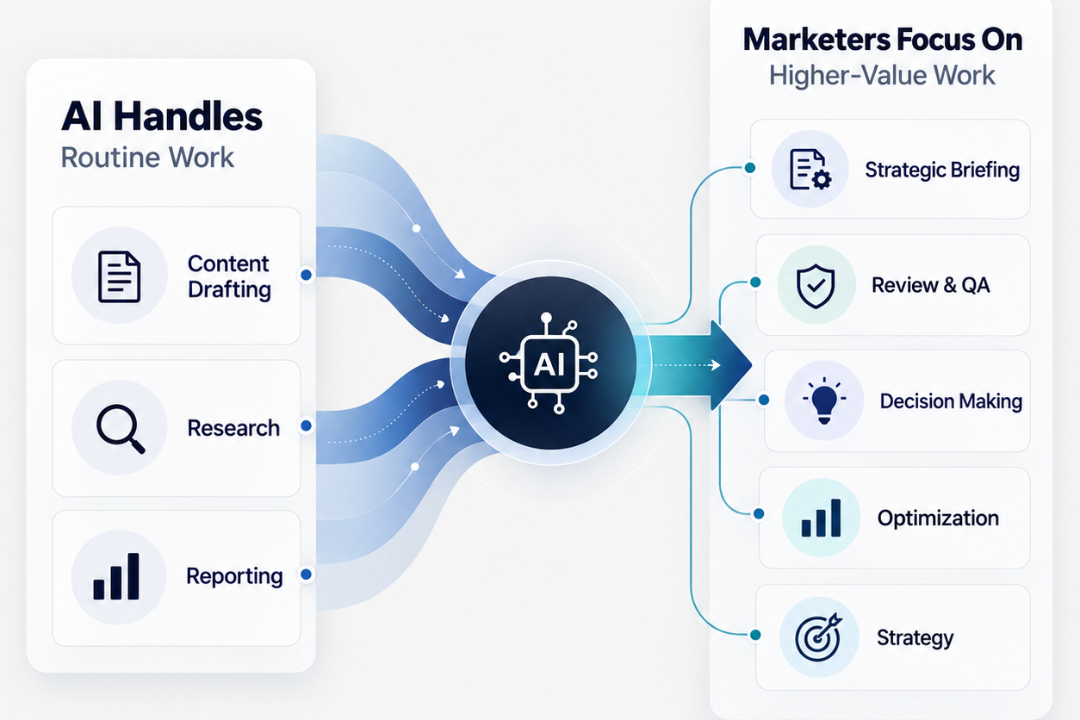
This creates a new kind of responsibility for marketing teams, since someone needs to set the boundaries before an AI workflow goes live. Teams can define which tasks AI can handle independently, which outputs need approval, and which situations should stop the workflow and bring a person into the process. Over time, metrics such as correction rates, approval rates, factual errors, and human intervention can show where the system works well and where it needs adjustment. This makes quality control part of everyday AI marketing operations instead of an afterthought.
Read more: How AI Is Changing Google Ads Campaign Management for Service Businesses
What These AI Marketing Trends Mean for Teams
The six trends point to one bigger change in marketing: AI is becoming part of how work gets organized, not simply another tool sitting inside the marketing stack. Teams are changing how they move campaigns forward, use customer information, divide responsibilities, and decide where human input matters most.
Use the table below to choose a starting point and define how you will measure progress.
| AI Marketing Trends 2026 | Practical Starting Point | What to Measure |
|---|---|---|
| Connected workflows | Connect one recurring reporting or campaign-preparation process. | Completion time and correction rate |
| More strategic marketing roles | Assign responsibility for briefs, review, and final decisions. | Review time and output quality |
| Better customer context | Test messaging for one clearly defined CRM segment. | Qualified leads or repeat purchases |
| Faster creative testing | Test two variations based on one clear hypothesis. | Cost per qualified lead or acquisition |
| AI search discovery | Improve core service information and answer customer questions clearly. | Identifiable AI referrals and resulting inquiries |
| Human oversight | Define approval rules for budget changes and public claims. | Errors caught, rework, and unauthorized actions |
Taken together, these changes give marketing leaders a practical way to think about AI adoption. The goal is to identify where AI can remove repetitive work, where better data can improve decisions, and where human judgment should remain firmly in the process.
A Quick Recap
AI is changing marketing in ways that go beyond faster content creation or automated reports. Teams are rethinking how campaigns move, how customer data is used, and where human judgment fits into the process. The real value comes from building workflows where AI handles repetitive work, and marketers stay focused on strategy, ideas, and decisions that need context.
The AI marketing trends 2026 are therefore less about chasing every new tool and more about finding practical ways to work better. As these systems become part of everyday marketing, teams that build clear processes, use reliable data, and keep human oversight in the right places can make better use of what AI has to offer.
Turn AI Marketing Trends Into Action
Gray Bay Marketing helps businesses connect AI opportunities with their marketing goals. Explore our paid media services, Google Ads management, and LLM SEO services to identify where campaign execution or search visibility could improve.
Contact Gray Bay Marketing to discuss your current marketing process and the changes your team wants to make.
FAQs About AI Marketing Trends 2026
What are the biggest AI marketing trends in 2026?
The biggest trends include AI-powered workflows, automated campaign production, better use of customer data, AI search, and stronger human oversight.
How does AI use customer data in marketing?
AI can analyze customer behavior, purchase history, preferences, and campaign data to identify patterns and support more relevant marketing decisions.
Will AI replace marketing jobs?
AI is more likely to change many marketing responsibilities than remove the need for marketers entirely. Human judgment, creativity, strategy, and oversight still play important roles.
How can businesses prepare for AI marketing trends 2026?
Start with practical workflows, reliable customer data, clear AI responsibilities, human review points, and measurable goals before expanding AI across the marketing operation.