
6 Boring SEO Habits That Quietly Build Serious Traffic

SEO can easily turn into a cycle of trying new tactics, checking rankings, and wondering why traffic is not picking up as quickly as you hoped. There is always another strategy to test, another tool to try, or another quick fix making the rounds, so the everyday work can get pushed to the back burner.
Many of the SEO best practices that support steady traffic growth are simple and repetitive. They are easy to overlook when a new tactic promises faster results.
This article covers six practical habits you can work into your routine, with clear steps, suggested timing, and useful metrics to track so you know what is working and where to keep going.
Why Boring SEO Habits Tend to Compound
SEO often rewards the work you keep coming back to, even when that work does not give you an exciting result right away. A page that stays useful can gather search data, earn links, attract internal connections, and show you new opportunities to improve. Over time, those small gains give you a clearer picture of what deserves your attention.
Search Console is a good example because the data becomes more useful as your pages collect impressions, clicks, queries, and ranking history. Instead of guessing what your audience wants, you can look at what they are already searching for and use those patterns to guide your next move.
Content updates, internal links, technical fixes, and relevant backlinks can support one another. Reviewing the results helps you decide which pages need more work and which changes are worth repeating. You build on what you have learned instead of starting from scratch every month.
Six SEO Best Practices Worth Doing Again and Again
These six SEO best practices focus on the everyday SEO work that can easily slip through the cracks.
1. Review Google Search Console Every Month
Google Search Console can tell you a lot about what is happening across your site, but it is easy to overlook when you are busy creating content or working on other SEO tasks. A quick monthly review gives you a chance to see which pages are gaining attention, where clicks are slipping, and what people are actually searching for before deciding what to work on next.
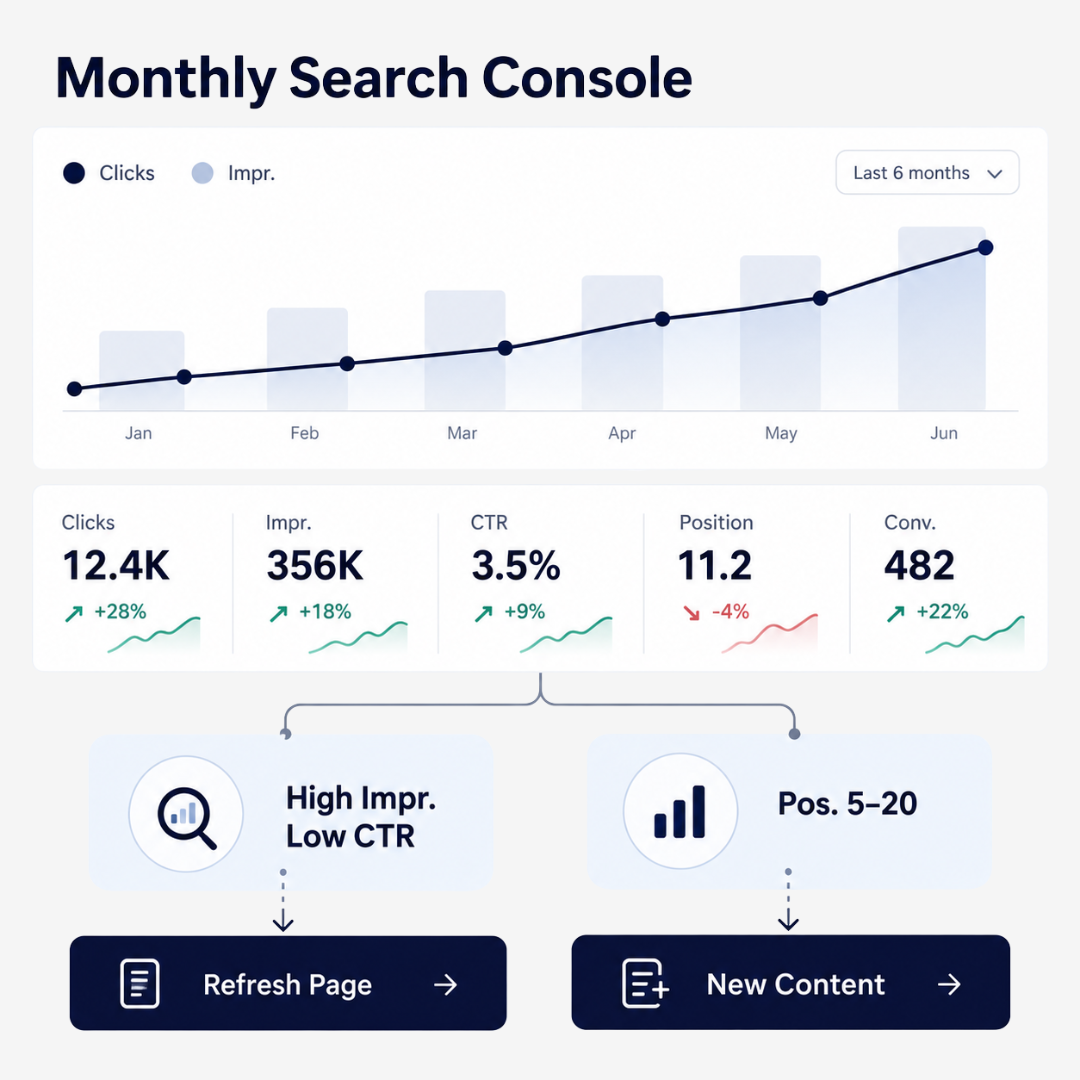
Compare the latest 28 days with the previous period, then review individual pages and queries. For seasonal topics, also compare the same period last year. Look for declining clicks, relevant queries with average positions around 5 to 20, and pages with substantial impressions but few clicks. Before treating low CTR as a title problem, check position, device, search intent, and the results appearing for that query.
The useful part is knowing what to do with those findings. If you already have a relevant page for a query, that page may need a stronger explanation, better targeting, or a few useful updates. If the query points to an intent your site does not cover, it could be a reason to create something new. Keeping those two situations separate can save you from publishing content simply because a keyword looks interesting.
Cadence: Monthly
Metrics to watch: Non-branded clicks, impressions, CTR, and average position in Search Console. Track organic leads and sales separately through GA4 or your conversion tracking system.
2. Refresh the Same High-Value Pages with Advanced On Page SEO Techniques
Once a page starts bringing in search visibility, it deserves some attention instead of being left alone to gather dust. A common habit is to publish an article, watch it climb, and then move on to the next topic. That approach can leave useful pages with outdated examples, missing answers, weak sections, or information that no longer reflects what readers need.
A proper refresh starts with the page itself. Read it like a first-time visitor and look for places where the explanation feels thin, the examples feel dated, or the answer takes too long to reach the point. Check the competing pages too, not to copy them, but to notice questions or useful details your own page has overlooked.
Use practical on-page SEO techniques to address the gaps you find. Check that the title and main heading describe the page accurately, update outdated information, and answer important questions clearly. For example, a catering pricing guide may need current package details and a clearer explanation of staffing charges rather than another paragraph about why catering costs vary.
Give priority to pages that already have some traction, especially those sitting close to stronger rankings, attracting valuable visitors, or contributing to leads and sales. A page with a foundation is often worth revisiting several times as new information and audience needs emerge.
Cadence: Monthly or quarterly, depending on the page’s importance and how quickly its topic changes.
Metrics to watch: Organic clicks, ranking movement, conversions, and engagement on the refreshed page.
3. Keep Internal Links Clean and Intentional
Internal links can quietly shape how visitors move through your website, so they deserve more thought than simply adding a few links whenever a new article goes live. A useful link should give the reader somewhere relevant to go next, especially when the next page answers a question that naturally follows the one they are already reading.
Start by looking at your important pages and tracing the routes that lead to them. A valuable service page buried several clicks away, an older article with no links pointing toward newer resources, or a useful page that receives very little internal support can all create missed opportunities. Broken links and vague anchor text are worth cleaning up too, since they can make those paths harder to follow.
Give each link a clear purpose. An article about refreshing older content could link to a detailed content audit guide using the anchor text “how to audit existing content.” That guide could then link to a relevant SEO service page for readers who need help implementing the recommendations. Use descriptive anchor text so readers know what to expect before clicking.
You do not need to rebuild your entire internal linking structure at once. Pick a few important pages, look at the content already surrounding them, and add links where they genuinely make sense. Repeating that process over time can gradually create a stronger network across the site.
Cadence: Spend 20 to 30 minutes each week on small improvements, with a deeper review once a month.
Metrics to watch: Clicks to priority pages, organic conversions, orphan pages, and broken internal links.
4. Fix Broken SEO Basics Before Launching Something New
Before launching another SEO project, check that important pages can be accessed and indexed. An accidental noindex tag can exclude a service page from search, and an incorrect canonical can signal that another URL is the preferred version. Broken redirects and internal links can also interrupt useful paths through your site. Prioritize problems affecting enquiries, purchases, and other important customer actions.
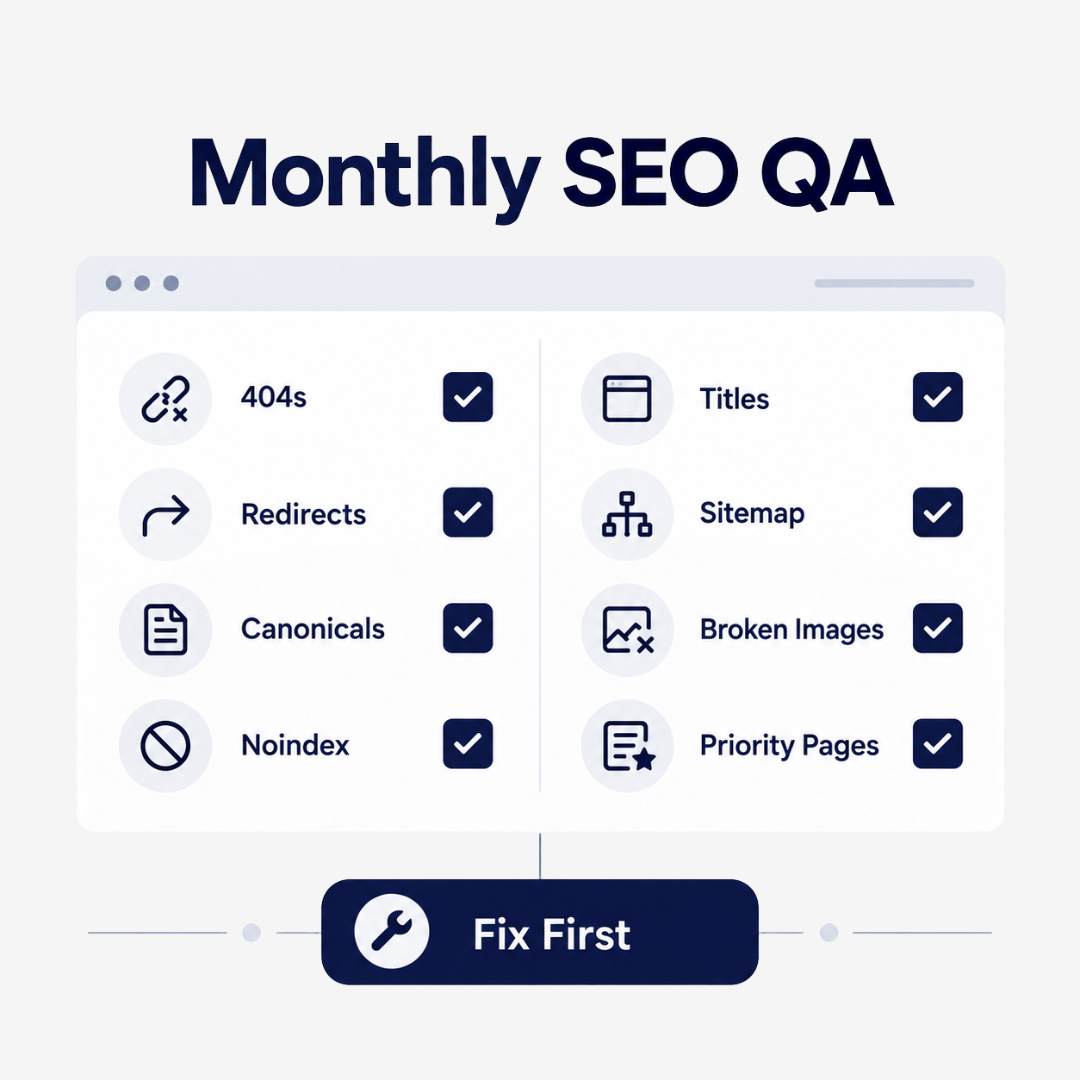
A monthly technical check gives you a chance to clear out that clutter before it starts spreading. Look through your 404s, redirect chains, duplicate titles, broken images, sitemap issues, and pages that should be indexed but are not showing up as expected. Pay attention to pages that matter to the business too, since a technical issue on an important landing page deserves quicker attention than a problem on an outdated URL.
The trick is to make this part of the routine instead of treating it like an emergency project. Keep a running list of issues, deal with the ones that affect important pages first, and check the affected URLs again after making changes. That simple habit can keep your site in better shape and give your other SEO work a cleaner foundation.
Cadence: Monthly for smaller sites, with more frequent checks for large or frequently updated websites.
Metrics to watch: Indexation status, crawl errors, broken URLs, sitemap health, and organic performance of affected pages.
5. Consider Useful Content Optimization Tips With a Predictable Schedule
Use your publishing schedule to organize useful work rather than fill a quota. Each new article should answer a relevant question that your existing pages do not adequately cover. A regular schedule helps your team manage research, editing, and publishing, but frequency alone does not make an article more valuable or more likely to rank.
Your best ideas may already be sitting in places you rarely check for SEO inspiration. Customer emails, sales conversations, support tickets, product questions, comments, and internal site searches can reveal specific problems that deserve a proper answer. These sources can also show you the language people use when they are looking for information, which can make the resulting content feel much more natural.
Give every topic a clear reason to exist before it reaches your publishing calendar. Ask what question it answers, who needs the answer, and where the reader should be able to go next. A useful article should fit naturally into the wider site, connect with related resources, and offer enough substance to stand on its own.
A predictable schedule also makes it easier to build a rhythm around research, writing, editing, publishing, and updating. You might publish every week, every two weeks, or once a month, depending on your resources. The schedule matters less than having one you can maintain without letting quality slip.
Cadence: Weekly, biweekly, or monthly based on your available resources.
Metrics to watch: Organic impressions, non-branded clicks, rankings for relevant topics, and conversions influenced by new content.
6. Pursue Relevant Link Opportunities Every Week
Link building can easily become a numbers game, with marketers chasing large lists of prospects and impressive domain metrics. A steadier approach is to look for websites, organizations, and people who have a genuine reason to reference your content. A relevant link can put your work in front of the right audience and create a useful connection between two related resources.
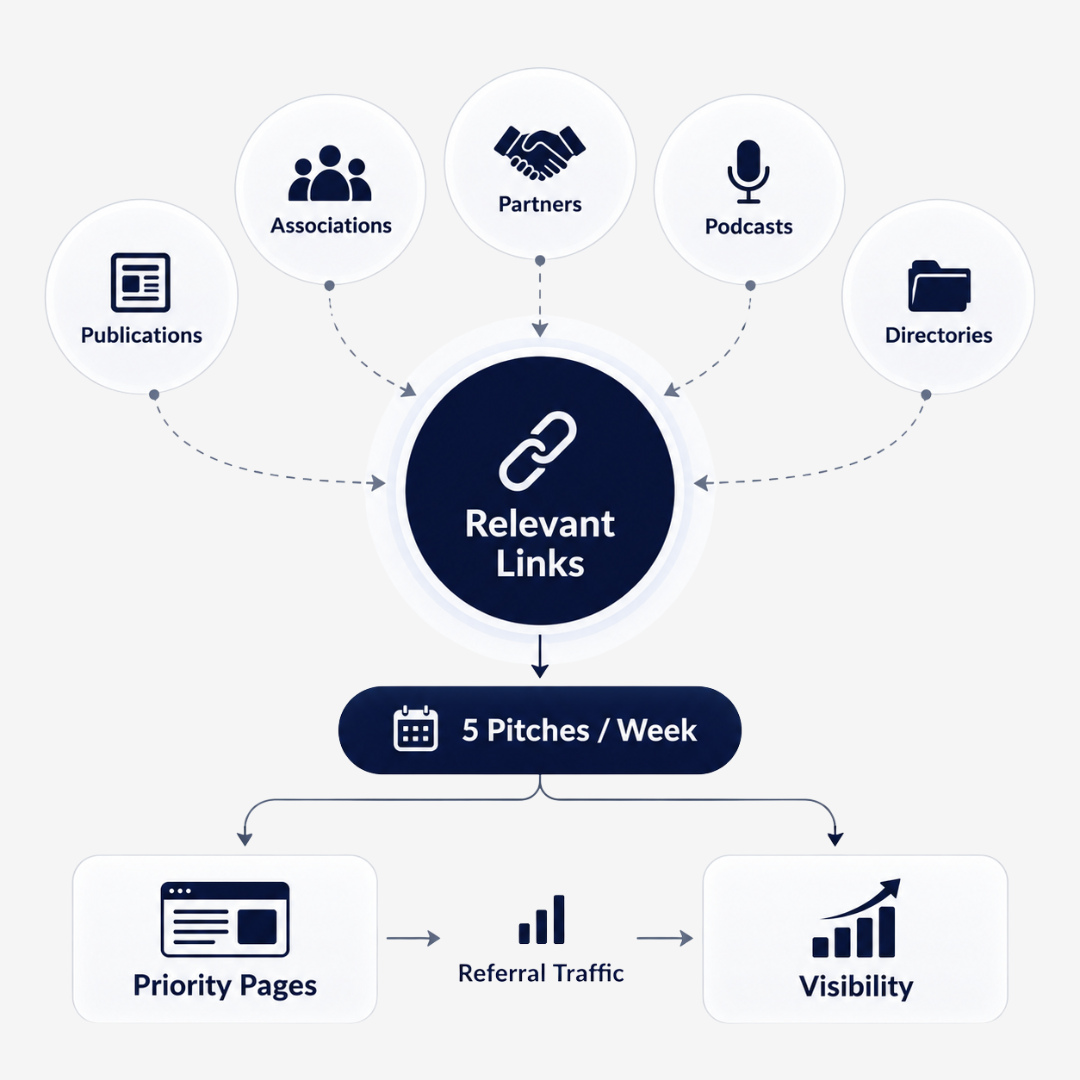
Start by making a small list of places where your expertise or original material could add value. Industry publications, professional associations, partner businesses, niche directories, podcasts, journalists, and complementary companies can all be potential sources. Original research, useful tools, detailed guides, and first-hand data can also give someone a real reason to mention your site.
Set a manageable outreach target, such as five relevant pitches each week. Explain why your research, resource, or expertise would help the recipient’s audience. Track pitches and responses separately from links earned, since publication timing is outside your control. Avoid buying links to influence rankings or arranging excessive link exchanges. Paid advertising and sponsorship links should use the appropriate sponsored or nofollow attribute.
Cadence: Weekly.
Metrics to watch: Relevant referring domains, links earned to priority pages, referral traffic, and organic visibility.
The Weekly and Monthly SEO Routine That Makes These Habits Stick
The hardest part of routine SEO is often keeping track of what needs attention without letting the work take over your entire week. A simple schedule can make these habits easier to manage because you always have a clear idea of what to check and when to come back to it.
| Frequency | SEO Best Practices |
|---|---|
| Weekly | Check for broken links and pages showing signs of decline |
| Weekly | Improve a few internal linking paths |
| Weekly | Publish or move forward with one useful content piece |
| Weekly | Send a small batch of relevant link outreach |
| Monthly | Review Search Console data and identify new opportunities |
| Monthly | Refresh high-value pages based on recent findings |
| Monthly | Run a technical health check |
| Quarterly | Review topic coverage, content overlap, and conversion paths |
Give the routine enough time to produce useful signals before deciding that a habit is not working. Rankings and traffic can move unevenly, so impressions, click-through rate, new referring domains, and improvements to important pages can provide earlier signs that the work is heading in the right direction.
Your Ongoing SEO Maintenance Checklist
Instead of trying to remember every task as you go, keep a simple SEO maintenance checklist nearby and use it during your weekly and monthly reviews. It gives you a quick way to see what needs attention, what has already been handled, and where your next improvement should come from.
| SEO Checklist | Status |
|---|---|
| Compare Search Console performance and identify pages needing investigation. | ☐ |
| Confirm priority pages are accessible and check their indexing and canonical status. | ☐ |
| Update outdated information and answer missing reader questions on selected pages. | ☐ |
| Fix broken internal links and add relevant links to priority pages. | ☐ |
| Check sitemap errors and redirects affecting important URLs. | ☐ |
| Record outreach, responses, and relevant links earned. | ☐ |
| Verify that lead or purchase tracking works. | ☐ |
| Log completed changes and set a date to review their results. | ☐ |
Ready to Turn Consistency Into Search Growth?
Good SEO does not stop once a page starts ranking. Search behavior keeps changing, new questions appear, and the way people discover information continues to shift. Gray Bay Marketing’s AI SEO services combine content strategy, technical foundations, and ongoing optimization to help businesses improve visibility across traditional and AI-driven search.
The goal is to build a search presence that can keep adapting instead of relying on short-lived tactics. If your team is ready to turn routine SEO work into a stronger long-term system, Contact Gray Bay Marketing today.
FAQs: SEO Best Practices
What SEO best practices are important for every week?
Start with a few repeatable tasks that keep your site healthy and moving forward. Check for broken links or declining pages, improve internal links, move one useful content piece forward, and look for relevant link-building opportunities. A small weekly routine is easier to maintain than trying to complete a large SEO project all at once.
How often should I refresh an SEO page?
There is no fixed schedule for every page. High-value pages can benefit from monthly or quarterly reviews, especially when the topic changes quickly or the page contributes to leads and sales. Less time-sensitive content may need attention less often. Focus on meaningful updates instead of changing a page simply to give it a newer date.
Should I chan¢ge the publication date when updating an article?
Only change the date when the page has received a substantive update that justifies it. Updating a date without making meaningful improvements can create a misleading signal for readers. Focus on improving the information, examples, structure, and usefulness of the page instead of treating the date as an SEO shortcut.
How do backlinks fit into an SEO routine?
Backlinks can support your site's authority and visibility when they come from relevant, credible sources. Instead of chasing a large number of links, build a small outreach process around publications, partners, industry organizations, journalists, and useful resources that have a genuine reason to reference your content.
How long does it take to see results from SEO?
The timeline varies based on factors such as site history, competition, content quality, technical condition, and the type of work being done. Early signs can include growing impressions, new ranking queries, improved positions, and stronger internal traffic before meaningful changes appear in organic conversions.
What is the biggest mistake with SEO consistency?
The biggest issue is often abandoning a useful process too quickly. SEO best practices need enough repetition to produce useful data and reveal patterns. Review the leading indicators first, make adjustments when the evidence points to a problem, and give worthwhile changes enough time to develop before replacing the entire strategy.
How can I increase organic traffic without constantly publishing new content?
Start by improving the pages that already show signs of search demand. Review pages with impressions but low clicks, refresh sections that no longer match the search intent, strengthen internal links, and fix technical issues that may be limiting visibility. Updating existing content can uncover traffic opportunities without requiring a constant stream of new articles.