
What Is International SEO? A Guide to Multilingual and Multi-Regional Optimization
International SEO ensures your website appears in search results for multiple languages and countries. Done right, it helps you connect with audiences across regions while respecting how they search, speak, and shop.
Expanding internationally sounds complex, but with the right plan, it’s a natural extension of your local success. Whether you’re an e-commerce store ready to sell overseas or a B2B brand targeting clients abroad, this guide will show you how to build visibility where it matters most.
Understanding International SEO – The Basics You Can’t Skip
Before we talk tactics, we need to define what is international SEO in simple terms. It’s the process of optimizing your website to target users in different countries and languages. Search engines like Google rely on signals – such as language tags, domain setup, and content – to show the right version of your site to the right audience.
International SEO has two core elements:
Multilingual SEO focuses on different languages.
Multi-regional SEO focuses on different countries.
Each has unique requirements, but both depend on technical precision and cultural awareness. Getting this wrong can confuse Google and your audience alike. For example, if your U.S. site shows up in Spain’s results, users will bounce fast.
You’ll also want to master language targeting for SEO – the art of signaling which language version belongs to which country. Tools like Google Search Console and hreflang tags make that possible. A clean site structure, accurate tags, and clear regional settings lay the groundwork for future growth.
When you understand what is international SEO, you can start shaping your site to fit multiple audiences – not just one.
Building an Effective International SEO Strategy
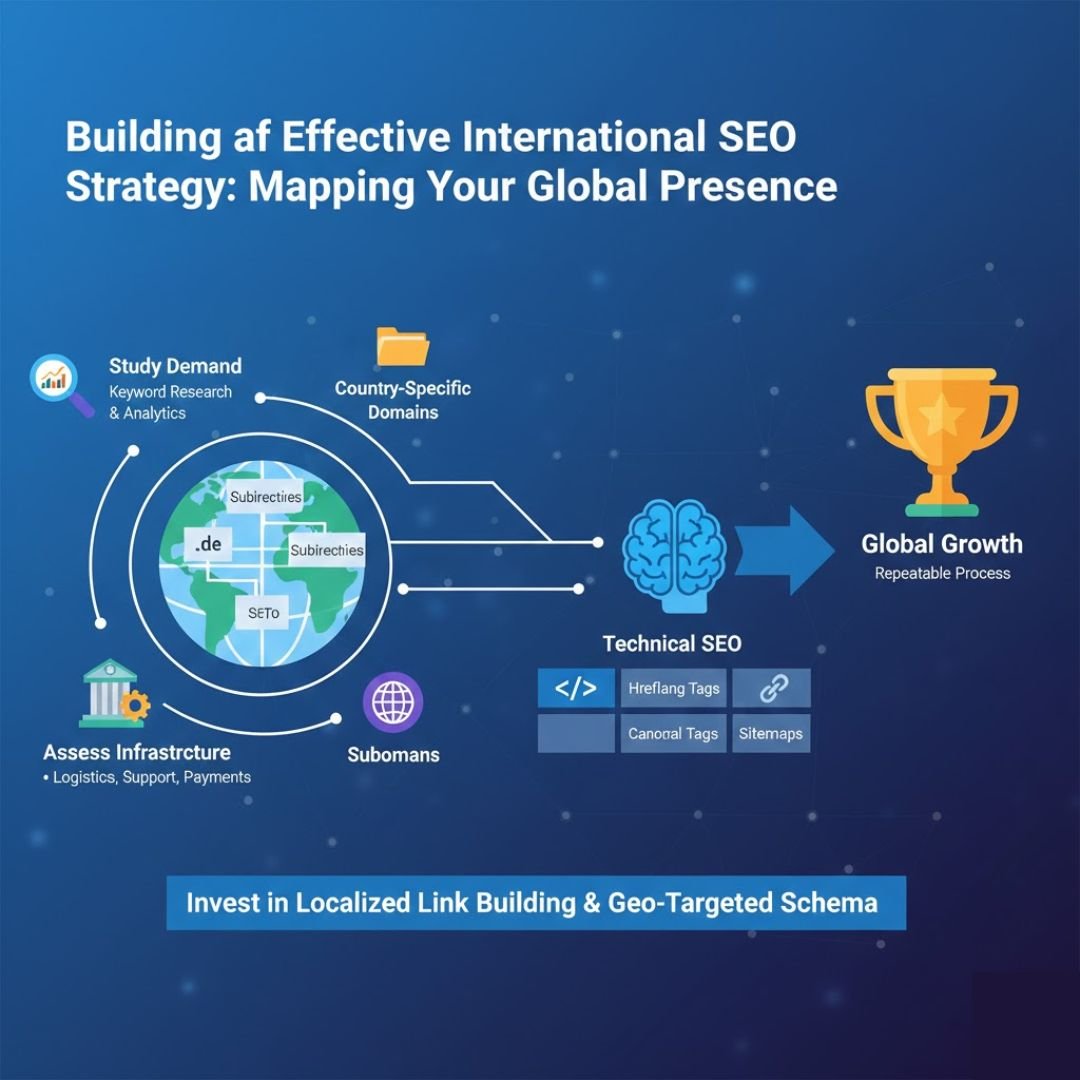
Once the basics are clear, the next step is planning your international SEO strategy. This is where you map out markets, structure, and resources before launching into new regions.
First, study demand. Where are people searching for your products in another language? Which countries have rising interest? Use keyword tools and analytics to measure this.
Second, assess infrastructure. Ask yourself:
Can your business handle shipping, taxes, or time-zone differences?
Do you have multilingual customer support?
Are your payment options flexible for foreign buyers?
Third, decide how your site will represent each country:
Country-specific domains (like .de for Germany) signal strong local intent.
Subdirectories (like example.com/es/) keep all traffic under one main domain.
Subdomains (es.example.com) can work but need strong internal linking.
Technical choices are critical. Hreflang tags must point to the correct pages. Canonical tags should prevent duplicate issues. And each localized version needs its own sitemap entry.
You’ll also want to use consistent analytics tracking for global insights. A thoughtful structure ensures that what is international SEO becomes not just a theory but a repeatable process.
Finally, invest in international SEO techniques like localized link building and geo-targeted schema. These signals tell Google your business belongs in each market it serves.
Creating Localized Content for International SEO
Technical SEO builds the skeleton, but content gives it life. Crafting localized content for international SEO ensures your brand actually connects with each market on a human level.
Understanding what is international SEO also means recognizing the power of localization. Localization means adapting your messaging, visuals, and voice for cultural relevance. A Spanish buyer in Madrid reads differently than one in Mexico City. Tone, currency, and even color symbolism can shift meaning.
Strong localization involves:
Translating with intent, not word-for-word.
Adjusting imagery, references, and offers to local culture.
Using local metrics, dates, and currencies.
Optimizing metadata with native keywords and idioms.
Partnering with native speakers for content review.
Automation can help, but AI translation tools still miss nuance. Always pair automation with human editing to ensure your brand voice feels authentic.
When you understand what is international SEO, you realize localization is what transforms visibility into connection. It’s how your business earns trust in markets where competitors already speak the language.
The Benefits of International SEO for Global Growth
The rewards of going global aren’t just about traffic – it’s about connecting with the right customers in multiple regions and languages.
Here’s what you gain:
Visibility: You show up in new language and country searches.
Revenue: You reach customers ready to buy in their own currency.
User experience: Visitors feel understood, not translated.
Brand trust: Localized pages make your company appear credible and established.
Data insight: Regional analytics uncover where your next market should be.
Brands that implement structured multilingual content often see double-digit growth within a year. When done strategically, learning what is international SEO gives your brand a clear path to global authority.
Common Mistakes to Avoid in International SEO
Even well-intentioned global launches can backfire. Avoiding these missteps will save time and credibility:
Copy-pasting English content: Each region deserves tailored language and references.
Relying on machine translation alone: It breaks tone and damages trust.
Misconfigured hreflang tags: These cause pages to rank in the wrong markets.
Auto-redirecting users: It confuses Google and frustrates visitors.
Ignoring mobile speed: Slow load times hurt rankings abroad.
Neglecting local culture: Humor or imagery that works in one place may offend in another.
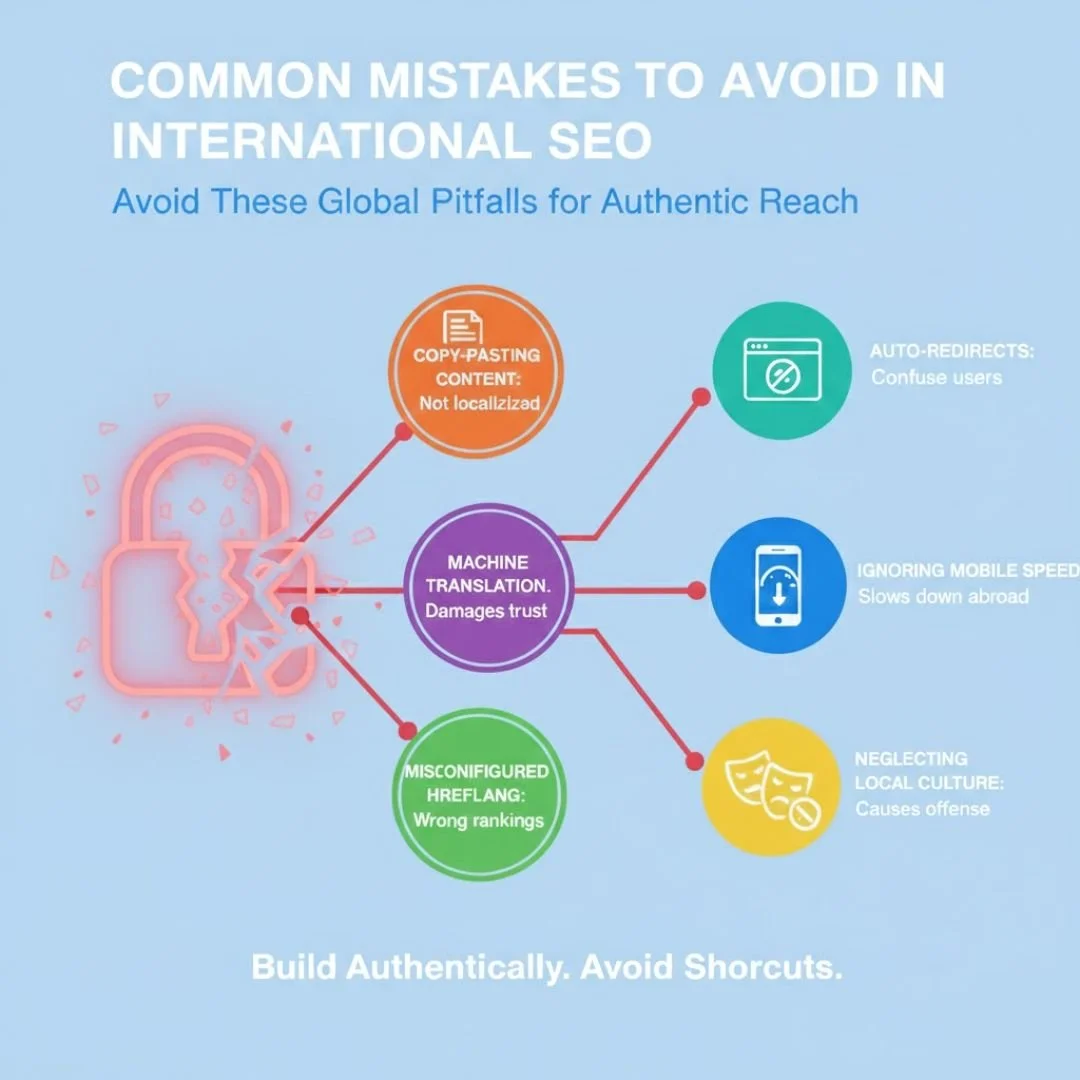
The key is to build each regional version deliberately, not reactively. Taking shortcuts undermines the whole point of what is international SEO – connecting authentically with real audiences everywhere.
Measuring Success: Analytics and Continuous Optimization
Once your global pages go live, tracking performance becomes the backbone of improvement. Data tells you which markets engage and which need refinement.
Start with Google Search Console. Segment by country and language to see impressions, clicks, and ranking patterns. Add analytics tracking to measure conversion rates by region.
Focus on actionable insights:
Which pages drive traffic but not conversions?
Where do visitors bounce most quickly?
Are mobile experiences consistent across regions?
Use these answers to fine-tune copy, UX, and targeting. Adjust internal links and content cadence based on performance trends. Over time, your insights compound – each update teaches you more about audience intent.
Remember, understanding what is international SEO means recognizing that it keeps changing. Search algorithms shift, cultures adapt, and global competition never slows. Ongoing optimization keeps your business visible and relevant.
Going Global With Gray Bay Marketing
Going global isn’t just about bigger numbers – it’s about connecting with the right customers in each market and language. At Gray Bay Marketing, our AI SEO services experts help businesses expand into new markets with confidence. Through a combination of strategy, technical SEO, and hands-on execution, we help service businesses grow internationally while driving measurable results.
We know that what is international SEO goes far beyond ranking high on Google. It’s about earning trust in new markets, understanding culture, and showing up in ways that feel familiar to your customers – wherever they are.
Every project we take on starts with research and planning, then moves into content that feels genuine to each audience. We don’t stop there. We keep testing, refining, and learning so your strategy evolves as fast as the world does.
At Gray Bay, we believe in growth that feels sustainable and true to your brand. We help service-based businesses establish a strong presence in international markets. Because the future of search is multilingual and multi-regional. Gray Bay Marketing ensures your business reaches the right customers and generates measurable growth in new markets.