
AI Search Optimization: 10 Ways to Boost Google Visibility
Google’s new era of AI-powered results – from Gemini to AI Overviews – is reshaping how people discover content online. Search results are now dynamic, conversational, and deeply context-aware. That means traditional SEO is no longer enough. Businesses must shift toward AI search optimization to stay visible as Google redefines how it interprets and displays information.
At Gray Bay Marketing, we help brands navigate this transformation through advanced SEO marketing strategies that combine creativity, data, and technical expertise. In this guide, you’ll learn eight key strategies that show how to rank in AI search and position your business at the forefront of Google’s evolving ecosystem.
1. Focus on Unique, Helpful Content
Google’s AI values originality and depth. It seeks content that provides genuine answers rather than rehashed summaries. To stand out in AI search optimization, focus on clarity, utility, and authority.
Here’s what to prioritize:
Solve specific user problems instead of repeating surface-level advice.
Add context-rich examples or original insights.
Keep pages updated – AI favors freshness.
Structure your content with natural questions and a conversational tone.
When your information provides real-world value, Google’s AI identifies your content as trustworthy and relevant for featured snippets and summaries.
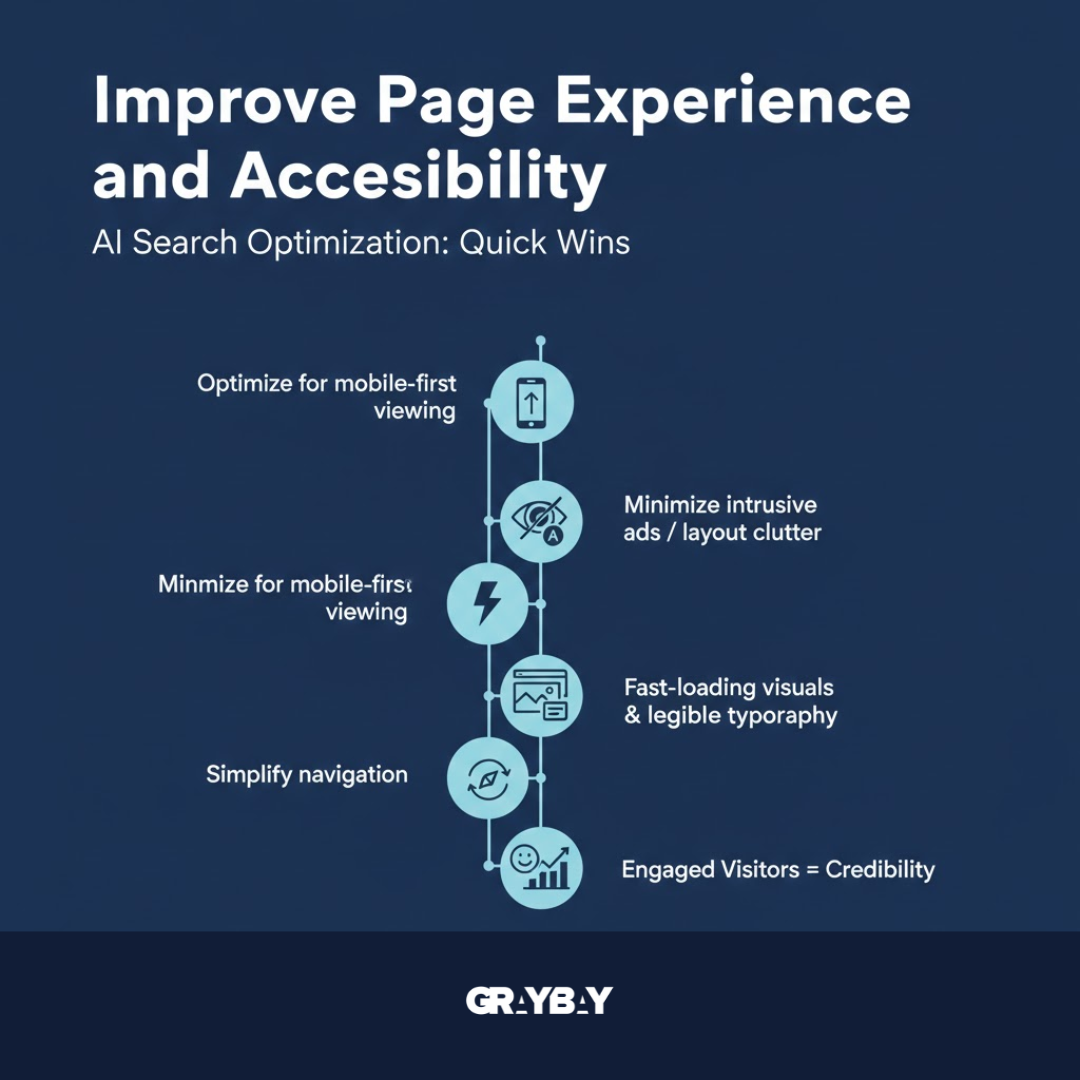
2. Improve Page Experience and Accessibility
AI-driven ranking depends as much on user experience as content quality. A strong AI search optimization approach ensures that visitors can easily consume and interact with your site.
A few quick wins:
Optimize for mobile-first viewing.
Minimize intrusive ads or layout clutter.
Use fast-loading visuals and legible typography.
Simplify navigation so users find answers quickly.
If visitors stay engaged and explore your site, AI systems view your page as credible and prioritize it in contextual results.
3. Ensure Google Can Access and Interpret Your Content
Even great content fails if Google can’t reach it. Successful AI search optimization begins with technical clarity.
Check that your site allows crawling and indexing of all key pages. Keep your XML sitemap up to date, and remove broken links. Make sure your internal linking creates a logical flow that AI systems can follow. A technically clean site tells Google your content is trustworthy and ready for inclusion in AI-powered experiences.
4. Manage Visibility With Preview and Ownership Controls
As AI summaries expand, it’s important to manage how much of your content appears in previews. Smart AI search optimization means knowing where to draw boundaries.
Use Google’s directives strategically:
nosnippet hides content previews completely.
max-snippet sets preview length limits.
data-nosnippet excludes specific on-page elements.
noindex removes pages from indexing.
Pair these settings with proper author and publisher markup to establish ownership. This helps protect your work while ensuring your brand still benefits from AI-driven exposure.
5. Align Structured Data With Visible Content
Structured data serves as a translator between your website and Google’s AI. In AI search optimization, accurate schema markup ensures your brand’s details are clear and consistent.
Add relevant schema types such as Article, Product, FAQ, or LocalBusiness, but always align them with what users actually see on your page. Validate each update with Google’s Rich Results Test to avoid mismatches. Consistency between structured data and on-page content improves trust and visibility across AI summaries and search enhancements.
6. How to Optimize Content for AI Search
Understanding how to optimize content for AI search requires writing in a way that resonates with both humans and algorithms. AI now looks for clarity, context, and tone that reflect authentic expertise.
To achieve this balance, use conversational phrasing that mirrors natural queries. Add FAQ sections to answer related questions, and include examples or personal insights to demonstrate experience. Cite credible sources to reinforce authority. When your tone feels human, and your answers feel complete, AI systems recognize your content as reliable and surface it more often.
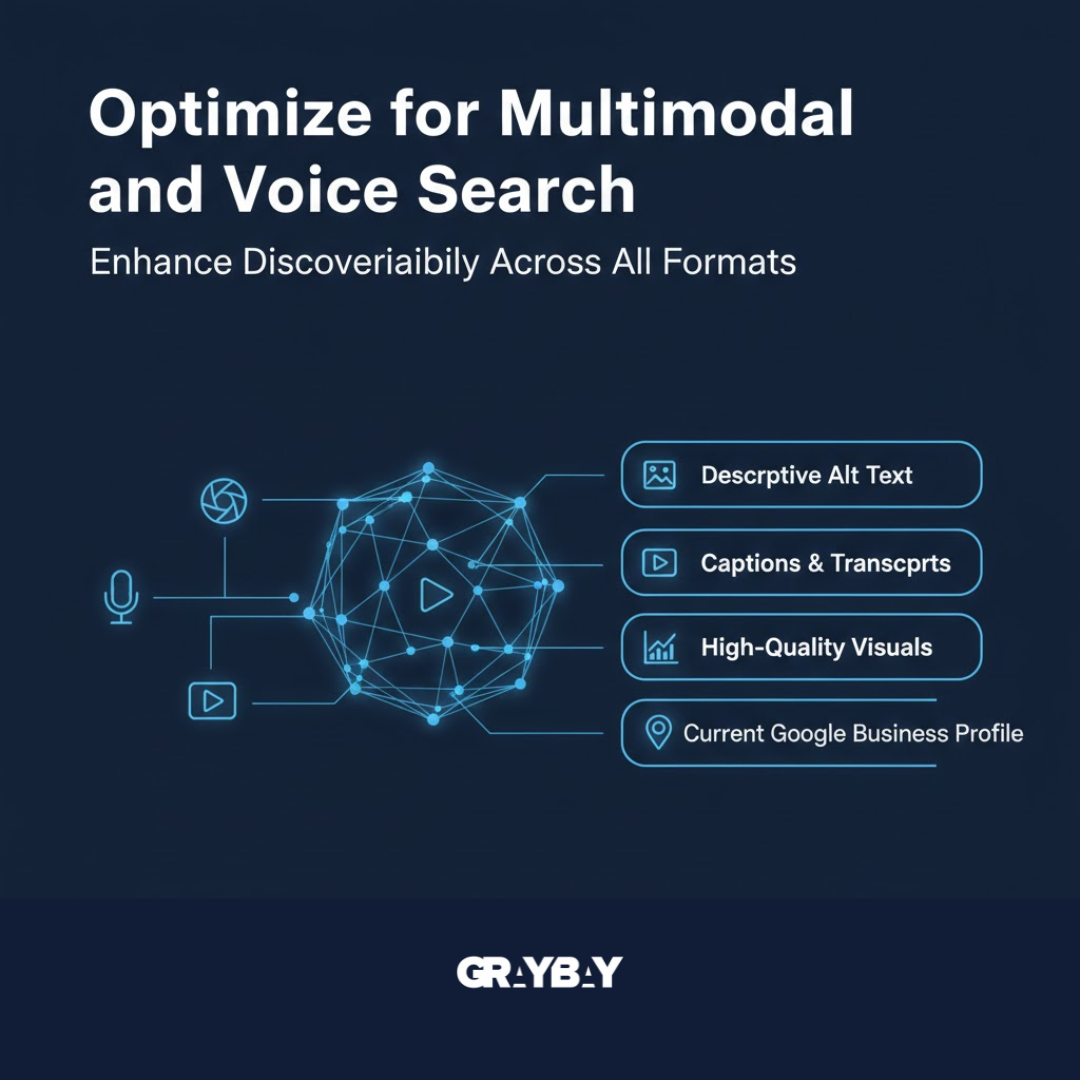
7. Optimize for Multimodal and Voice Search
Search isn’t just typed text anymore. Google’s AI processes voice commands, visuals, and even videos to deliver results. Effective AI search optimization means preparing your content for all formats users rely on.
Enhance discoverability by:
Adding descriptive alt text for every image.
Including captions and transcripts for video content.
Using high-quality visuals and graphs for context.
Keeping your Google Business Profile current with accurate media and details.
By embracing multimodal optimization, your brand reaches users wherever they search – through text, voice, or visuals.
8. Leverage AI Search Engine Optimization Tools
The right technology gives you a competitive edge. Using AI search engine optimization tools helps you refine content, analyze trends, and track visibility across AI-powered results.
Some effective tools include:
Surfer AI and Clearscope for content analysis and topical depth.
ChatGPT and Gemini Advanced to preview how AI interprets your pages.
AnswerThePublic and AlsoAsked to identify natural-language search questions.
Screaming Frog and Schema Validator to catch crawl or markup issues.
These tools make optimization data-driven and efficient. They don’t replace strategy – they empower smarter, faster decision-making in your overall AI search optimization workflow.
9. Understand the Full Value of AI Clicks
AI-driven search changes the nature of engagement. You may see fewer clicks overall, but those clicks tend to be far more qualified. With AI search optimization, success comes from quality over volume.
Monitor metrics like dwell time, conversion rate, and scroll depth to assess value. Tools such as Google Analytics 4 reveal which AI surfaces drive high-intent traffic. When visitors arrive after seeing an AI summary, they already understand your value – meaning they’re more likely to stay, engage, and convert.
10. Evolve With Your Users and Entities
Google’s AI understands relationships between people, places, and brands – known as entities. Staying visible means making those connections clear.
Keep your business information consistent everywhere online, from your website to social profiles. Build contextual internal links between related pages, and collaborate with credible partners in your community. Even a single high-quality SEO backlink can signal to AI that your brand holds authority within your niche or region.
How Gray Bay Marketing Helps Businesses Thrive in AI Search
At Gray Bay Marketing, we see AI not as a disruption but as a transformation. As search evolves from static lists to intelligent, conversational experiences, businesses need partners who can merge creativity with precision. That’s where our AI SEO optimization expertise makes the difference.
We design forward-thinking strategies that combine helpful content, structured data accuracy, technical SEO, and brand storytelling. Our approach ensures your website performs flawlessly while your brand voice remains authentic and distinct. With our team of SEO Services in San Francisco, we work with businesses across industries to strengthen visibility, reputation, and measurable growth.
The future of search rewards those who adapt early. With Gray Bay Marketing, you’re not just keeping up with AI – you’re leading it. We help your business appear where it matters most, with results that turn visibility into tangible success.