
Index Bloat in SEO: How It Impacts Crawl Budget and Search Performance

Pages not ranking, traffic dropping, or important content getting ignored?
These are all signs of index bloat in SEO. When too many low-value, duplicate, or outdated pages are indexed, search engines waste their crawl budget on content that doesn’t matter.
The result?
Slow indexing of new pages, inconsistent rankings, and a website that underperforms despite your best efforts. Index bloat quietly sabotages your visibility, making it hard for your top content to shine.
No worries.
Because in this blog, we’ll take a closer look at a common issue that can slow down your website’s performance. We’ll highlight the warning signs that indicate your site might be overloaded with unnecessary pages, explain how this can make it harder for search engines to focus on your most important content, and share practical steps you can take to clean up your site and improve overall visibility.
So, let’s start with “what is index bloat”?
What is Index Bloat?
In simple words, it’s when your website has too many low-value or unnecessary pages indexed by search engines. These pages can include:
Thin content pages that don’t provide unique information.
Duplicate pages created by CMS systems or tracking parameters.
Paginated or faceted navigation pages with little value.
Outdated content that is no longer relevant.
Index bloat isn’t just a technical issue—it directly affects how Google crawls and indexes your website. If the search engine bots spend their crawl budget on irrelevant pages, your important pages might get ignored or indexed slowly.
What are the Signs of Index Bloat in SEO?
Recognizing signs of Index Bloat in SEO early helps ensure search engines focus on your valuable pages. Here are the key signs:
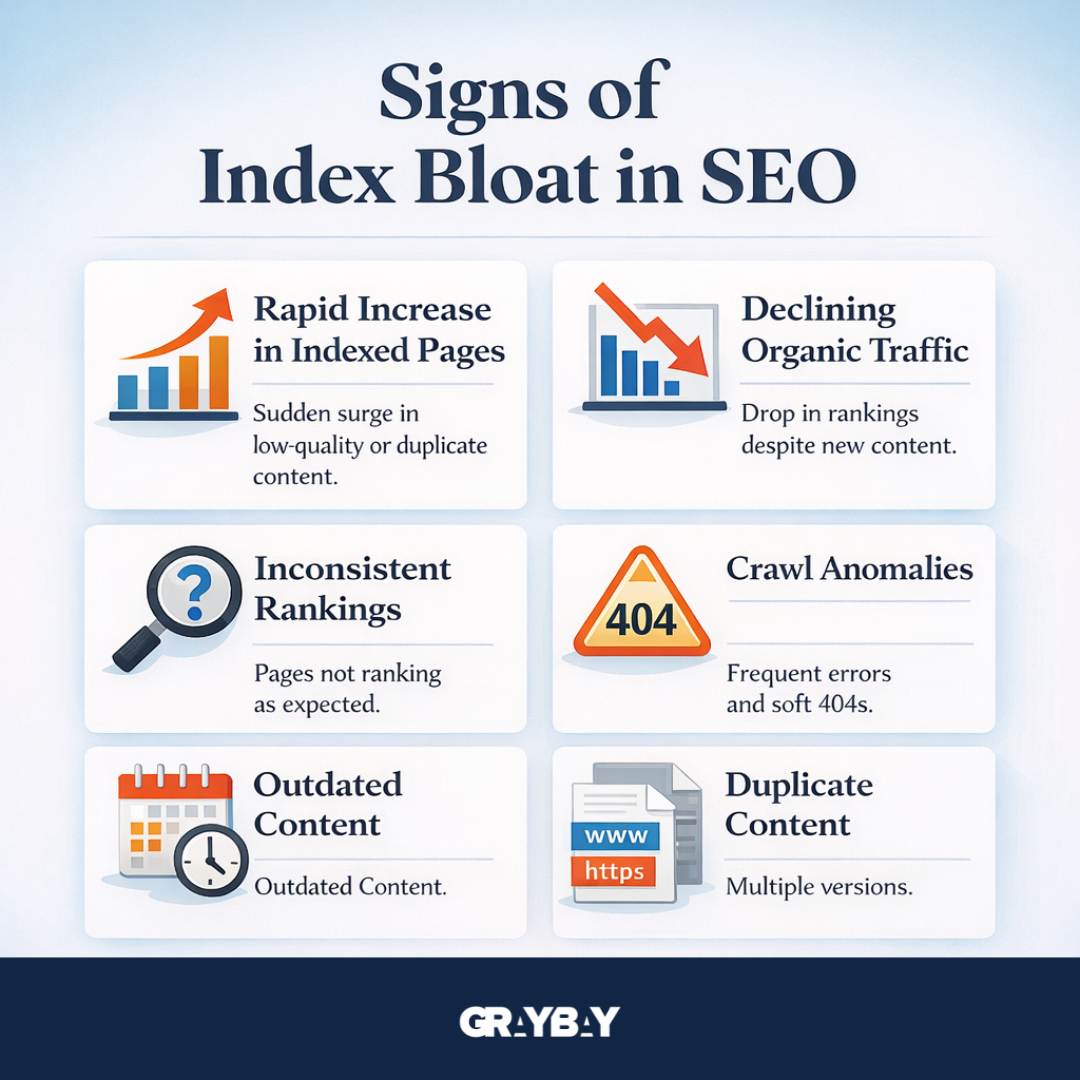
Rapid increase in indexed pages: A sudden jump in the number of pages indexed without adding meaningful content often indicates that thin, duplicate, or auto-generated pages are taking up space.
Declining organic traffic: Even if you consistently publish quality content, your rankings may stagnate or drop because search engines spend crawl budgets on low-value pages instead of prioritizing your important ones.
Inconsistent page rankings: Pages that should rank well may appear lower in search results or not appear at all, signaling that search engines are struggling to identify which content is most important.
Crawl anomalies in Search Console: Frequent 404 errors, redirects, or soft 404s being indexed are clear red flags of index bloat, showing that your website isn’t efficiently guiding crawlers.
Outdated or irrelevant content being indexed: Old posts, expired promotions, or low-quality pages can clutter your index and reduce the visibility of your most valuable pages.
Duplicate content issues: Multiple versions of the same page (e.g., www vs. non-www, HTTP vs. HTTPS, printer-friendly pages) can confuse search engines and waste crawl budgets.
Keeping an eye on these signs allows you to take action, optimize your crawl budget, and improve overall SEO performance.
Crawl Budget in SEO: Why It Matters
Crawl budget in SEO refers to the number of pages a search engine crawls on your site during a certain time period. Essentially, it’s your website’s “attention quota.” If Googlebot spends too much time on low-quality pages, important pages may be crawled less often.
Several factors affect crawl budget:
Site size and structure: Larger, well-organized sites tend to get crawled more efficiently.
Server performance: Slow servers may reduce crawl frequency.
Page quality: High-quality content is prioritized for crawling, while duplicate or thin content can be skipped.
When your website suffers from index bloat in SEO, it directly wastes your crawl budget, causing search engines to crawl low-value or duplicate pages instead of your most important content.
SEO Implications of Index Bloat
Index bloat has real consequences for your SEO. The most noticeable impact is reduced organic visibility. If search engines waste time on unnecessary pages, they may miss important updates to core content, leading to lower rankings.
Other implications include:
Diluted site authority: When low-value pages dominate your index, it reduces your overall site quality and trust signals to search engines.
Performance issues: Crawlers might take longer to find and index your valuable pages, delaying new content from appearing in search results.
Resource drain: Excessive crawling of unnecessary pages can strain your server, affecting speed and user experience.
In short, index bloat doesn’t just clutter your site—it actively limits your SEO potential. Addressing it ensures that your crawl budget is spent wisely and your most important pages have the chance to rank higher in search results.
How to Diagnose Index Bloat?
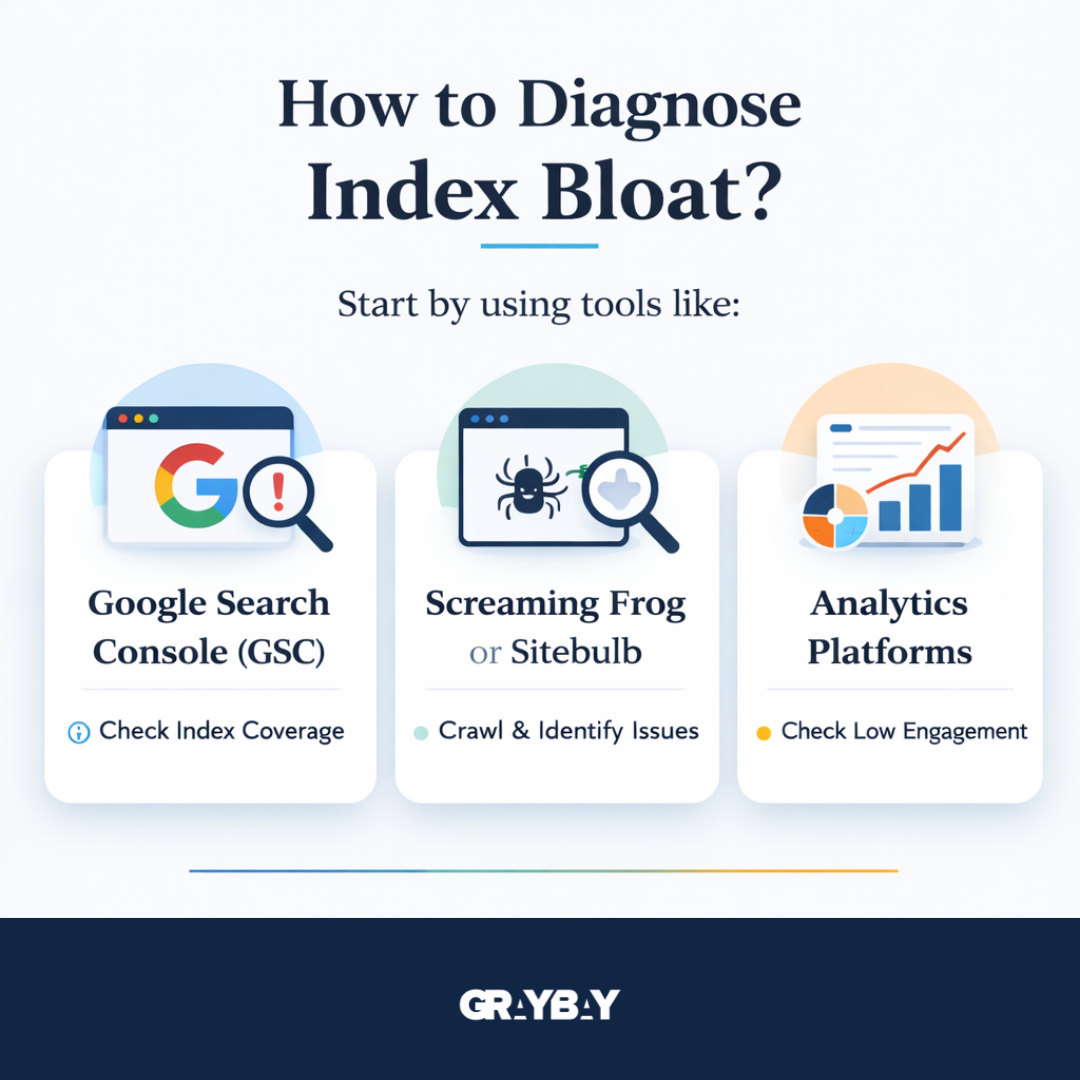
Detecting index bloat isn’t hard if you know what to look for. Start by using tools like:
Google Search Console (GSC): Check the Index Coverage report for anomalies or pages that shouldn’t be indexed.
Screaming Frog or Sitebulb: Crawl your website to identify duplicate pages, thin content, or blocked URLs.
Analytics platforms: Look for pages with extremely low engagement or high bounce rates—they may be unnecessary for indexing.
Some key metrics to monitor include:
Indexed pages – Compare actual pages with Google index; remove low-value pages that do not contribute to search performance.
Crawl stats – Monitor crawling frequency and errors; identify technical bottlenecks that may block search engine bots.
Organic traffic – Review pages receiving no visits; consolidate weak content or remove underperforming pages to improve overall site quality.
By combining these tools and metrics, you can map out exactly which pages are causing index bloat and which ones need attention.
How to Reduce Index Bloat?
Reducing index bloat involves a mix of technical, content, and structural improvements. Here’s how to approach it:
On-Page & Technical SEO Fixes
Addressing index bloat in SEO starts with proper on-page and technical SEO strategies. One of the first actions is to apply noindex tags to pages that provide little value. Examples include:
Tag archives
Filtered or faceted pages
Admin or login pages
Duplicate landing pages for the same content
Noindex tags prevent these pages from appearing in search results, saving your crawl budget in SEO for your important content.
Another key fix is implementing canonical tags to handle duplicate content. Many websites accidentally create multiple URLs for the same page due to tracking parameters, session IDs, or CMS-generated versions. Canonical tags tell search engines which page is the primary one, consolidating ranking signals and preventing unnecessary indexing.
Finally, clean up URL parameters and session IDs to avoid multiple versions of the same page. Standardizing URLs helps prevent search engines from repeatedly crawling and indexing duplicates. By combining noindex tags, canonicalization, and URL parameter cleanup, your website will become more organized, crawl-efficient, and ready for improved search performance.
2. Content Optimization
Optimizing content is essential to reduce index bloat while improving user experience and search performance. Thin or redundant pages are the main contributors to index bloat. To fix this, consolidate multiple short or similar pages into one comprehensive page. This strategy ensures:
Search engines index higher-value pages
Users find complete, helpful information in one place
Ranking potential increases for main topics
Outdated content is another major source of index bloat. Pages like expired promotions, outdated event listings, or old blog posts that no longer serve a purpose should be updated or removed. Keeping content fresh ensures search engines prioritize pages that matter.
Building content hubs can further improve site structure and internal linking. By grouping related content under one topic and linking relevant pages, you guide search engines toward your most important pages. This reduces unnecessary crawling of low-value content and boosts authority for high-priority pages.
3. Site Architecture & Internal Linking
A well-planned site architecture and effective internal linking play a crucial role in tackling index bloat in SEO. Poor site structure can lead to duplicate or thin pages being indexed unnecessarily, wasting your crawl budget. Here are the steps to fix it:
The first step is to simplify navigation to ensure that high-value pages are easily accessible. Clear navigation menus, category pages, and structured submenus help search engines understand the hierarchy of your website.
Next, make sure that internal links point to high-value content. Internal linking not only spreads link authority but also signals which pages are most important. Pages without internal links may be crawled less frequently or ignored altogether, so a proper linking strategy helps prioritize your best content.
Also, pagination and faceted navigation require special attention. Improperly handled, they can create multiple indexable URLs for the same content. Use canonical tags, noindex meta tags, or URL parameter management to prevent unnecessary indexation.
For a deeper dive into building an optimized site foundation, explore our guide on “Best Site Structure for SEO: How to Create a Solid Foundation” to learn practical steps for organizing your website, improving navigation, and prioritizing important pages.
4. Monitoring & Maintenance
Continuous monitoring and maintenance are vital to prevent index bloat in SEO from returning. Even after technical fixes, websites can accumulate unnecessary pages over time, so regular audits are necessary. Begin by auditing indexed pages using tools like Google Search Console (GSC) or crawling software such as Screaming Frog or Sitebulb. Look for low-value, thin, or duplicate pages that may need removal or consolidation.
Next, monitor crawl stats to measure improvements. Check how often search engines are crawling high-value pages versus low-priority content. A properly optimized site should show increased crawl activity on important pages and fewer wasted visits on unnecessary URLs.
By implementing these ongoing monitoring steps, you can effectively manage and reduce index bloat, making your website easier for search engines to crawl, index, and rank. Consistent oversight guarantees long-term search performance improvements and keeps your website clean, organized, and ready for growth.
Read our guide on “Content Gap Analysis: The Strategy to Rank Higher on Google” to learn how to uncover missing opportunities, consolidate thin content, and create valuable pages that boost your rankings.
Final Thoughts
Reducing index bloat in SEO is essential to make sure your high-value pages get indexed, improve crawl efficiency, and boost search performance. By combining technical fixes, content optimization, and smart site architecture, your website can stay organized and search-engine-friendly.
If you want expert help, Gray Bay Marketing can guide you every step of the way. Our team of SEO services in San Francisco helps you maximize your SEO potential. Contact us today and let us help your site rank higher and attract more traffic.
FAQs
What is index bloat in SEO?
Index bloat occurs when search engines index too many low-value, duplicate, or unnecessary pages on your site. It wastes crawl budget, slows down indexing of important content, and can negatively impact your website’s search performance.
How can I tell if my website has index bloat?
Signs of index bloat in SEO include a large gap between actual pages and indexed pages, low traffic to core content, duplicate URLs, and inefficient crawling in Google Search Console. Regular audits can help detect these issues early.
How do noindex and canonical tags help fix index bloat?
Noindex tags prevent low-value pages from being indexed, while canonical tags consolidate duplicate content under a preferred URL. Together, they ensure search engines focus on high-value pages and prevent unnecessary pages from consuming your crawl budget.
Can content optimization help avoid index bloat?
Yes. Consolidating thin or redundant pages, updating outdated content, and creating content hubs ensures search engines prioritize valuable pages. Optimized content reduces index bloat while improving user experience and search rankings.
How often should I monitor for index bloat?
It’s best to audit your site quarterly or biannually. Regular monitoring of indexed pages, crawl stats, and internal linking ensures that low-value pages don’t accumulate and your crawl budget stays focused on important content.
Can small websites face index bloat?
Absolutely. Even small sites can experience index bloat through duplicate URLs, thin content, or unoptimized filters. Regular audits and proper on-page SEO ensure that search engines focus on pages that matter, regardless of site size.
How does site architecture affect index bloat?
A well-structured site guides search engines to high-priority pages and prevents unnecessary duplication. Clear navigation, proper internal linking, and controlled pagination avoid index bloat while improving crawl efficiency and overall SEO performance.