
12 Ecommerce Marketing Strategies to Increase Online Sales
People may find your store in all kinds of ways. Someone clicks a Google search result, another shopper discovers it on Instagram, and someone else hears about the product from a creator they follow. At first, things seem to be moving in the right direction.
But then the numbers tell a different story.
More people are finding your products, but that does not always translate into more sales. Shoppers arrive, spend a few minutes exploring, and move on. Other customers complete one purchase but never return, limiting repeat revenue and customer lifetime value.
That is where ecommerce marketing strategies need to do more than bring visitors to the site. Product discovery now stretches across search, social platforms, AI shopping tools, email, creators, and marketplaces. This guide breaks down 12 practical ways to increase online sales across the full customer journey. We will cover discovery, paid acquisition, product pages, checkout, personalization, retention, and measurement so you can see where revenue is slipping away and what to fix first.
E-commerce Marketing in 2026
Before starting, remember that customers no longer follow a straight path to purchase. Ecommerce marketing in 2026 is moving beyond simple traffic generation. Shoppers can now discover products through search, social media, creators, AI assistants, and agent-based shopping experiences before they ever reach a store.
Google continues to expand AI-assisted product discovery across its search and shopping experiences. As these systems rely on accurate product information, clean product feeds and structured data are becoming increasingly important for visibility. AI personalization is also shaping product recommendations, offers, and messaging around real customer behavior. At the same time, brands still need strong creative, useful content, fast checkout, and first-party data.
The biggest shift is clear: growth now depends on connecting discovery, conversion, and retention as one system.
The Best Online Store Marketing Strategies Across the Customer Journey
The best online store marketing strategies work across the full buying journey. That means the strongest approach usually combines acquisition, conversion, and retention. The 12 strategies below follow that same path, starting with how products get discovered and ending with how performance should be measured.
1. Optimize Product Data for Search and AI Shopping
Product discovery increasingly happens before a shopper reaches the website. Search engines, shopping platforms, and AI-powered tools rely on product information to understand what an item is, who it may suit, and when it should appear.

That makes product feeds an important part of marketing. Clear and complete product data can help products show up for more relevant searches and shopping experiences. The most useful details to keep accurate include:
Accurate product title
Brand name
Product category and type
Material, color, and size
Current price and sale price
Product availability
GTIN, MPN, or other relevant product identifiers
Shipping and return information
Clear, high-quality product images
Consistent information across the feed and landing page
The same level of detail should carry over to the product page. Use cases, specifications, sizing information, and common buying questions can give search systems and shoppers more context about the product. Once that foundation is in place, paid shopping campaigns can use the same data to reach people who are closer to buying.
Read more: AI Search Optimization: 10 Ways to Boost Google Visibility
2. Build Shopping Ads Around Purchase Intent
Shopping ads work best when campaigns are built around commercial value instead of treating every product in the catalog the same way.
A bestseller with strong margins may deserve a different budget from a seasonal item or a product with limited stock. Organizing campaigns around business priorities makes it easier to decide where ad spend should go. Useful ways to separate products include:
Profit margin
Average order value
Bestseller status
Seasonality
Inventory level
Customer lifetime value
The campaign goal matters just as much as the structure. Optimizing only for clicks can bring traffic without enough sales. Purchase data, revenue, and new customer value give advertising platforms stronger signals about which shoppers are actually worth reaching.
Search ads can capture that existing purchase intent. Social advertising plays a different role by creating interest before a shopper starts looking.
3. Use Social Ads to Create Product Demand
Many products need to be seen before they become something a shopper wants to search for. Social platforms can introduce a product during everyday browsing and give potential customers a reason to stop and pay attention.
The creative does most of the work at this stage. Instead of showing the same polished product image repeatedly, brands can use content that explains the product naturally. Formats that often work well include:
Short demonstrations
Customer videos
Unboxing clips
Before and after examples
Product comparisons
Real-life use cases
These formats help shoppers understand the product quickly. They also give ad platforms stronger engagement signals that can improve delivery over time.
Creator content can take this a step further because it shows the product through a person customers already choose to watch.
4. Turn Creator Content Into a Sales Channel
Creator marketing becomes more useful when it is connected directly to the buying journey instead of being treated as a one-time awareness campaign.
A good creator can show how a product looks, fits, feels, or works in everyday life. That often answers questions that standard product photography cannot. It also gives potential customers a more realistic view of the product before they visit the store.
To understand which partnerships actually contribute to sales, creator campaigns can be tracked through:
Affiliate links
Discount codes
Dedicated landing pages
Assisted conversions
Revenue by creator
Cost per purchase
The strongest creator content can then be reused in paid ads, product pages, email campaigns, and retargeting. This gives one piece of content a much longer life.
Creators can help attract attention, but organic search still plays a major role when shoppers begin actively researching what to buy.
5. Build SEO Around Real Buying Questions
Ecommerce SEO should extend beyond product names and category keywords. Shoppers often search for help making a decision before they are ready to open a product page.
That creates an opportunity to build content around questions that sit close to a purchase. Useful topics can include:
Product comparisons
Buying guides
Size guides
Gift guides
Material comparisons
Care guides
Best products for specific needs
The content should then lead naturally toward relevant collections and products. A buying guide that attracts traffic but gives readers nowhere useful to go creates a dead end.
A stronger path looks like this:
Buying guide → Collection page → Product page → Purchase
Once shoppers arrive on the site, the next priority is making the experience feel relevant to what they have already shown interest in.
6. Personalize the Shopping Experience
A shopper visiting for the first time behaves differently from someone returning after several purchases. Showing both the same products and messages can miss useful opportunities.
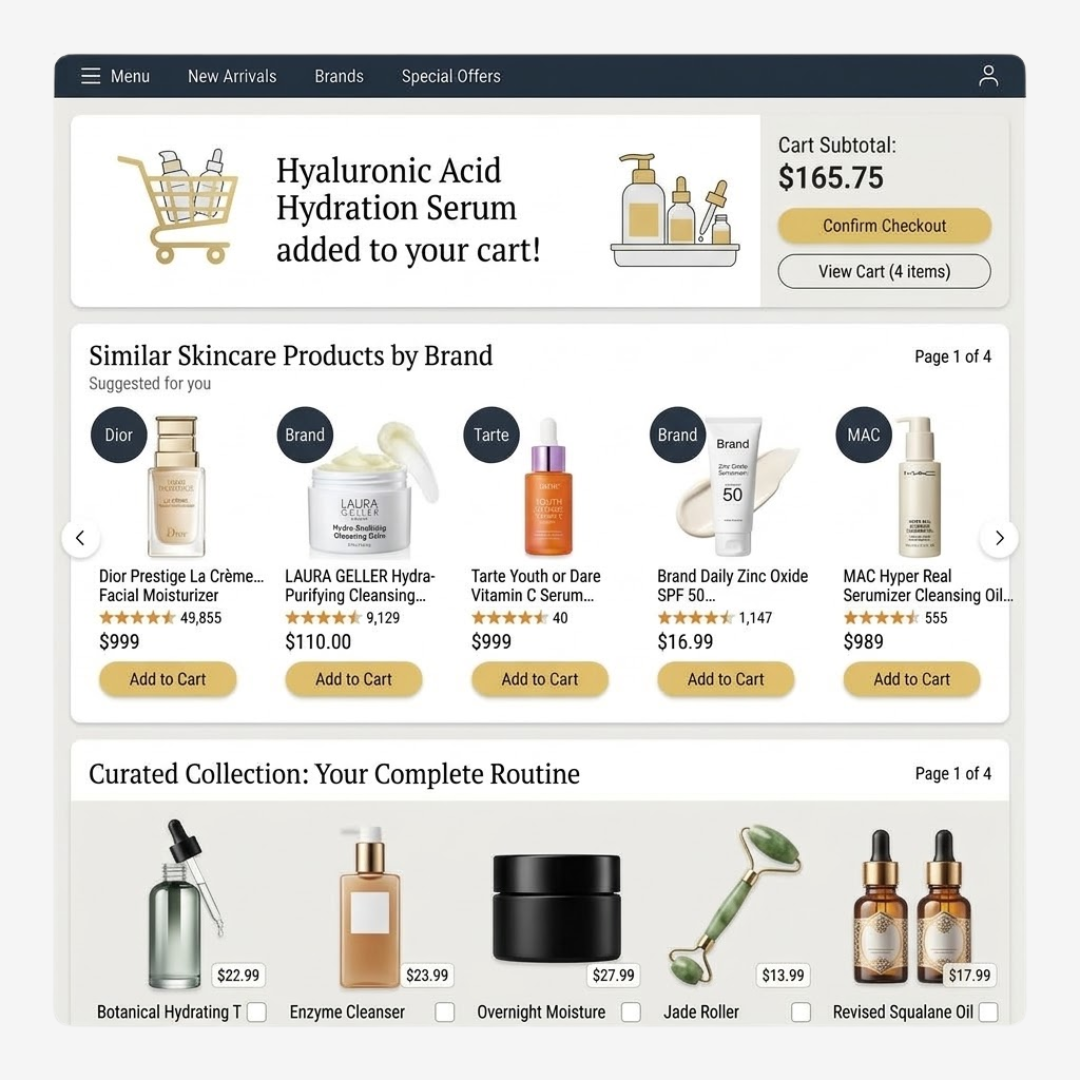
Personalization can use browsing history, purchase behavior, and product interest to help shoppers find relevant items faster. Common recommendation types include:
Recently viewed products
Similar products
Frequently bought together items
Complementary accessories
Products related to past purchases
The goal is not to fill every page with recommendations. Personalization works best when it reduces the amount of searching a customer has to do.
Even the best recommendation cannot rescue a product page that leaves important buying questions unanswered. That makes conversion rate optimization the next part of the journey.
7. Improve Product Pages Before Buying More Traffic
When product pages convert poorly, spending more on acquisition can make the problem more expensive.
A strong product page should remove uncertainty before the shopper reaches the cart. Important details should be easy to find, especially information that can delay a buying decision. That usually includes:
Product dimensions
Materials
Sizing
Shipping times
Returns
Warranty
Care instructions
Availability
Social proof can support those details. Reviews, customer photos, ratings, and user videos give shoppers extra context about what the product looks like and how it performs after purchase.
Mobile layout also deserves attention. Product options, pricing, images, and the Add to Cart button should remain easy to use on smaller screens.
Once a shopper decides to buy, the checkout experience needs to keep that momentum going.
8. Reduce Cart and Checkout Friction
A shopper who reaches the cart has already moved through most of the decision process. The final steps should feel simple and predictable.
Unexpected costs can cause hesitation at exactly the wrong moment. Shipping fees, delivery estimates, taxes, and minimum order requirements should be shown as clearly as possible before the last step.
The checkout itself should also avoid unnecessary work. A smoother experience can include:
Guest checkout
Digital wallets
Familiar payment options
Clear delivery information
Fewer form fields
Even with a strong checkout, some shoppers will still leave without buying. Email and SMS can help bring those high-intent visitors back.
9. Use Email and SMS Based on Customer Behavior
Email and SMS become much more effective when the message is tied to something the shopper actually did.
A visitor who viewed a product needs a different message from a customer who placed an order three months ago. That is why behavioral flows often perform better than sending the same promotion to the entire list.
A solid lifecycle program can include:
Welcome messages
Browse abandonment
Cart abandonment
Checkout abandonment
Post-purchase follow-up
Review requests
Back in stock alerts
Win back campaigns
Segmentation adds another layer of relevance. First-time customers, repeat buyers, high-value customers, and category-specific shoppers can all receive different messages based on their history.
Once repeat communication is in place, the next opportunity is increasing the value of the orders already being generated.
10. Increase Average Order Value With Relevant Offers
Growing revenue does not always require more traffic. Increasing the value of existing orders can improve campaign economics without raising acquisition costs.
Bundles and complementary recommendations work best when they make sense with the original purchase. A watch buyer may need an extra strap. A necklace shopper may be interested in matching earrings. A coffee machine buyer may also need filters.
That same logic can be used across different offer types, including:
Product bundles
Free shipping thresholds
Gifts with purchase
Cart recommendations
Post-purchase offers
The extra offer should feel useful in the context of the original order. Random upsells can distract from the purchase instead of improving it.
Higher order values improve the first sale. Retention determines how valuable that customer becomes over time.
11. Give Customers a Reason to Return
The first order creates a new opportunity to build a longer relationship with the customer.

Repeat purchases can reduce the pressure to constantly replace existing customers with new ones. The most useful retention campaigns usually give customers a clear reason to come back instead of relying on constant discounts.
That reason might come through:
New product launches
Personalized recommendations
Replenishment reminders
Loyalty rewards
Referral incentives
Early access
Customer-only bundles
Purchase history can make those offers more relevant. Someone who regularly buys from one category may respond better to a related product launch than to a general promotion. Retention also changes how marketing performance should be judged, which brings the strategy back to measurement.
12. Measure Marketing by Profit and Customer Value
Clicks, traffic, and return on ad spend can tell part of the story. They do not always show which channels are creating the healthiest growth.
A campaign may produce an expensive first order and still bring in valuable customers who return several times. Another campaign may look efficient at first but attract customers who never purchase again.
That is why ecommerce reporting should include metrics that connect marketing activity with actual business value. The most useful numbers often include:
Conversion rate
Customer acquisition cost
Average order value
Contribution margin
Repeat purchase rate
New customer revenue
Customer lifetime value
Looking at these metrics together makes it easier to see where budget should increase and where a campaign needs work.
The 12 strategies also make more sense when viewed as one connected system. Product data improves visibility. SEO, ads, and creator content bring shoppers in. Product pages and checkout turn that traffic into orders. Email, personalization, and retention help turn those orders into repeat revenue.
The full journey looks something like this:
Discovery → Traffic → Product consideration → Purchase → Retention → Repeat revenue
The best place to start depends on where that journey is currently breaking down. A store with weak traffic needs stronger discovery and acquisition. A store with plenty of visitors but few orders needs to focus on conversion. A store with healthy first-time sales but weak repeat business should put more attention into retention.
Read more: Schema Markup for Ecommerce Website: Boost Google Reviews
How the 12 Ecommerce Growth Strategies Work Together
These ecommerce growth strategies should support one connected customer journey. Product data, SEO, advertising, social content, and creator partnerships generate discovery and traffic. Product pages, personalization, and checkout improvements turn more of that traffic into purchases. Email, SMS, loyalty programs, and relevant offers then help increase repeat revenue.
A practical implementation plan can be divided into three stages:
| Stage | Primary Goal | Actions to Prioritize |
|---|---|---|
| Days 1–30 | Diagnose | Review traffic sources, product feeds, conversion rates, checkout behavior, margins, and repeat purchases |
| Days 31–60 | Fix | Improve priority product pages, repair tracking, simplify checkout, and build essential email flows |
| Days 61–90 | Scale | Increase investment in profitable products, test new creative, and expand retention campaigns |
Which Ecommerce Marketing Strategies Should You Start With?
Trying to work on all 12 strategies at once can spread time and budget too thin. A better starting point is the part of the customer journey that is currently holding sales back.
If traffic is low, discovery should come first. That may mean stronger SEO, paid shopping campaigns, social ads, creator content, or better product data. If traffic is healthy but sales are weak, product pages, checkout, and personalization deserve more attention.
Stores with steady first-time sales may have a different problem. Low repeat purchase rates usually point toward email, SMS, loyalty, and retention work. High acquisition costs may call for better conversion rates, stronger average order value, or more profitable customer segments.
This table gives a simple place to start:
| Main Problem | Strategies to Prioritize |
|---|---|
| Low website traffic | SEO, shopping ads, social ads, creator marketing |
| Poor product visibility | Product data and shopping feed optimization |
| Plenty of traffic but few sales | Product pages, personalization, checkout |
| High cart abandonment | Checkout improvements, email, SMS |
| Low average order value | Bundles, cross-sells, threshold offers |
| High acquisition costs | Conversion optimization, retention, customer value |
| Few repeat purchases | Email, SMS, loyalty, personalized offers |
| Unclear marketing performance | Profit, acquisition cost, lifetime value, attribution |
The goal is to fix the biggest leak first. Once that part of the funnel improves, the next strategy becomes easier to choose because the data will show where the next constraint sits.
How to Increase Ecommerce Sales by Fixing the Biggest Revenue Leak
Sales growth usually starts with finding the point where shoppers lose interest or leave the buying journey. Low traffic may call for stronger search visibility, paid campaigns, social content, and better product feeds. Healthy traffic with weak conversions often points to product pages, mobile usability, checkout friction, or missing trust signals.
The next opportunity comes after the first purchase. Email, SMS, product recommendations, loyalty offers, and useful follow-up can encourage customers to return. Stronger results usually come from improving several areas together, especially conversion rate, average order value, repeat purchases, and customer retention.
Final Thoughts
Strong ecommerce marketing strategies work best when they support the full customer journey instead of chasing traffic alone. Product visibility brings shoppers in, conversion work helps turn visits into orders, and retention gives customers a reason to come back.
The smartest next step is to look at where sales are currently slowing down. A store with weak discovery needs a different fix from one losing shoppers at checkout or after the first purchase. Once that weak point is clear, the right strategy becomes easier to prioritize and measure. Growth gets much easier to manage when acquisition, conversion, and retention are working together.
Turn Traffic Into Revenue With Gray Bay Marketing
Gray Bay Marketing helps ecommerce brands connect acquisition, conversion, and retention into one clear growth plan. Our team supports paid media, ecommerce SEO, email strategy, conversion improvements, and LLM SEO services as part of broader digital marketing services.
If traffic is coming in but sales are not moving with it, Gray Bay Marketing can help identify where the customer journey is breaking down and build a strategy around the channels that have the strongest revenue potential.
Ready to improve ecommerce performance? Work with Gray Bay Marketing to build a smarter path from discovery to purchase.
FAQs: Ecommerce Marketing Strategies
Why is the store getting traffic but very few sales?
Traffic alone does not guarantee purchases. The problem may sit on the product page, pricing, shipping costs, checkout, mobile experience, or the quality of the traffic itself. Start by checking where shoppers leave the site.
Why are shoppers adding products to cart but not checking out?
Unexpected shipping costs, slow delivery, limited payment options, or a long checkout can cause people to leave. Review the checkout process on both desktop and mobile to find unnecessary steps.
How can an online store increase sales without spending more on ads?
Start with the traffic already coming in. Improve product pages, checkout, product recommendations, email flows, bundles, and cart recovery. Better conversion can increase revenue without increasing acquisition costs.
Why is the conversion rate lower on mobile?
Small screens make friction easier to notice. Slow pages, hard-to-read product details, confusing variant selectors, pop-ups, or a difficult checkout can all hurt mobile sales. Test the full buying process on a phone.
How can a store improve average order value without offering constant discounts?
Use relevant bundles, complementary products, free shipping thresholds, and post-purchase offers. The extra item should make sense with the original purchase instead of feeling like a random upsell.
Why are email campaigns getting opens but very few purchases?
The message may be too general or disconnected from customer behavior. Emails based on browsing, cart activity, past purchases, and product interest usually give shoppers a clearer reason to click back.
Which marketing problem should be fixed first?
Start with the biggest leak in the customer journey. Low traffic points to discovery. Strong traffic with weak sales points to conversion. Healthy first orders with few repeat purchases point to retention. Fixing the largest problem first usually makes the next decision much clearer.
What should an ecommerce marketing strategy include?
A strong plan can include SEO, paid advertising, social media, creator marketing, email, SMS, product page optimization, checkout improvements, customer retention, and performance tracking.