
Best SEO Practices for Images: How To Optimize Images for Search
In the world of digital marketing, visuals speak louder than words – but only if search engines can actually find them. That’s why image SEO has become a cornerstone of high-performing websites. At Gray Bay Marketing, our SEO marketing strategy focuses on helping Bay Area businesses combine creativity with technical precision. Knowing the best SEO practices for images ensures that every photo, graphic, and logo on your site works as hard as your written content.
Search has become more visual than ever. Google Lens, AI-powered discovery tools, and image-rich search results are now part of daily browsing. Optimized images improve rankings, increase engagement, and enhance user experience. They also make your pages faster and more shareable – all critical for brand visibility in 2025.
What Is Image Optimization in SEO?
Image optimization is the process of making images discoverable, accessible, and fast without compromising quality. Search engines can’t “see” images like humans do – they rely on context, code, and structure to understand what an image represents.
Here’s what image optimization involves:
File relevance: Images must align with the content and keywords on the page.
Performance efficiency: Properly sized and compressed images reduce load time.
Accessibility: Alt text helps screen readers and search crawlers interpret visuals.
Metadata: Tags and schema markup give search engines clear contextual cues.
When implemented correctly, these steps form part of the best SEO practices for images, boosting both search rankings and user satisfaction. Optimized images also contribute to Google’s Core Web Vitals, improving your site’s overall performance metrics.
How Search Engines Understand Images
Search engines have evolved far beyond basic alt text scanning. Today, Google uses computer vision and machine learning to interpret the contents of an image. It evaluates not only filenames and captions but also surrounding text, layout, and structured data.
For example:
File name: Descriptive names like ‘bay-area-cafe.jpg’ perform better than ‘IMG_1234.jpg’.
Alt text: Short, accurate descriptions such as “Downtown San Francisco coffee shop interior” enhance relevance.
Schema markup: Adding ‘ImageObject’ data helps Google associate visuals with your business context.
Understanding how these elements interact gives you a competitive edge. The best SEO practices for images now extend beyond technical accuracy to include how visuals fit the story of your brand online.
Technical Foundations for Image SEO
Every millisecond of load time affects both rankings and conversions. That’s why the technical foundation of image SEO is crucial. Optimizing images begins before upload – during creation and export.
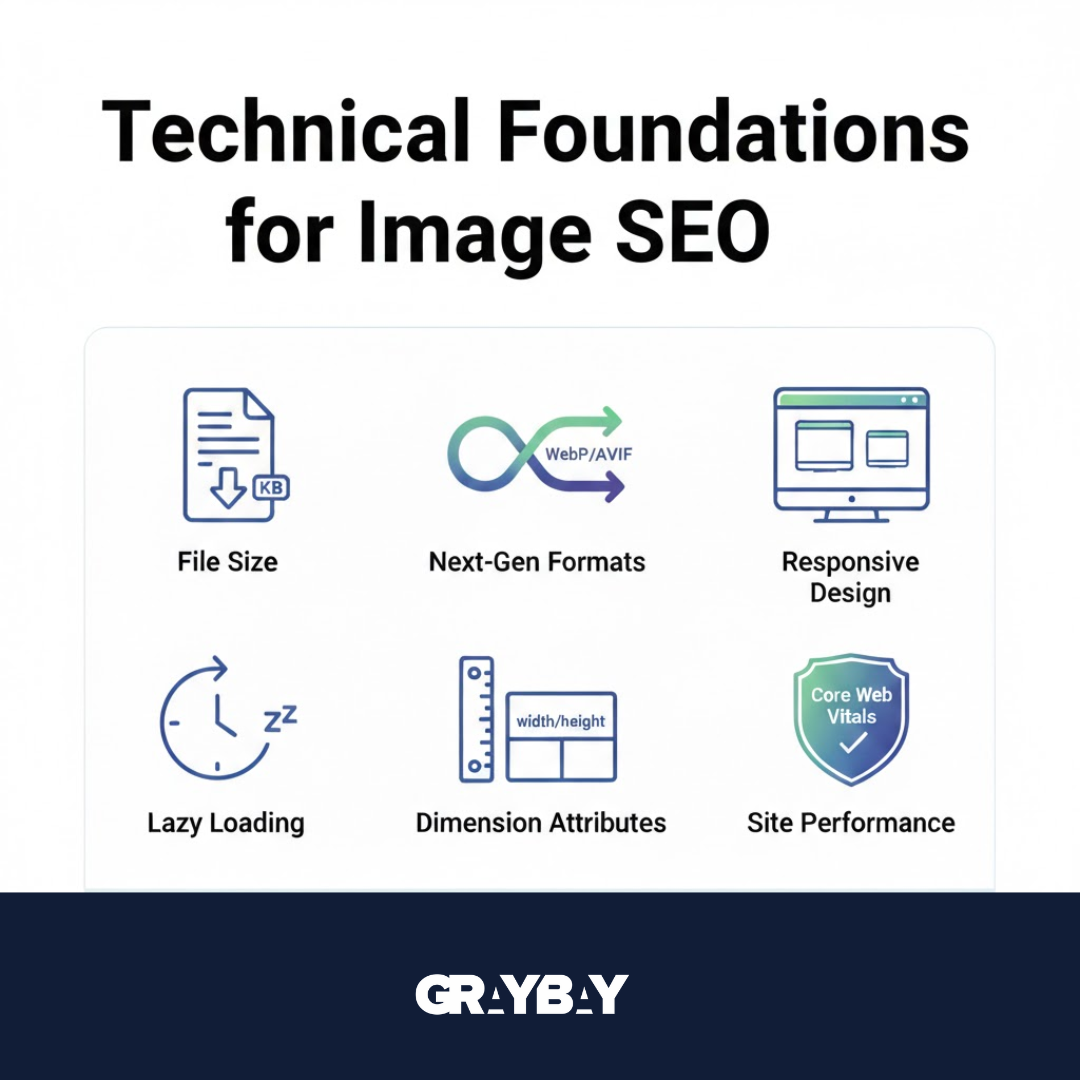
To follow the best SEO practices for images, focus on:
File size: Compress without losing quality using tools like TinyPNG or Squoosh.
Next-gen formats: Use WebP or AVIF for faster delivery and smaller file sizes.
Responsive design: Implement ‘srcset’ or ‘<picture>’ elements to serve different image sizes across devices.
Lazy loading: Defer off-screen images to speed up the initial render.
Dimension attributes: Set width and height to prevent layout shifts.
These optimizations keep your site light and compliant with Core Web Vitals, two ranking factors that directly influence visibility. The better your site performs technically, the stronger your visual SEO foundation becomes.
Content Optimization: Metadata, Keywords, and Context
Beyond file compression and structure, image SEO depends on how well you communicate meaning to both users and crawlers.
To enhance results:
Use descriptive alt text – not just for SEO, but for accessibility compliance.
Include relevant captions – these reinforce topic relevance.
Add contextual clues – align image content with nearby text and headlines.
Leverage structured data – Schema markup helps search engines connect the dots.
Avoid keyword stuffing. Instead, write naturally and focus on clarity. An image titled “Golden Gate Bridge at sunset over the bay” provides meaningful data without sounding robotic. That balance represents the best SEO practices for images in action.
How to Optimize Images for Search
Every step from upload to publishing impacts your SEO. To streamline the process, follow this practical workflow – a modern take on how to optimize images in 2025.
Choose the right format. Use JPEGs for photos, PNGs for transparency, and WebP or AVIF for speed.
Name strategically. Describe the content clearly in the file name.
Compress efficiently. Aim for balance between file size and quality.
Add alt text and captions. Keep them natural and informative.
Add structured data. Use ‘ImageObject’ schema for extra context.
Host images properly. If using a CDN, maintain consistent URLs and redirects.
Test performance. Run checks in PageSpeed Insights or Lighthouse.
These steps embody the best SEO practices for images, ensuring that your visuals enhance both usability and discoverability.
If your content is proprietary or brand-sensitive, consider AI-protection measures such as ‘noai’ and ‘noimageai’ tags. They tell AI crawlers not to use your images for model training – an emerging safeguard in responsible image optimization for SEO.
Common Mistakes to Avoid
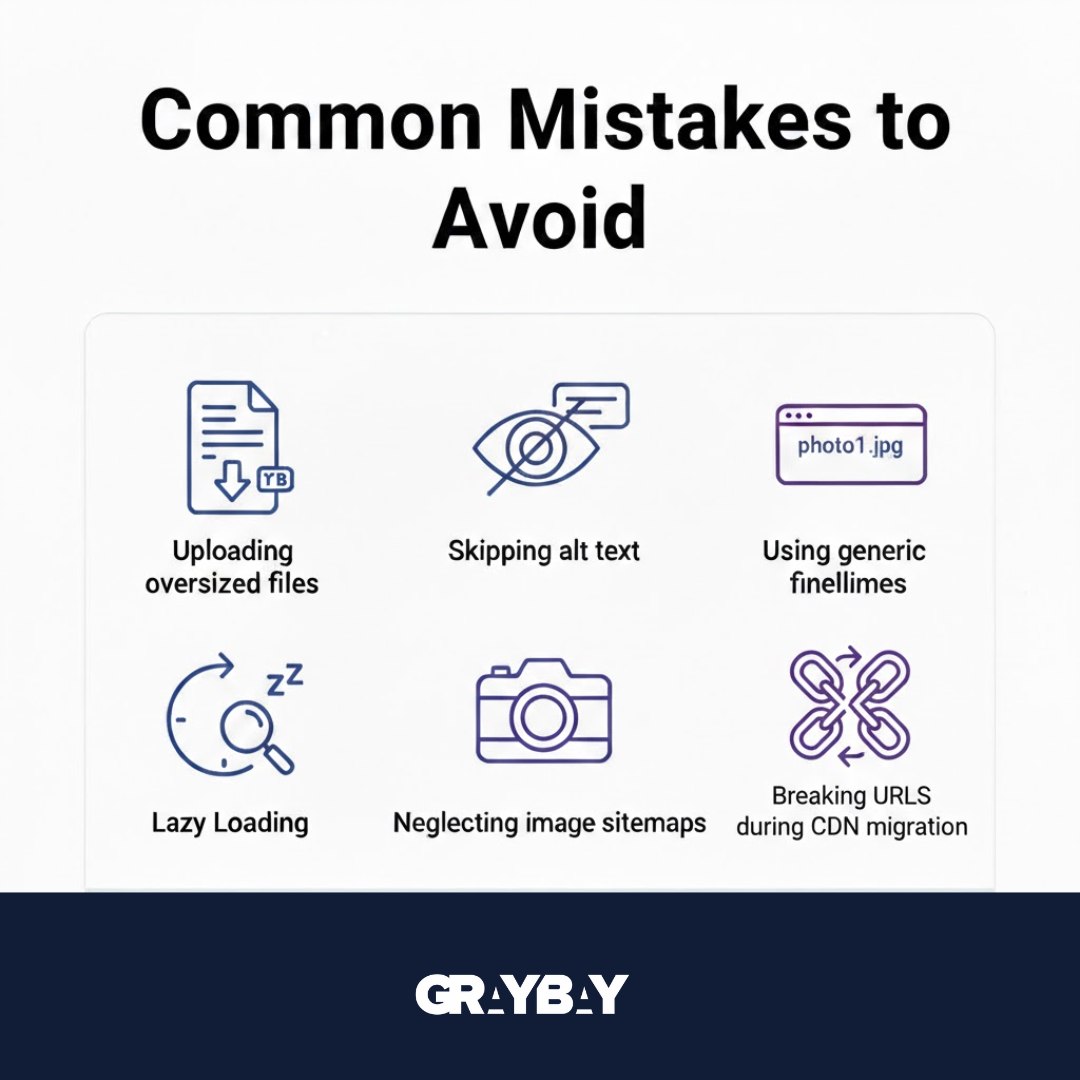
Even experienced marketers overlook critical image SEO details. To stay on track, avoid:
Uploading oversized files. They slow down loading and waste bandwidth.
Skipping alt text. It hurts accessibility and discoverability.
Using generic filenames. ‘photo1.jpg’ adds zero context.
Neglecting image sitemaps. Search engines can miss unlinked images.
Breaking URLs during CDN migration. Always set proper redirects.
These errors can quietly erode SEO progress. Correcting them early helps preserve the gains you’ve made from applying the best SEO practices for images elsewhere on your site.
Optimizing Images for Social Media
Your visuals don’t stop working once they’re indexed by Google. Social platforms also rely on metadata to display images properly when shared.
Here’s how to stay consistent across channels:
Use Open Graph tags for Facebook and LinkedIn.
Add Twitter Card data for optimal display on posts.
Include Rich Pins for Pinterest product or article content.
Follow recommended sizes – e.g., 1200×630 for Facebook, 1080×1080 for Instagram.
Optimized social images drive referral traffic and improve engagement. When users share your content and it looks sharp, they help extend the impact of your best SEO practices for images beyond your own website.
Measuring Success: Tracking Image SEO Performance
You can’t improve what you don’t measure. Track image performance to confirm your strategy is working.
Use tools like:
Google Search Console: Monitor image impressions and click-through rates.
Google Analytics 4: Measure engagement metrics and conversion impact.
PageSpeed Insights: Identify images that slow page performance.
Evaluate metrics monthly. Look for patterns – increased impressions signal better indexing, while improved page speed suggests technical success. Continuous tracking ensures your efforts to optimize an image for the web pay off in both visibility and usability.
Smarter Visual SEO With Gray Bay Marketing
Images have become as crucial to SEO as text. They drive clicks, shape perception, and affect performance across every channel. Implementing the best SEO practices for images ensures your visuals strengthen both brand identity and digital reach.
At Gray Bay Marketing, we believe strong visual SEO starts with strategy and ends with measurable impact. Our AI SEO services help businesses create websites that perform well – not just visually, but technically. We combine storytelling with performance insights, helping every brand communicate clearly, load faster, and rank higher.
We approach SEO marketing as a partnership: data-driven, design-conscious, and grounded in long-term growth. That’s why we pay attention to the details that search engines – and customers – notice most. From file compression to brand storytelling, Gray Bay Marketing helps you transform every image into a competitive advantage.
If your site needs sharper visibility and faster performance, start by applying the best SEO practices for images – and let Gray Bay Marketing turn your visuals into lasting value.